How to Pair With Design for Success as a PM or Product LeaderLeveling up PM's relationship with design—and growing your product faster as a result
Hey, Aakash here, with a quick preamble. Can you do me a favor? Drag this to your main inbox, star it or mark it as important, and reply. If you do even one of these, it will help boost the newsletter's reputation with email providers. 🍻
It’s a harsh truth. Tension is always dancing around the edges of the PM-designer relationship. Just visit Reddit to find PMs complaining about designers and vice versa. But, over my 15+ years in product, I noticed something: the best PMs and product leaders flip that tension into cohesion. It’s a tight-rope balancing act. You need to:
It’s not easy. In fact, I’ll admit: I’ve made my own share of mistakes. For instance: I had a less-than-ideal relationship with my design leader counterpart for a few quarters at thredUP. Yes, she and I got along—quite well, in fact. But, the collective work of our teams wasn’t hitting the mark:
As a result, squads missed their OKRs, and the quality of our products was uneven, . So, we took a hard look at what each team was working on. We clearly defined areas of responsibility. We worked even harder on the PM-designer relationships in the org. And, we were able to ship a series of features that helped thredUP raise Series E. My experience fixing the PM-design relationship to fix the organization helped me realize:
This post will offer you some actionable tips to avoid the former and drive the latter.
Today’s PostWords: 8,215 | Est. Reading Time: 37 Mins I’ve interviewed 15 people—4 VPs of Design, 3 VPs of Product, 3 Designers, 3 PMs, and 2 UXRs—to get you the best advice to level up your relationship with design:
1-Minute SummaryIf you only have a few minutes, here’s a short summary of the key takeaways:
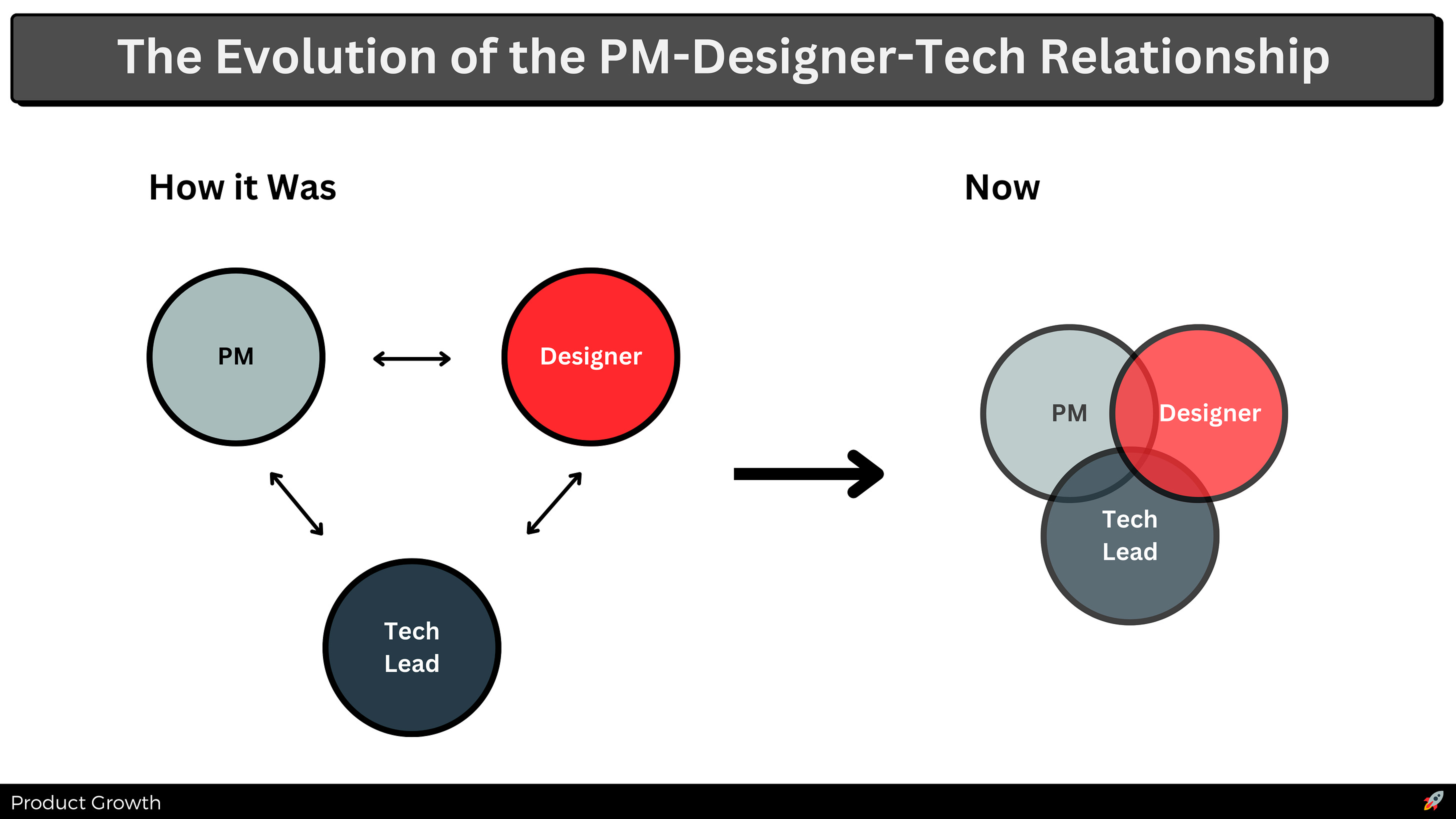
1. Design-PM 1011.1 How the relationship has changed over timeSince I began as a PM, a lot has changed in the relationship between PMs and designers. In empowered companies—about 25%—the roles have merged a good deal:
These are the environments Marty Cagan is always talking about.
But that’s just the empowered end of the PM world. For about 50% of companies, nothing has changed at all. In fact, in feature factories around the world:
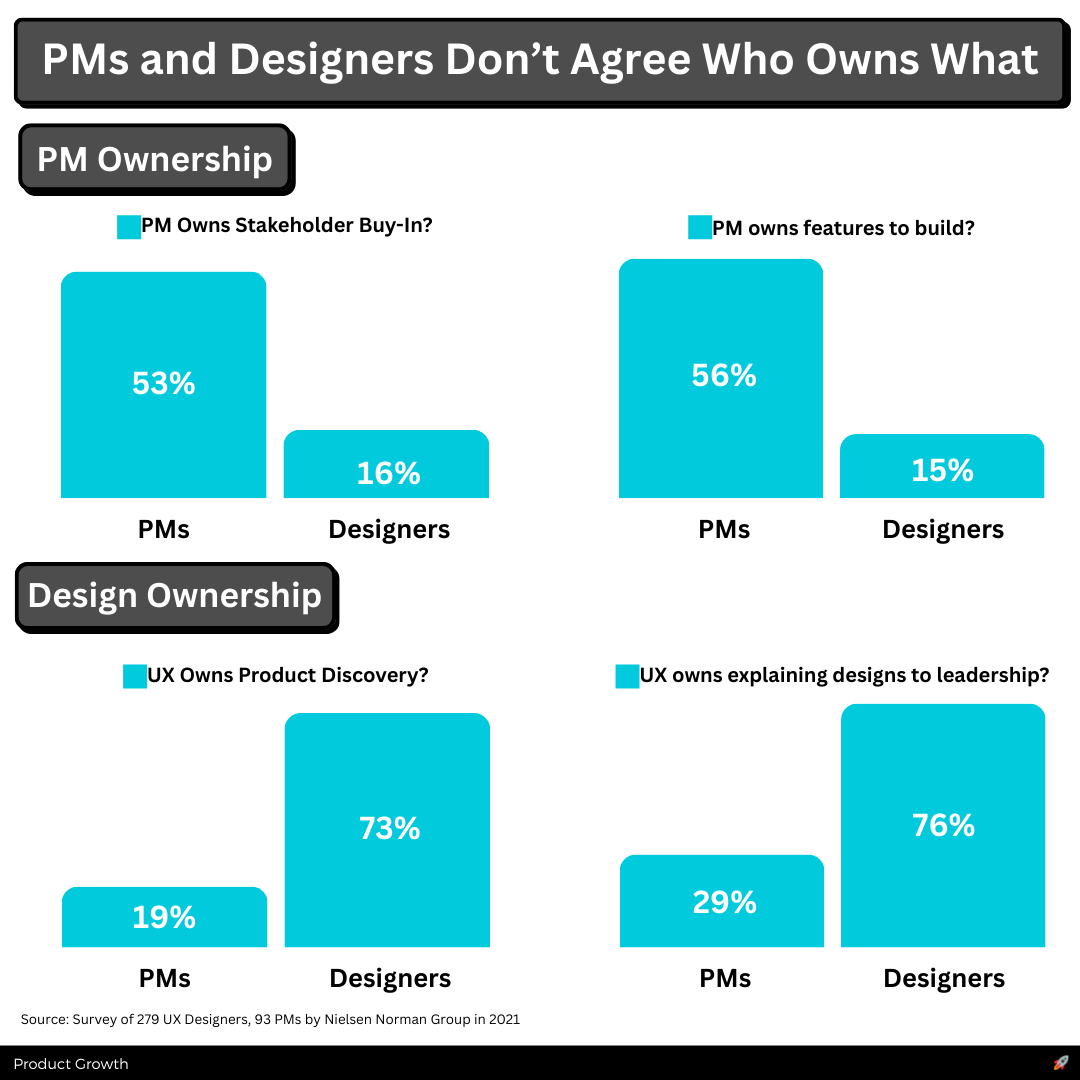
It's the siloed model from the past that refuses to fade away. Then, there’s everyone in the middle (~25%). Neither feature factory, nor empowered, but equally confused about the line between design and PM. So, all roads lead to: Designers and PMs not agreeing on who owns what. The data makes it clear as day:
Hence—today’s piece. 1.2 The variety of designers
Not every designer is the same. And the roles tend to be really blur between different types of designers. But, at the high level, here’s what you can expect from designers of different titles:
Notes:
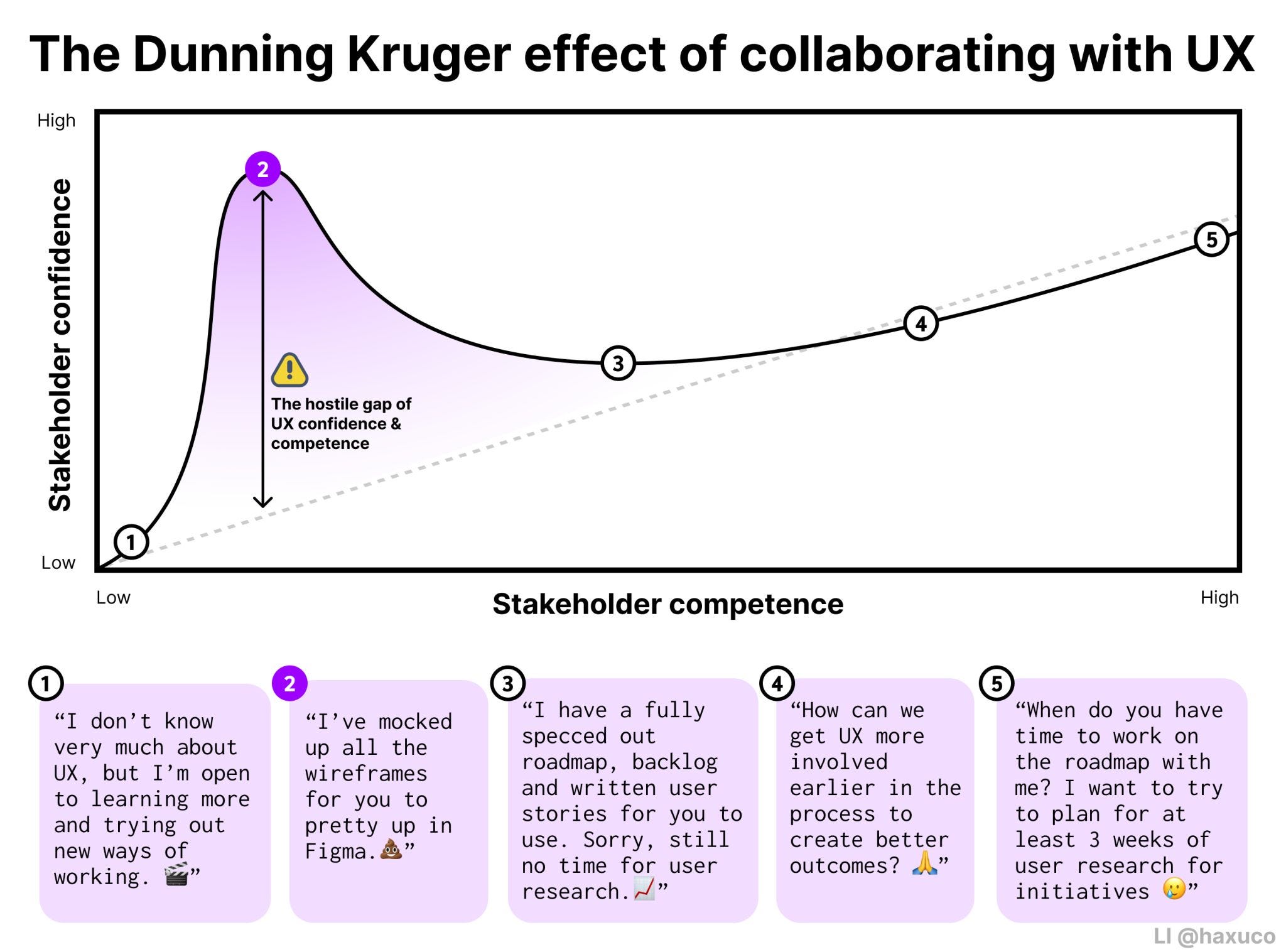
Even if a designer does not have one of these particular titles, it’s important to figure out what that person considers themselves, and what the organization expects that person to be. The job description really matters much more than the title. But once you figure it out, this completely frames how they expect you to involve them in different PM processes. 1.3 What designers don’t like about modern-day PMsThe first step to improving your relationship with design is better empathizing with them. So, let’s step into their shoes. One of the most popular design creators who serves as a face of the modern day designer’s complaints—whose posts were mentioned to me by several designers—is Hang Xu. He’s been a staff designer at a variety of companies, and here’s how he explains what designers are looking for from PMs:
Let’s breakdown these 5 levels of PM stakeholder competence:
As one designer shared with me about why it works this way:
The overarching theme is that designers want an equal seat at the table. They don't want to be an afterthought or pixel-pusher, but rather a key partner in shaping the product vision and experience alongside the PM. Now let’s move on to the tactical skills and steps to being that Very High Competence PM (section 2), and The Art of Managing the Org (section 3)... Keep reading with a 7-day free trialSubscribe to Product Growth to keep reading this post and get 7 days of free access to the full post archives. A subscription gets you:
|





This week’s system design refresher: Top 9 Most Popular API Protocols (Youtube video) What is a deadlock? What’s the difference between Session-based authentication and JWTs? Top 6 ElasticSearch Use Cases Top 9 Cases Behind 100% CPU Usage SPONSOR US ͏ ͏ ͏ ͏ ͏ ͏ ͏ ͏ ͏ ͏ ͏ ͏ ͏ ͏ ͏ ͏ ͏ ͏ ͏ ͏ ͏ ͏ ͏ ͏ ͏ ͏ ͏ ͏ ...
Comments
Post a Comment