Latest articlesIf you’re not a subscriber, here’s what you missed this month.
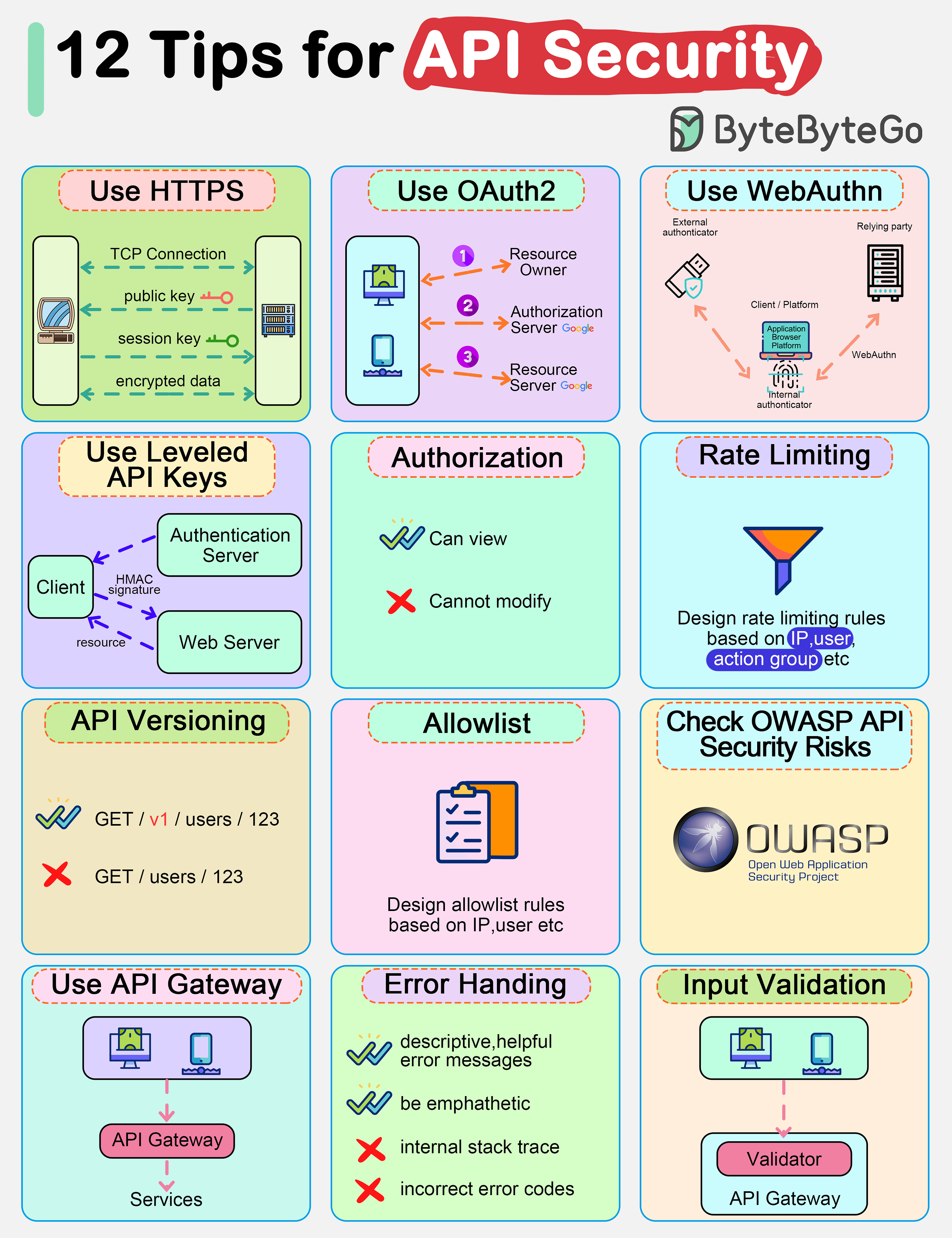
To receive all the full articles and support ByteByteGo, consider subscribing: APIs are the backbone of modern applications. They expose a very large surface area for attacks, increasing the risk of security vulnerabilities. Common threats include SQL injection, cross-site scripting, and distributed denial of service (DDoS) attacks. That's why it's crucial to implement robust security measures to protect APIs and the sensitive data they handle. However, many companies struggle to achieve comprehensive API security coverage. They often rely solely on dynamic application security scanning or external pen testing. While these methods are valuable, they may not fully cover the API layer and its increasing attack surface. In this week’s issue, we'll explore API security best practices. From authentication and authorization to secure communication and rate limiting, we’ll cover essential strategies for designing secure APIs.
AuthenticationAuthentication ensures that only authorized users or applications can access protected resources or API endpoints. Before implementing authentication, choosing the appropriate authentication mechanism is crucial based on our use case, security requirements, and compatibility with client applications. Below are some popular authentication mechanisms for securing APIs:...  Continue reading this post for free, courtesy of Alex Xu.A subscription gets you:
|







This week’s system design refresher: Top 9 Most Popular API Protocols (Youtube video) What is a deadlock? What’s the difference between Session-based authentication and JWTs? Top 6 ElasticSearch Use Cases Top 9 Cases Behind 100% CPU Usage SPONSOR US ͏ ͏ ͏ ͏ ͏ ͏ ͏ ͏ ͏ ͏ ͏ ͏ ͏ ͏ ͏ ͏ ͏ ͏ ͏ ͏ ͏ ͏ ͏ ͏ ͏ ͏ ͏ ͏ ...
Comments
Post a Comment