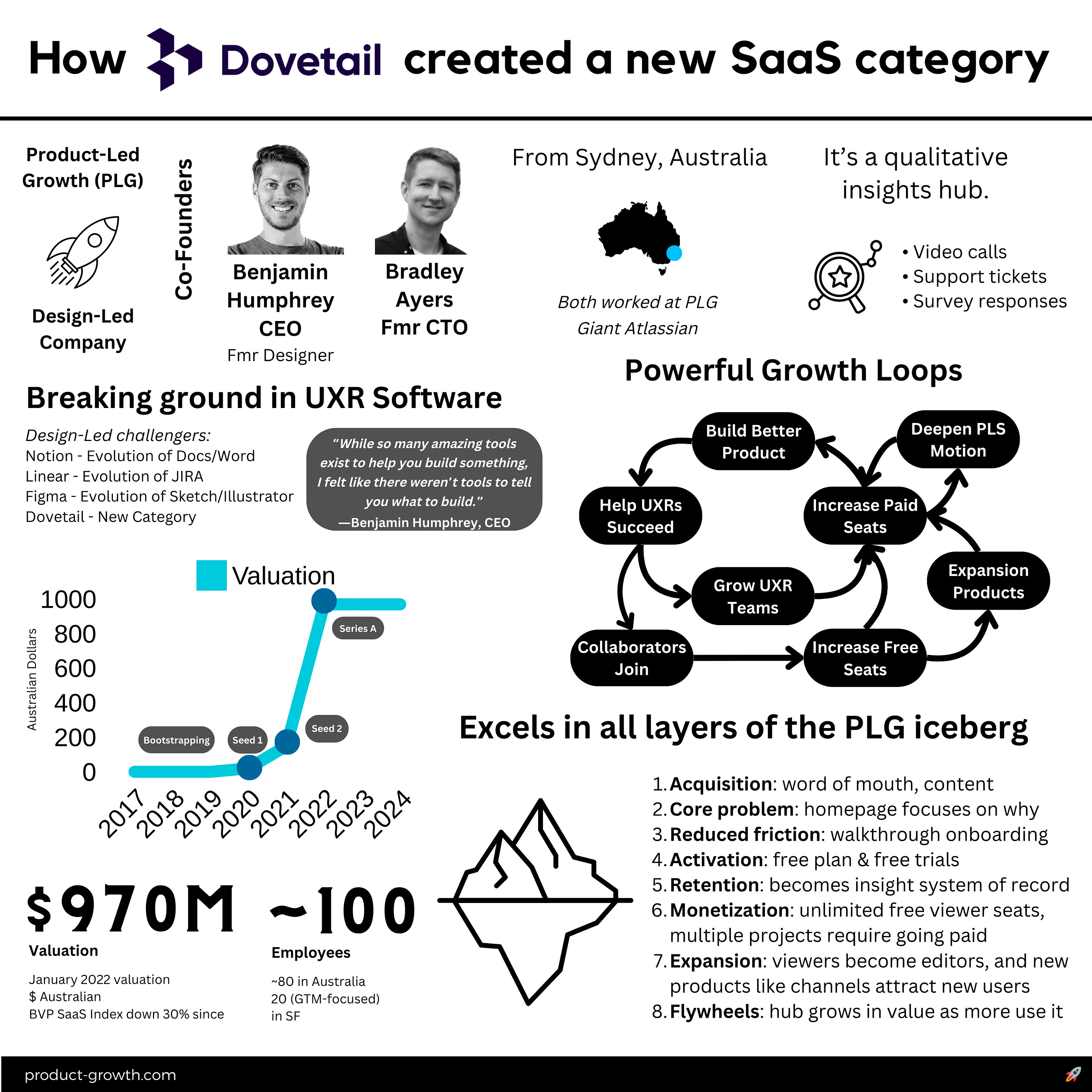
I’m excited to present what I believe is the web’s first deep dive on a fast-growing PLG B2B SaaS with a valuation of $970M AUD. A company with clients like Google, Notion, and Shopify. And it’s all powered by a series of exclusive interviews with the Dovetail team—including VP of Product Srinivas Krishnamurti, CEO Benjamin Humphrey, Content Lead Caitlin Burns, and Product Marketing Lead Alissa Lydon.
I also picked the brains of 4 user research leaders who have paid for the product. Coming out of all this work, I’m convinced that Dovetail is one of the most interesting tech companies on the planet right now. Let’s dive in. Today’s PostWords: 5,054 | Est. Reading Time: 22 Mins
1. The story of DovetailChapter 1 - Founding
The year was 2017. Benjamin Humphrey was working as a designer at Atlassian, the original PLG giant in Australia. As part of his design work, he frequently worked on user research projects, but never found the process fun. Unlike all the other functions, user researchers had no tool:
But what was there for User Research? The process was clunky and cumbersome. You had to hop between spreadsheets, physical whiteboards with sticky notes, UserTesting, and other bespoke tools. It was a mess.
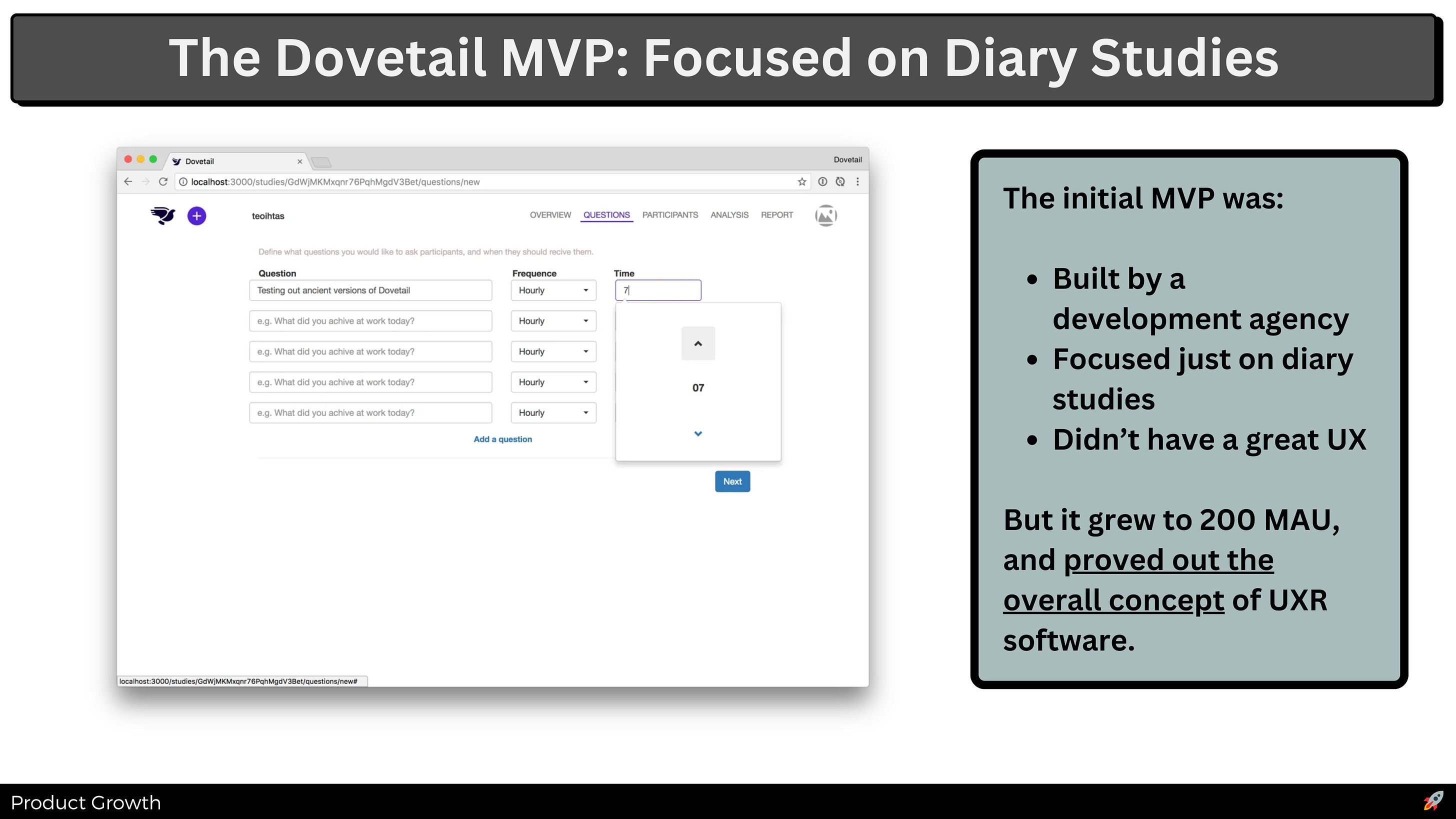
Recognizing this gap, Benjamin had the vision to build a tool that could do for User Research what Figma did for design: give user research a web-based, central, and collaborative hub for work. But, he didn’t start with such a grand vision. Starting Small: Tackling Diary StudiesTo start, he decided to just tackle diary studies. He hired an Upwork agency to get a prototype in 4 weeks. It looked like this:
The MVP was very simple. And it showed early promising signs. Two months after launch, Dovetail had 200 users, with 40 of them active and running studies on a weekly basis (WAU). The initial traction was enough for Ben to be able to convince his engineering colleague from Atlassian, Bradley Ayers, to join the team as co-founder and CTO. A Lifestyle Business, Not a UnicornThe duo’s dream was to create a small, lifestyle business. It wasn’t to go big:
Chapter 2 - PLG from the StartAnd that was a reasonable expectation. Success was far from guaranteed. Even if Dovetail’s precise idea hadn’t been built yet, the research and insights software space was crowded. Researchers used:
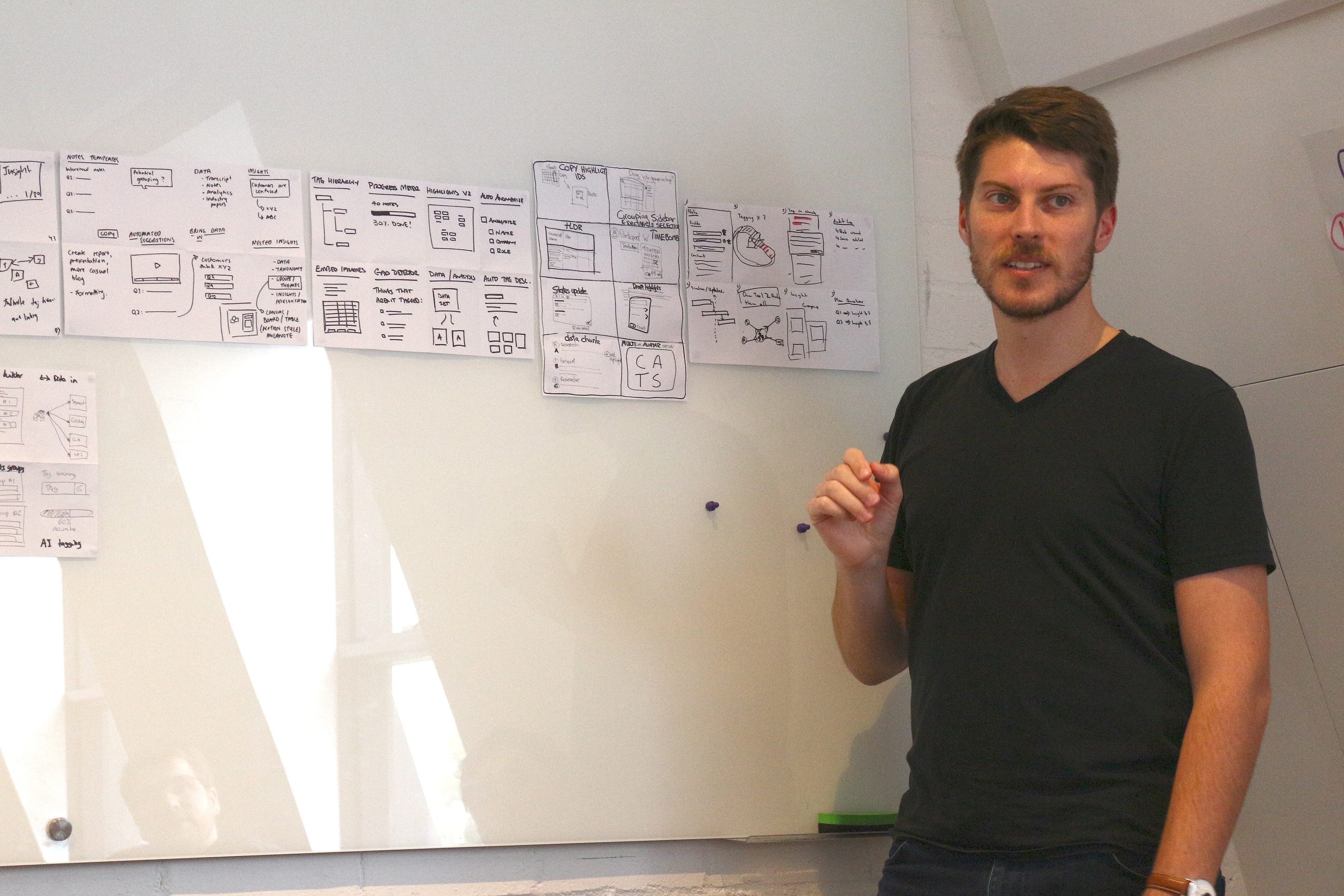
How could a couple of first-time founders with an MVP compete? Going Back to the Drawing BoardIt started with the MVP they had. Looking at the data, Ben and Bradley noticed that users would finish their diary study and cancel. So, they went back to the initial 200 customers and did detailed user research. It was a full-blown process, done on Dovetail:
The result of all that work? They realized that the whole product had to be reworked, from the ground up. Launching Dovetail 2.0So, they rewrote Dovetail and launched Dovetail 2.0. It looks quite a bit like the Dovetail we know today:
Dovetail 2.0 is quite similar to Dovetail today—just with less features. The key feature set was: you could tag insights from an interview and survey, easily aggregate that into insights, and then share it with your team. It was simple. But simple was good. Because it was a real problem for user researchers. And the product solved it. The Key to Initial SuccessThe real key to Dovetail’s initial success was: it borrowed design paradigms from expensive CAQDAS research software that user researchers, many of whom were formerly PhDs, were used to using. But it offered it at a fraction of the price. And it was in the cloud. And it had all the business features on top. Indeed, the team kept shipping them at a furious pace:
PLG Playbook: Doing More with LessThey didn't have a sales team or a huge marketing budget. Instead, they took a page from their Atlassian-days and used the product-led growth (PLG) playbook. It worked:
Chapter 3 - Rapid Growth
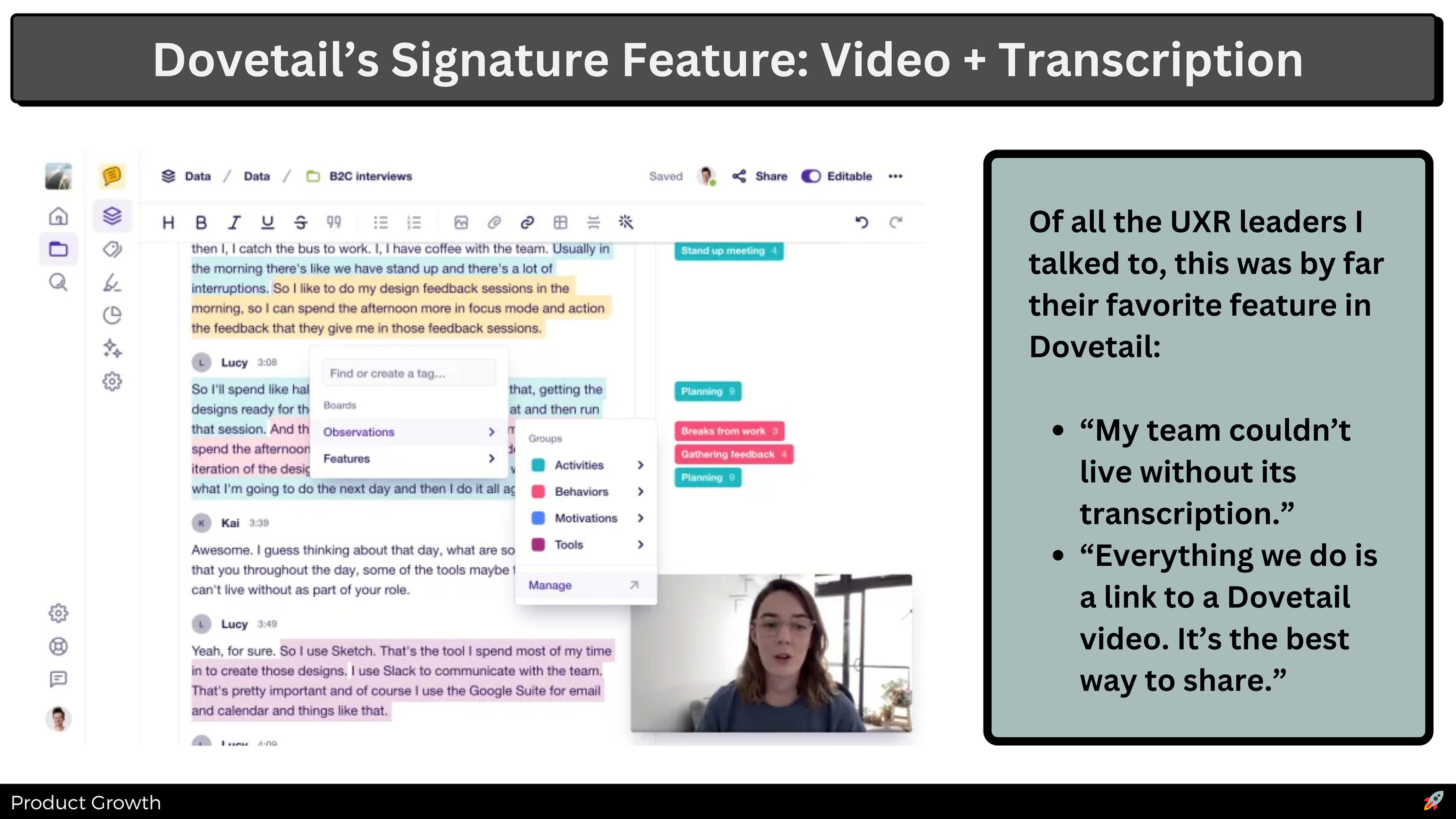
The PLG growth model worked. Growth came at a brisk pace. The team continued to grow. And they continued to ship more. In 2020, the company shipped one of its signature features: video and transcription. You can drop in your conversation with customers, and it will transcribe it, and also tag the sentences for sentiment:
The feature would prove to be transformative and a hook future UXR teams to use the tool. Hours transcribed even become the team’s main upgrade lever for a time (the free plan had a 2 hour limit). From Lifestyle to VC-backedGrowth was so fast that the team sniffed opportunity:
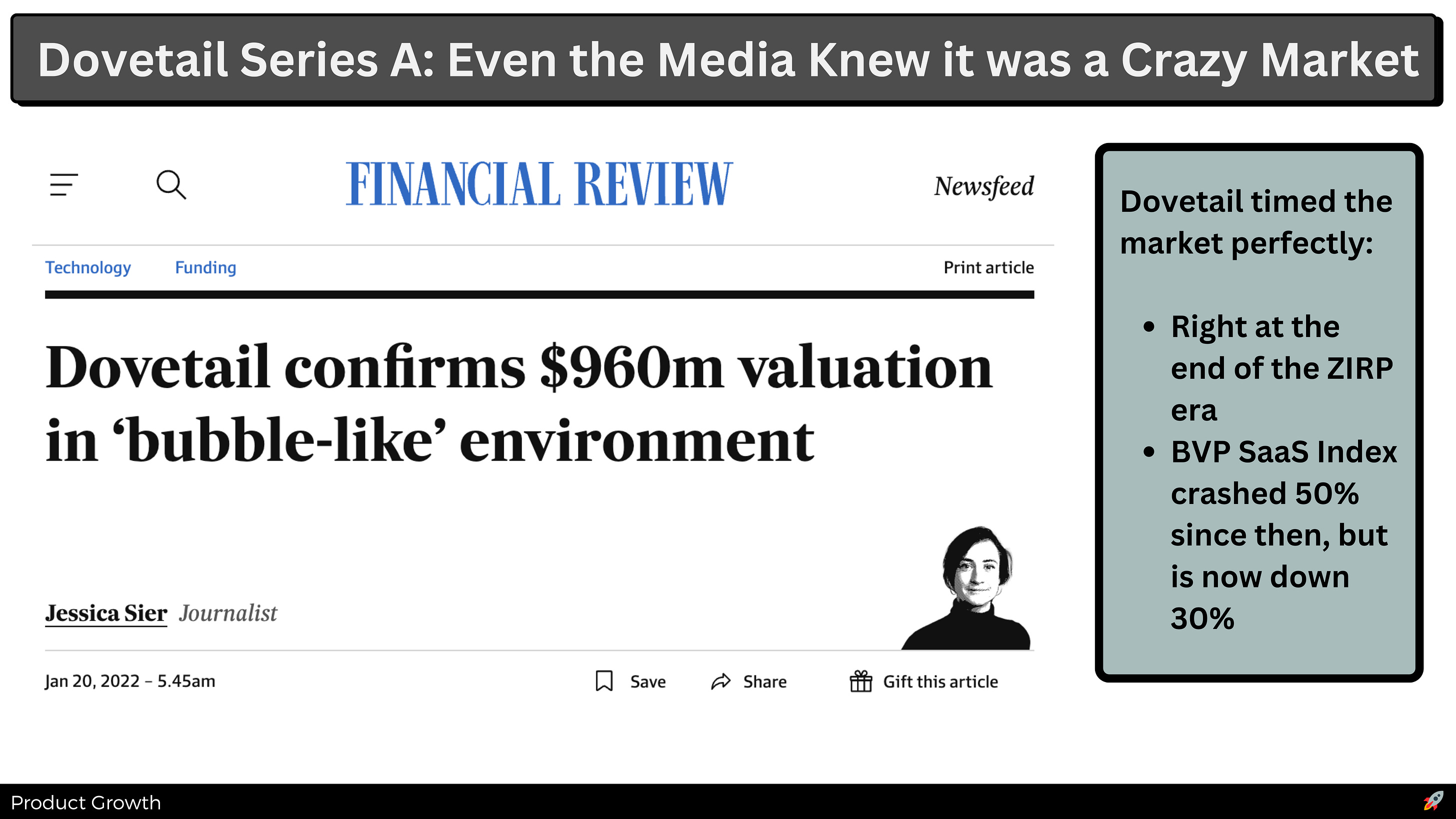
Dovetail’s roots as a lifestyle business helped the company grow in a way that it didn’t necessarily “need” funding. It was profitable(ish) and growing fast. This made it all the more sexy to investors. And so, the team changed their strategy, and raised:
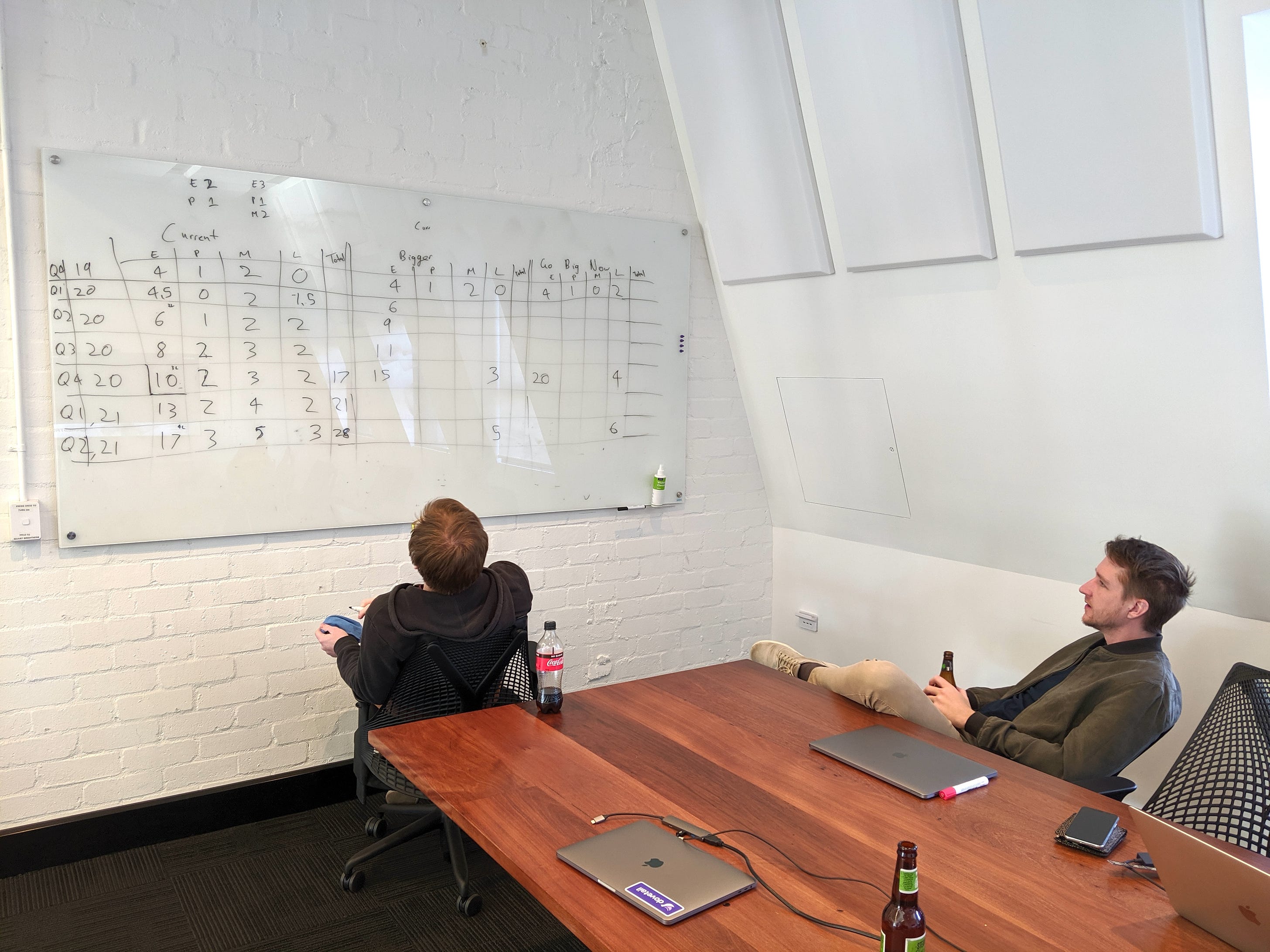
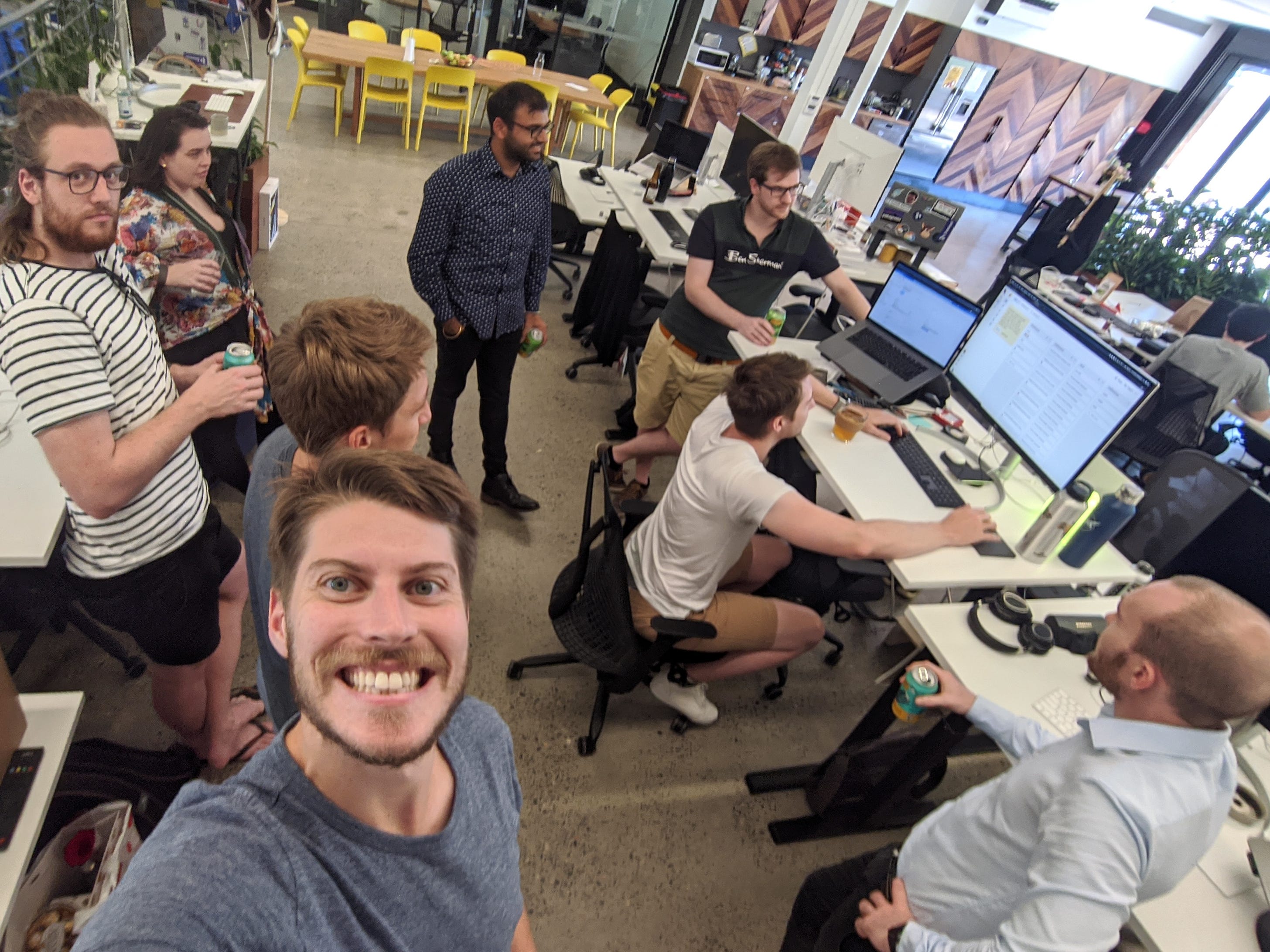
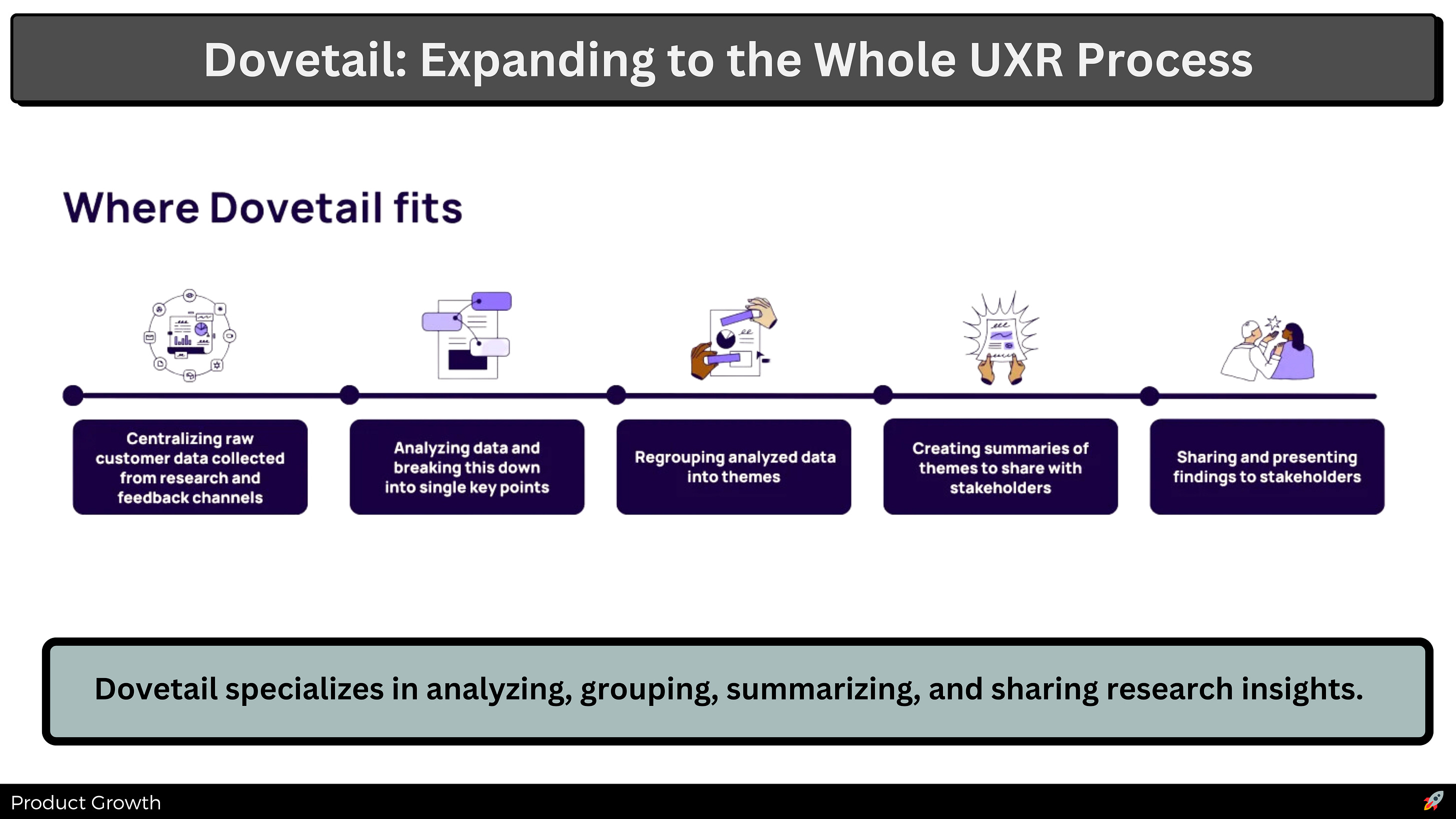
From 20 to 100: Beefing Up the TeamWith an additional $89M AUD in the bank, the company grew quickly. It beefed up its GTM office in San Francisco to 20, and the Australian office grew to ~80. The company ended 2023 with ~100 employees. Chapter 4 - Product ExpansionAs most companies do after raising funding, Dovetail’s aspirations grew considerably. And the company noticed people like me were using it. (Indeed, I was using it as a Head of Product Growth at Affirm.) This began the company’s product expansion to all parts of the lifecycle for user researchers:
The Power of the PLG FlywheelThis worked. As more user researchers adopted the product, the flywheel began to spin. They loved it:
So, they told their friends. And the product grew.
Over time, Dovetail went from a nice-to-have to a must-have. Individual users became teams. Teams became departments. And the virtuous cycle of PLG continued.
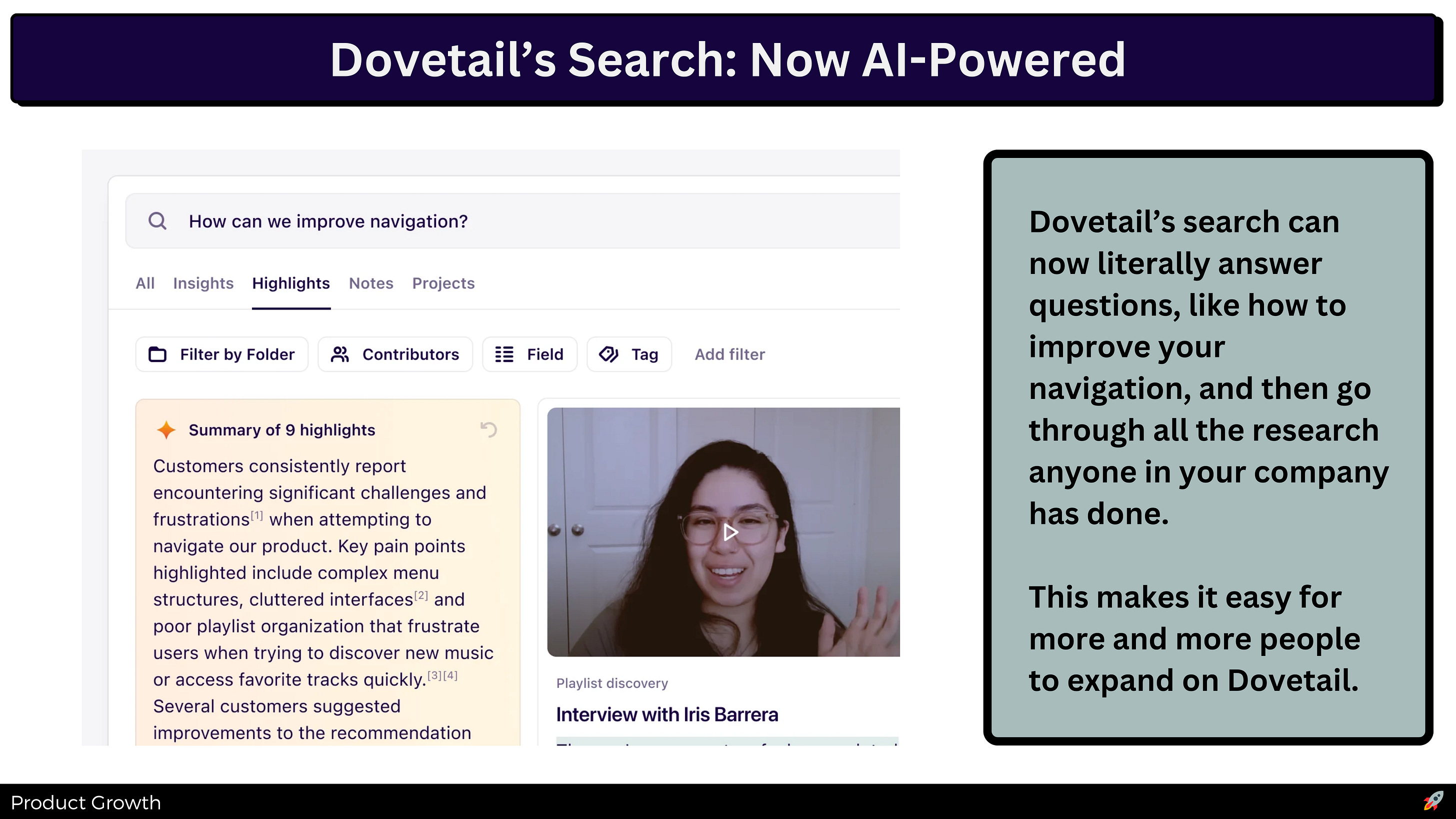
Chapter 5 - Dovetail TodayToday, Dovetail has grown to serve over 4,000 customers and 250,000 users, including the top product companies in the world—like Netflix, Shopify, and Canva. And it’s not just tech companies that use Dovetail. It has clients in the government (UK), in regulated industries like health care (AstraZeneca) and finance (RBS), and in stodgy old research institutions like universities (Harvard). Evolving with the TimesIt has had this success, because the company keeps evolving. Notably, a few months ago, co-founder Bradley Ayers left. And the company parted ways with its PMs and growth team to return to its design-led roots (more on that in Section 3). And, like every other SaaS, Dovetail has implemented its own version of AI in the product. The Rise of AI AI has now made it into the main screens of Dovetail’s most visited pages. AI can help you not just with transcription, but also summarization, highlights, and clustering.
Yet, even as Dovetail evolves rapidly, the PLG DNA that powered the early days remains as vital as ever. Growth is still primarily driven by product usage and word-of-mouth. Dovetail: The Story of PLGAs a result - in many ways, the story of Dovetail is the story of PLG itself: a obsessive focus on the end user, a commitment to making the product as accessible and valuable as possible, and a belief that if you build something truly great, the rest will follow. It's a story that's still being written, but one that offers valuable lessons for any founder or PM. Read on for a breakdown of the actual product (section 2), a look at how it builds product (section 3), its competition (section 4), and predictions for the future (section 5)…... Keep reading with a 7-day free trialSubscribe to Product Growth to keep reading this post and get 7 days of free access to the full post archives. A subscription gets you:
|





This week’s system design refresher: Top 9 Most Popular API Protocols (Youtube video) What is a deadlock? What’s the difference between Session-based authentication and JWTs? Top 6 ElasticSearch Use Cases Top 9 Cases Behind 100% CPU Usage SPONSOR US ͏ ͏ ͏ ͏ ͏ ͏ ͏ ͏ ͏ ͏ ͏ ͏ ͏ ͏ ͏ ͏ ͏ ͏ ͏ ͏ ͏ ͏ ͏ ͏ ͏ ͏ ͏ ͏ ...
Comments
Post a Comment