A PM's Guide to WireframesWireframes aren't just for designers. Great PMs use wireframes to align stakeholders, test assumptions, and decrease eng & design work on bad ideas
I was recently talking to the Head of Product at a late stage startup who said:
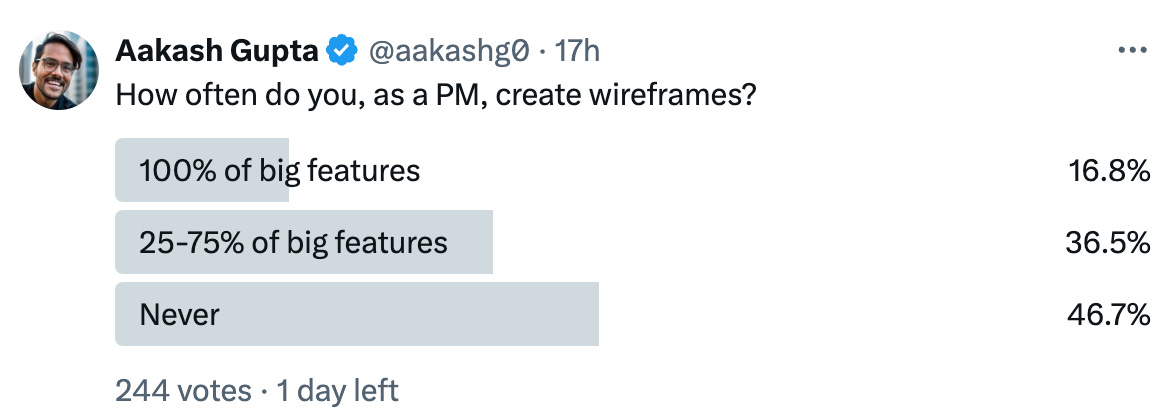
I couldn’t help but feel: this is a mistake. So, I had to poll you all to understand how often PMs are wireframing:
The plurality of PMs do not wireframe for big features. Let’s start with the supposition that this plurality is right. That is, that PMs should never wireframe. Now let’s do a thought exercise. If that’s our modus operandi, when might a wireframe from the PM still be useful?
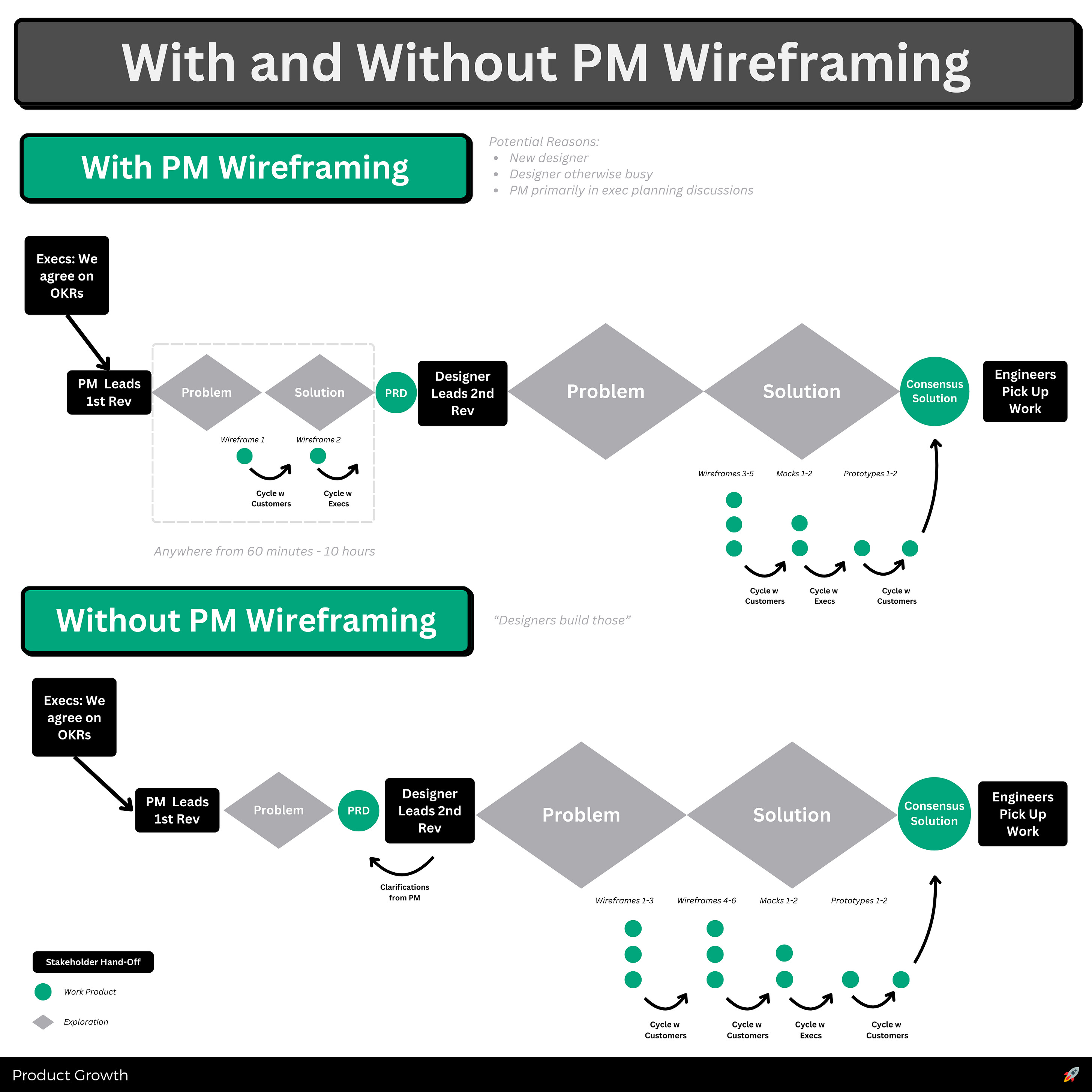
Now, let’s be honest. How much does this stuff happen? It happens a lot! In every single product org I’ve led, design resources are strapped. There’s 10 feature ideas product execs and managers want to explore for every 1 a designer can work on. And that’s why I think the majority may want to reconsider. In my opinion:
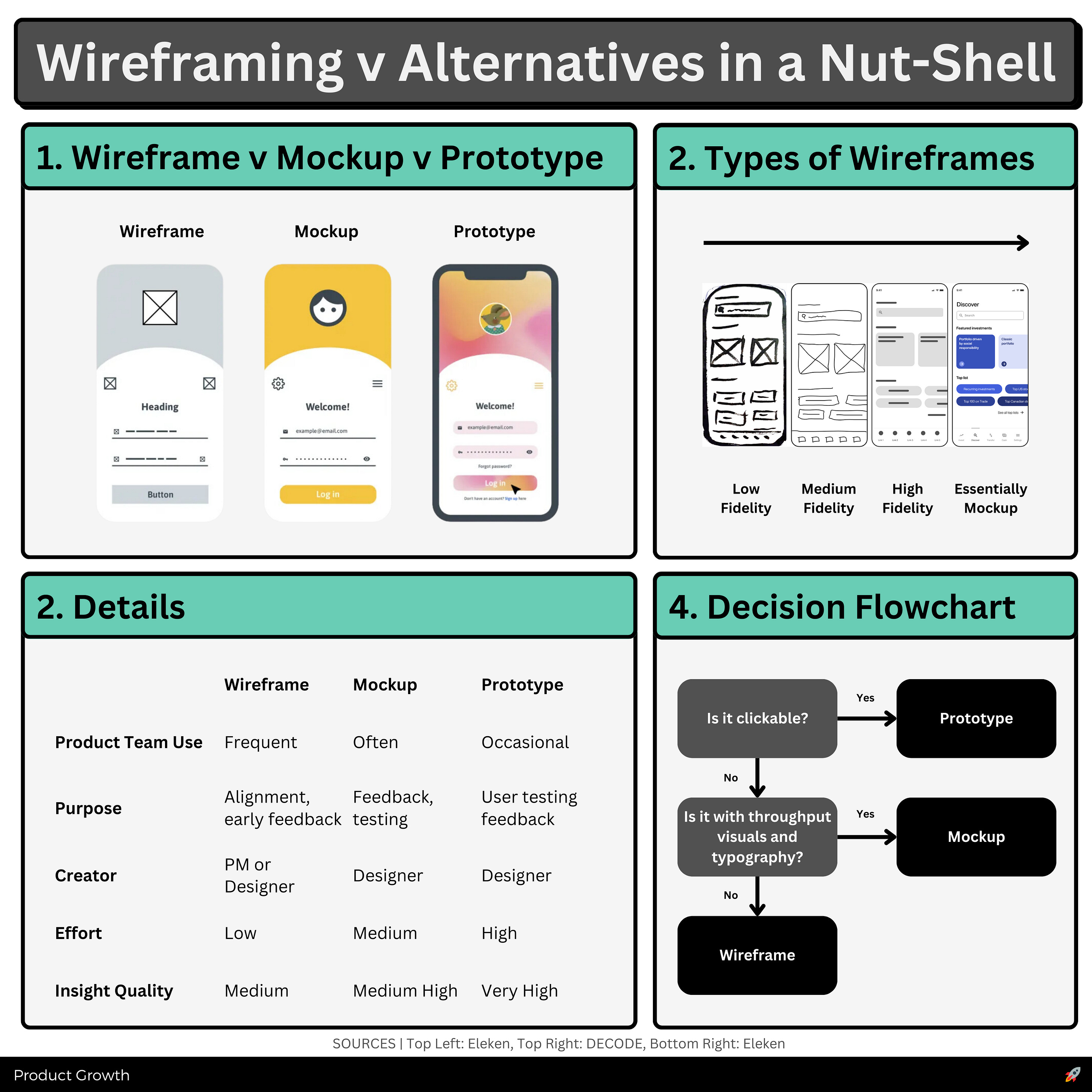
In fact, in my final years a senior IC PM—eg when I started at Epic Games—I always used wireframes in my PRDs. “No Question is a Stupid Question”What is the difference between a wireframe, a mockup, and a prototype?
Some people also talk about “high fidelity wireframes,” which, as you crank up the fidelity, eventually converge to mockups. Why I Love WireframesA great wireframe can:
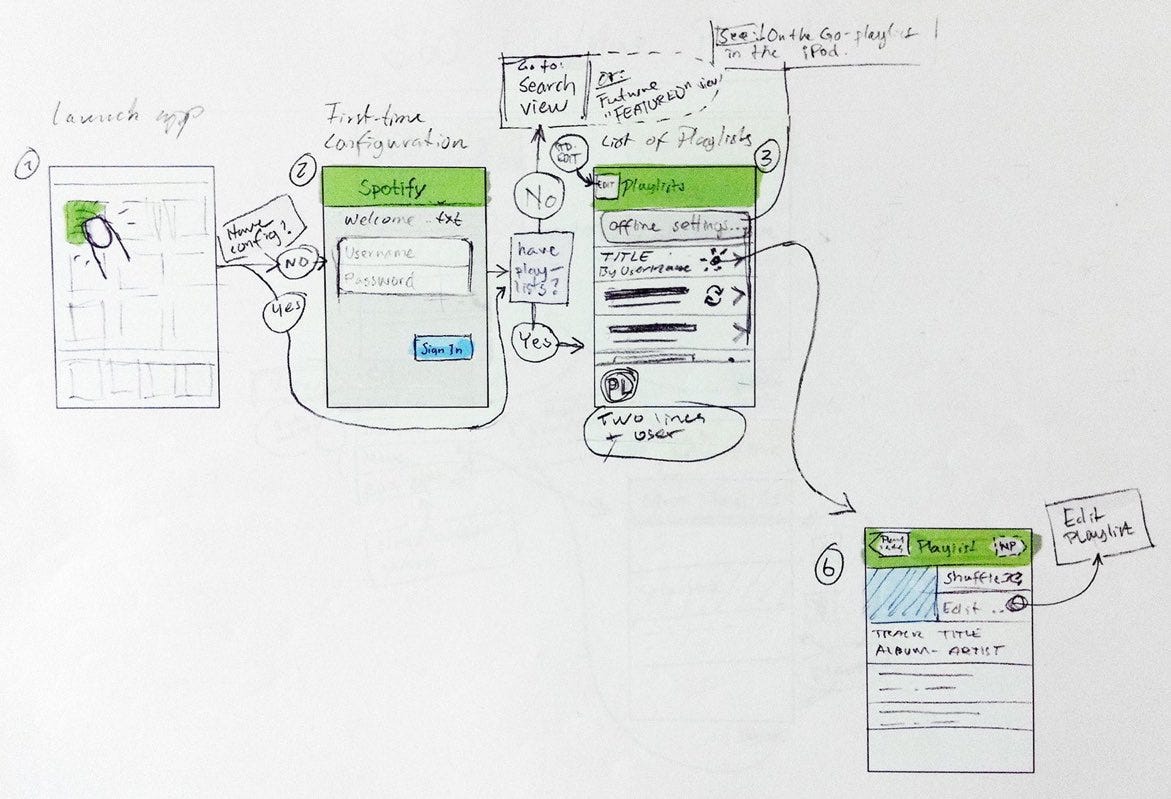
All before any expensive engineering time is dedicated to the idea. There’s a reason the Spotify founding team started with a wireframe before touching any code:
But the thing is: you all probably already know and agree with that! Most of you don’t wireframe because you believe design should be doing that. So let’s go further on that. Should PMs Wireframe At All?It’s a philosophical debate. So let’s ask the three questions:
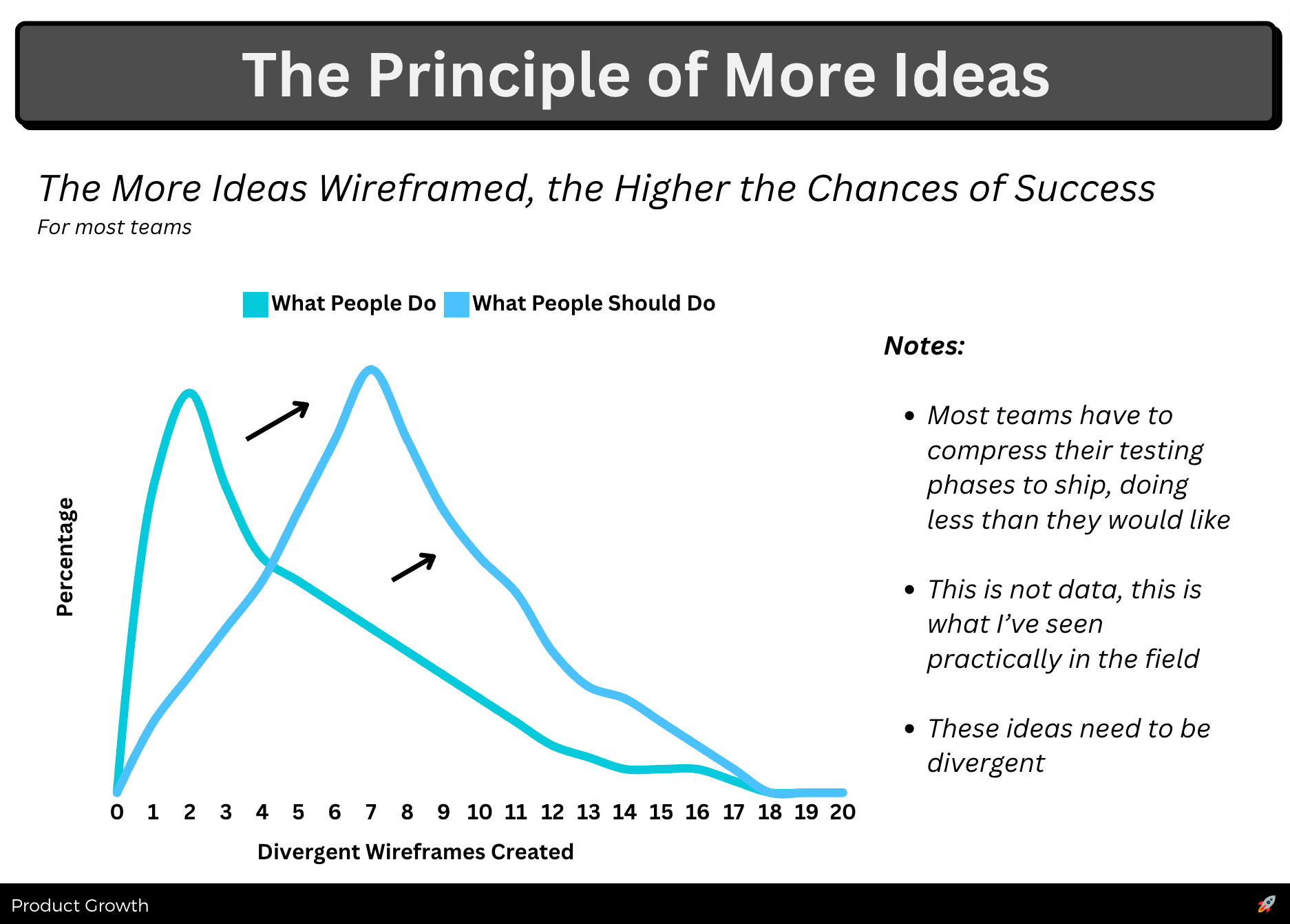
Question 1 - Once you agree on the problem to solve, how many ideas do you need to work through to come up with a good one?In my experience:
Luckily, that’s the case we’re talking about:
The result is that:
So, having two different people build wireframes increases the total variety of ideas you evaluate. And: the more divergent ideas, the better. I call it, “The Principle of More Ideas.”
Question 2 - What should the aperture of your discussions with executives be?Let’s say the CEO aligned with the product team on the problems to solve next quarter a week ago. Then, they ask:
It doesn’t really play well when, this week, the VP of Product responds:
What plays much better is:
So what I’m arguing here is: the aperture of your discussions with the CEO should actually shift to early-stage solutions, before you necessarily have time for design to get to it. For two reasons:
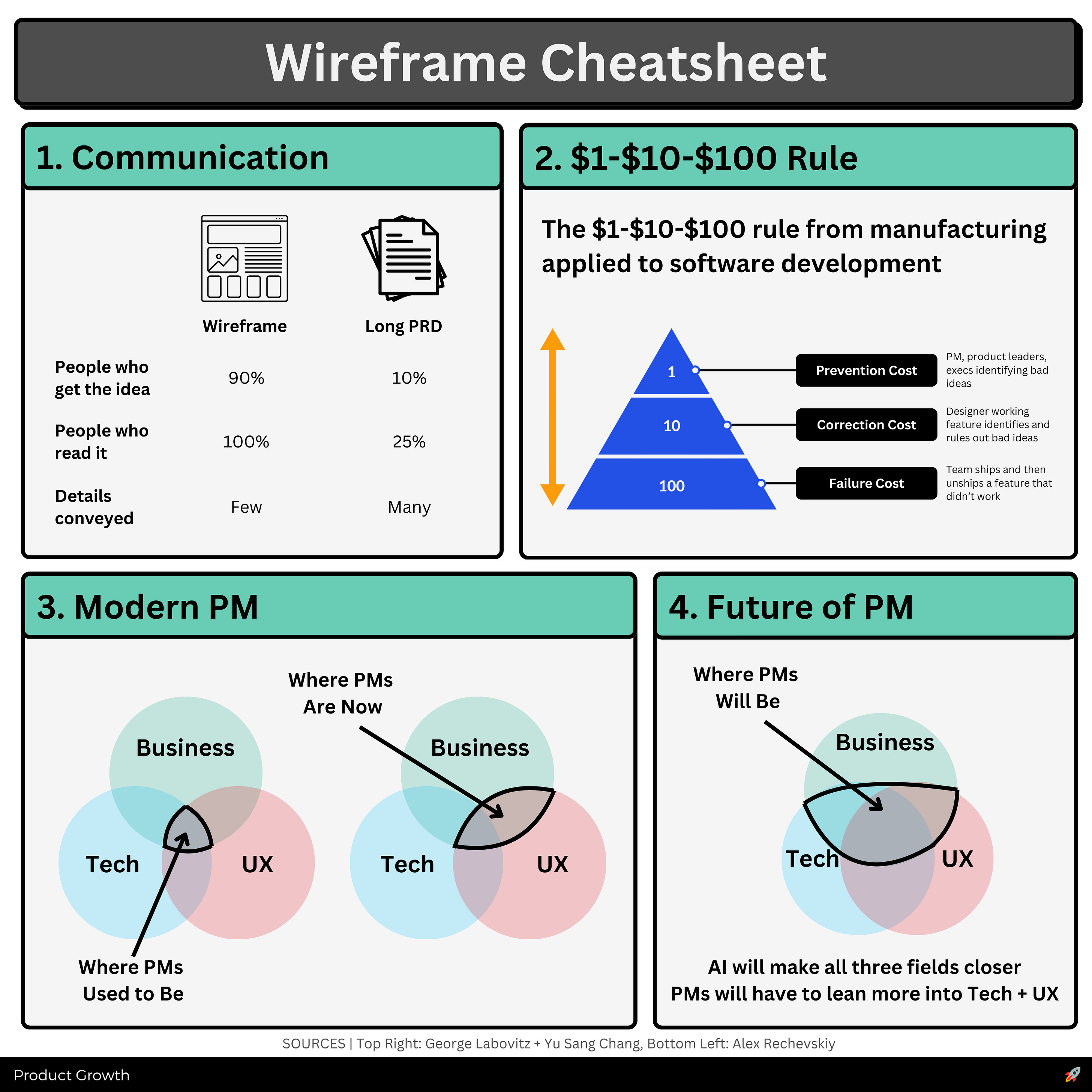
Let’s double-click on that second point. Usually, CEOs have amongst the best product sense in the company. So, their input focuses the teams in the right direction. It ends up being a useful exercise that reduces overall failure rate of features:
Question 3 - Should PMs be full-stack?Designers design. Coders code. PMs… manage the roadmap? How much value is that if most of the roadmap is pre-determined by executives and tech debt? Many PMs find themselves in a “credibility trap,” where their own designers and engineers question their value-add. This is where being “full-stack” helps. What is “full-stack?”
It’s the mentality of getting your hands dirty, and doing whatever the company needs. For many Silicon Valley series A-C startups, that’s what the PM role looks like. The real question is: should big companies be pursuing these startup PM tactics? I say yes. For 4 reasons:
Conclusion on PMs WireframingAs a product leader, I've grappled with whether PMs should wireframe many times over the years. On the one hand, there's a valid concern that PMs have to focus on the litany of other things they need to do. But I end up settling the key philosophical debates that PM is one of the highest leverage PMs can be doing:
It's not about PMs stepping on design’s toes, but rather about helping the team overall deliver the highest impact most cheaply. If you agree with me, let’s get into how to do this well… Today’s Deep DiveWords: 7,782 | Est. Reading Time: 36 Mins
Keep reading with a 7-day free trialSubscribe to Product Growth to keep reading this post and get 7 days of free access to the full post archives. A subscription gets you:
|





This week’s system design refresher: Top 9 Most Popular API Protocols (Youtube video) What is a deadlock? What’s the difference between Session-based authentication and JWTs? Top 6 ElasticSearch Use Cases Top 9 Cases Behind 100% CPU Usage SPONSOR US ͏ ͏ ͏ ͏ ͏ ͏ ͏ ͏ ͏ ͏ ͏ ͏ ͏ ͏ ͏ ͏ ͏ ͏ ͏ ͏ ͏ ͏ ͏ ͏ ͏ ͏ ͏ ͏ ...
Comments
Post a Comment