Everyone uses case questions in their PM interviews:
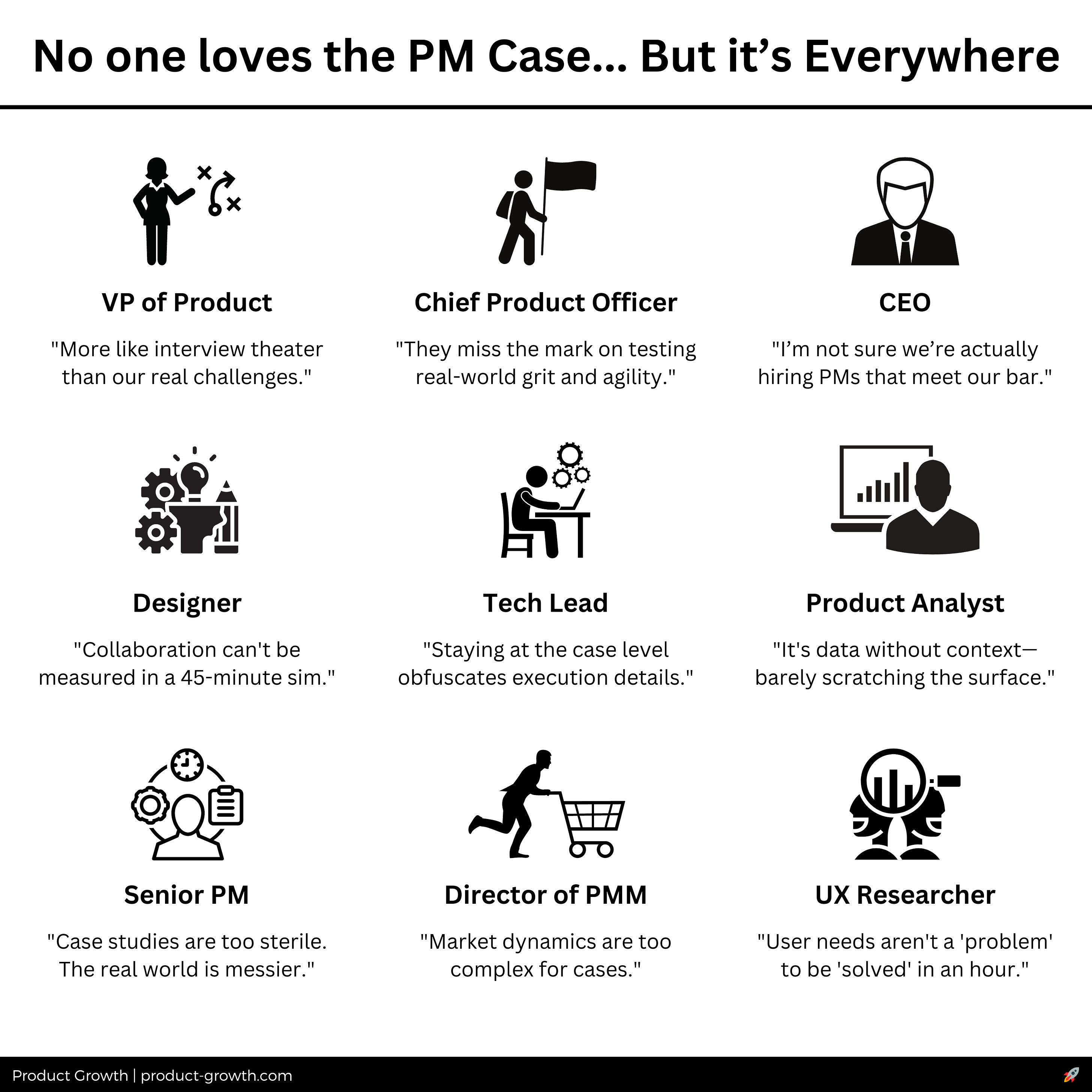
But hardly everyone is sold on their value. In fact - the most common thing I hear from hiring managers about the case interview is:
And it’s not just PM hiring managers. Colleagues across departments—from engineering to design to marketing—often express doubts about the effectiveness of PM case interviews:
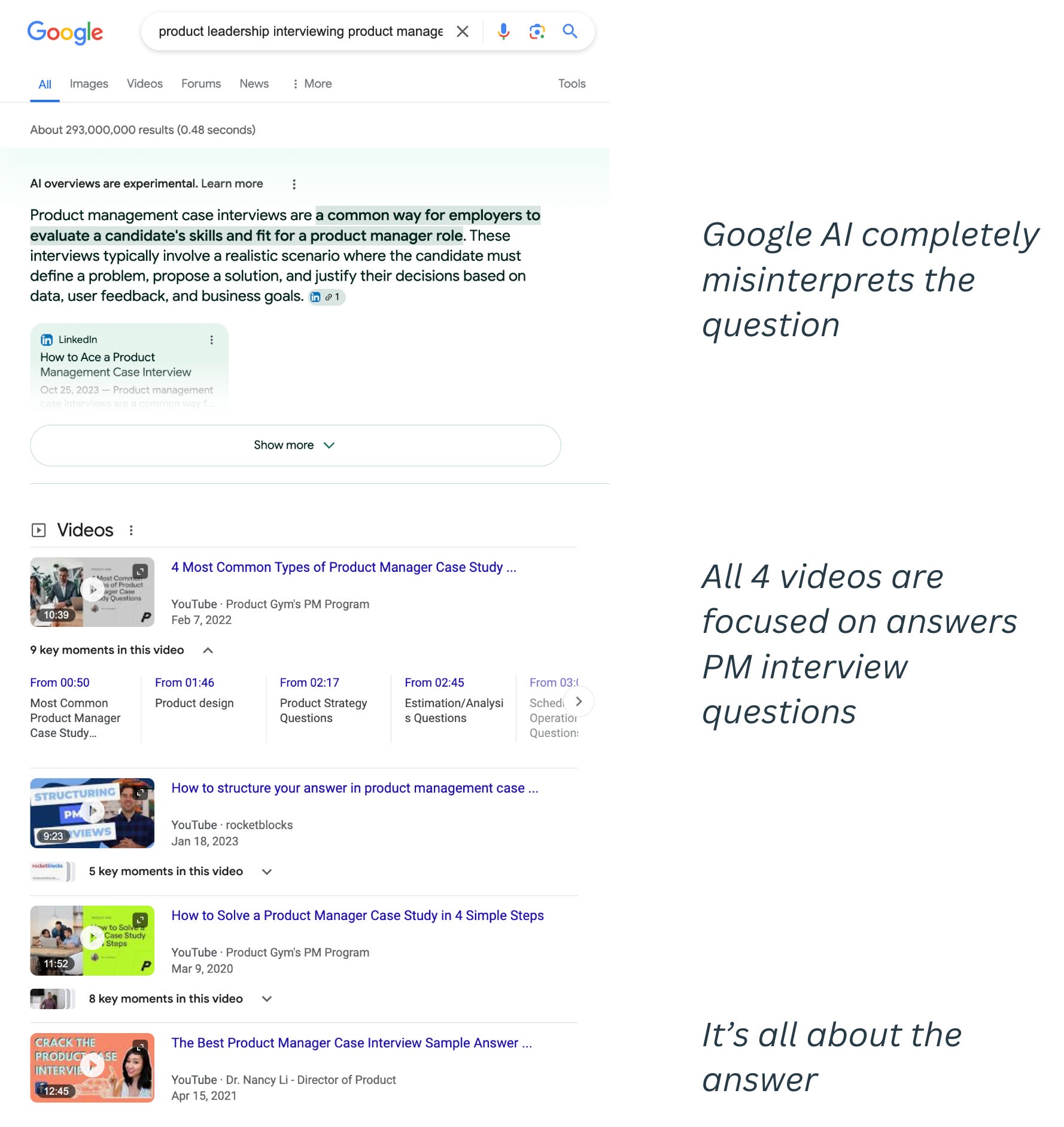
It’s the paradox of case interviews: they’re everywhere, but no one loves them. The obvious solution, if we’re going to use case interviews, is to get better at using them. That’s where things get interesting… Where is the content?Normally, to get better, we’d turn to the internet. But, it turns out that there’s almost nothing available on how to use case interviews well. On Google, I couldn’t find absolutely anything:
I tried multiple search terms: None had good results. Even ChatGPT and Claude Opus didn’t have anything interesting to say. Your Guide to Interviewing BetterThis lack of resources got me thinking. What is more valuable than getting more out of your interviews? As a hiring manager and product leader, few things rise to that level of importance. If you can get people 10% better at using interviews they already have on your calendar, your product output is also going to increase dramatically. It’s really high ROI. So I wanted to put down the learnings from my experience on case interviews. This is ‘that piece’ to forward to your team. Today’s PostWords: 3,943 | Est. Reading Time: 18 mins
1. The Basics1.1 Why did we adapt the case interview to begin with?In the mid 2000s, case interviews were hardly formalized, like they already were at that point for consulting. Case interviews weren’t even called that. They were just questions that certain hiring managers at big tech companies like Google and Microsoft used:
These questions arose from PM interviewers' genuine desire to better assess potential candidates. As big tech companies started to hone in on the science of interviewing, and standardizing their practices with things like the APM program at Google, the case interview became an official subject. By the time Cracking the PM Interview was published in 2013, it had become a well-known topic amongst PMs. And that knowledge quickly expanded to aspiring PMs as more books were written on the subject. So, the entire field is at most 19 years old. 1.2 How prevalent the case is and who uses itNowadays, use of the case is ubiquitous through the Director of Product level. Once you get beyond that, it’s often dropped in favor of more managerial questions. But, until that stage, it’s hard to find companies that don’t use the case interview.
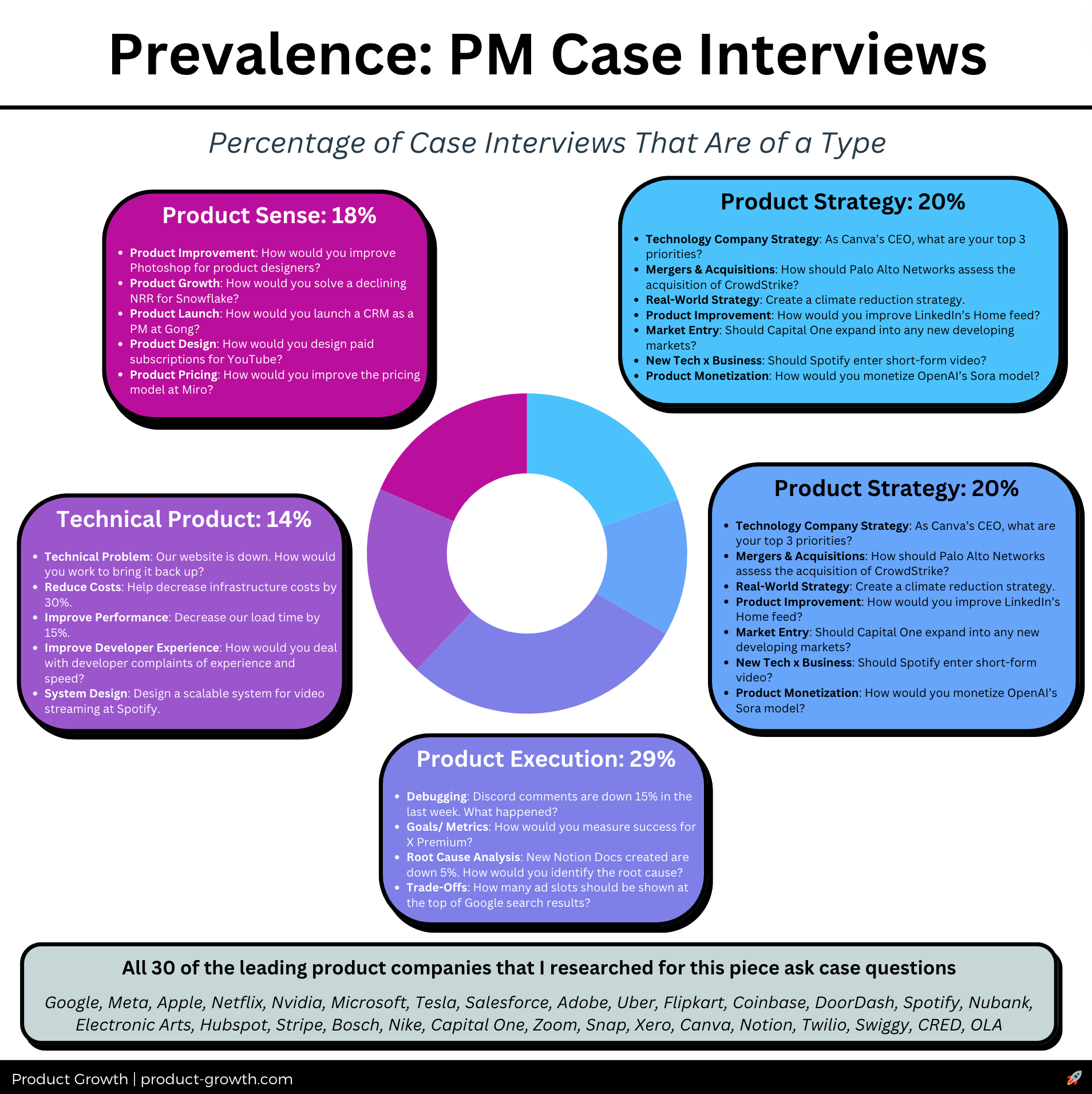
I researched 30 top tech companies’ PM interview processes. I couldn’t find a single one that doesn’t use case questions. Some may not have a dedicated round focused to the case, but they all ask case questions. Overall, there’s been a significant vibe shift in the past 10 years. In 2013, you might find in-demand candidates who dropped out of your process after learning of a case. Nowadays, everyone expects them. 1.3 The types of case interviewsThe types of cases that people rely most on are:
Here are the archetypal questions I’ve put in each category:
To get the most out of such questions, you need to have a very specific approach... Keep reading with a 7-day free trialSubscribe to Product Growth to keep reading this post and get 7 days of free access to the full post archives. A subscription gets you:
|





This week’s system design refresher: Top 9 Most Popular API Protocols (Youtube video) What is a deadlock? What’s the difference between Session-based authentication and JWTs? Top 6 ElasticSearch Use Cases Top 9 Cases Behind 100% CPU Usage SPONSOR US ͏ ͏ ͏ ͏ ͏ ͏ ͏ ͏ ͏ ͏ ͏ ͏ ͏ ͏ ͏ ͏ ͏ ͏ ͏ ͏ ͏ ͏ ͏ ͏ ͏ ͏ ͏ ͏ ...
Comments
Post a Comment