AI is probably the hottest sub-specialization within PM these days.
I was skeptical and had to investigate. The Data on the AI PM JobThere isn’t any perfect data, so I turned to what’s available. How many are there?Of the 37,915 PM jobs worldwide on LinkedIn, 929 of those jobs are “AI” Product Manager job (2.4%). And they are from some of the most desirable employers: TikTok, Tinder, Databricks, Google, Nvidia, AMD… How does this compare to other specializations?
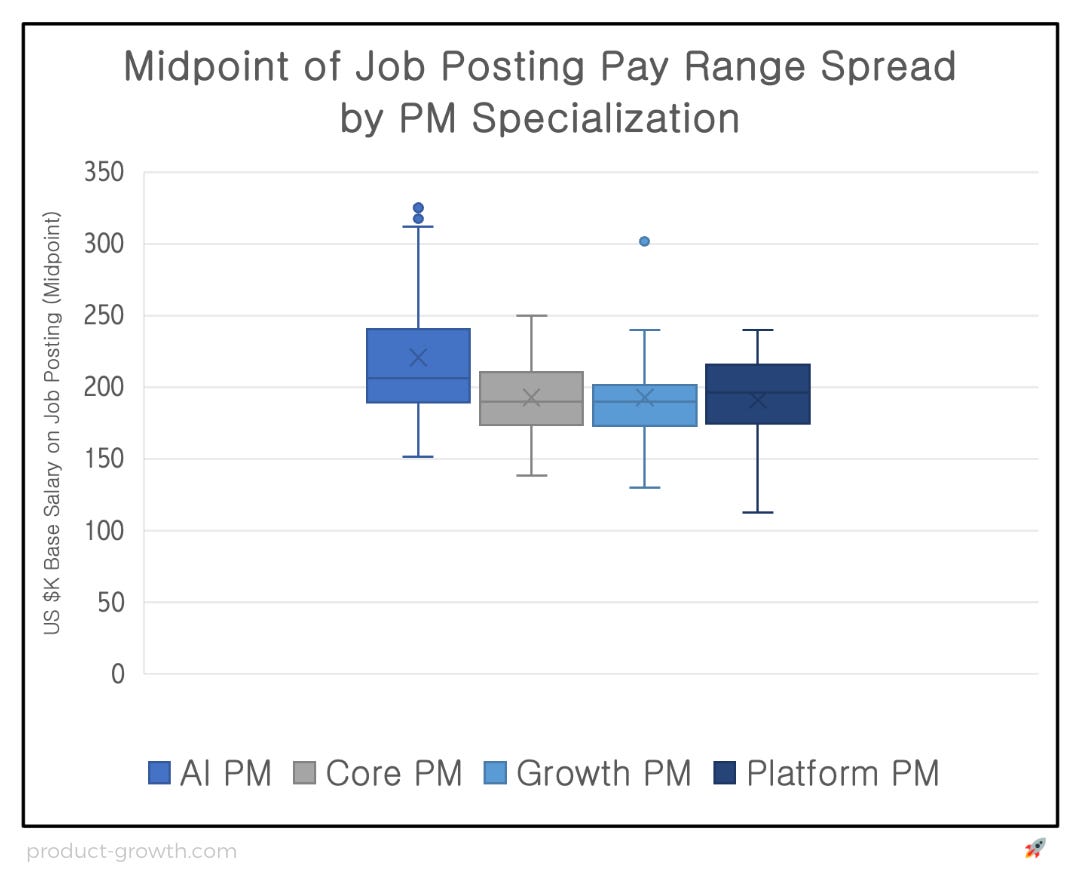
So it does seem: AI PM has firmly established itself as a real specialization. It’s already bigger than platform PM, and comparable to growth PM. And how does it pay?Again — there’s really limited data. So I took 50 job postings in each of the four main specializations to compare the stats¹:
The insight matches the anecdotes: AI PMs have a higher floor of pay, and a much higher ceiling. At the low end, 25th percentile, median, average (X), 75th percentile, and max, AI PMs earn more. Putting it All TogetherIn terms of “playing 3-D chess with your career,” moving into AI PM seems amongst the highest ROI moves.
But how do you actually break into AI PM? That’s where today’s post comes in. Introducing Marily NikaIf I had to think of the foremost experts in AI PM, I couldn’t do better than Marily.
Formerly an AI Product Lead at Google and AI PM at Meta, Marily has since helped 1000s of PMs with her AI PM courses on Maven (use code AAKASH10 for 10% off), her Substack, and her LinkedIn presence. So, I invited her to collaborate on this piece. And, lucky for us, she agreed. We’ve put our heads together to create the Ultimate Guide to becoming an AI PM. Today’s GuideWords: 5,956 | Est. Reading Time: 28 minutes
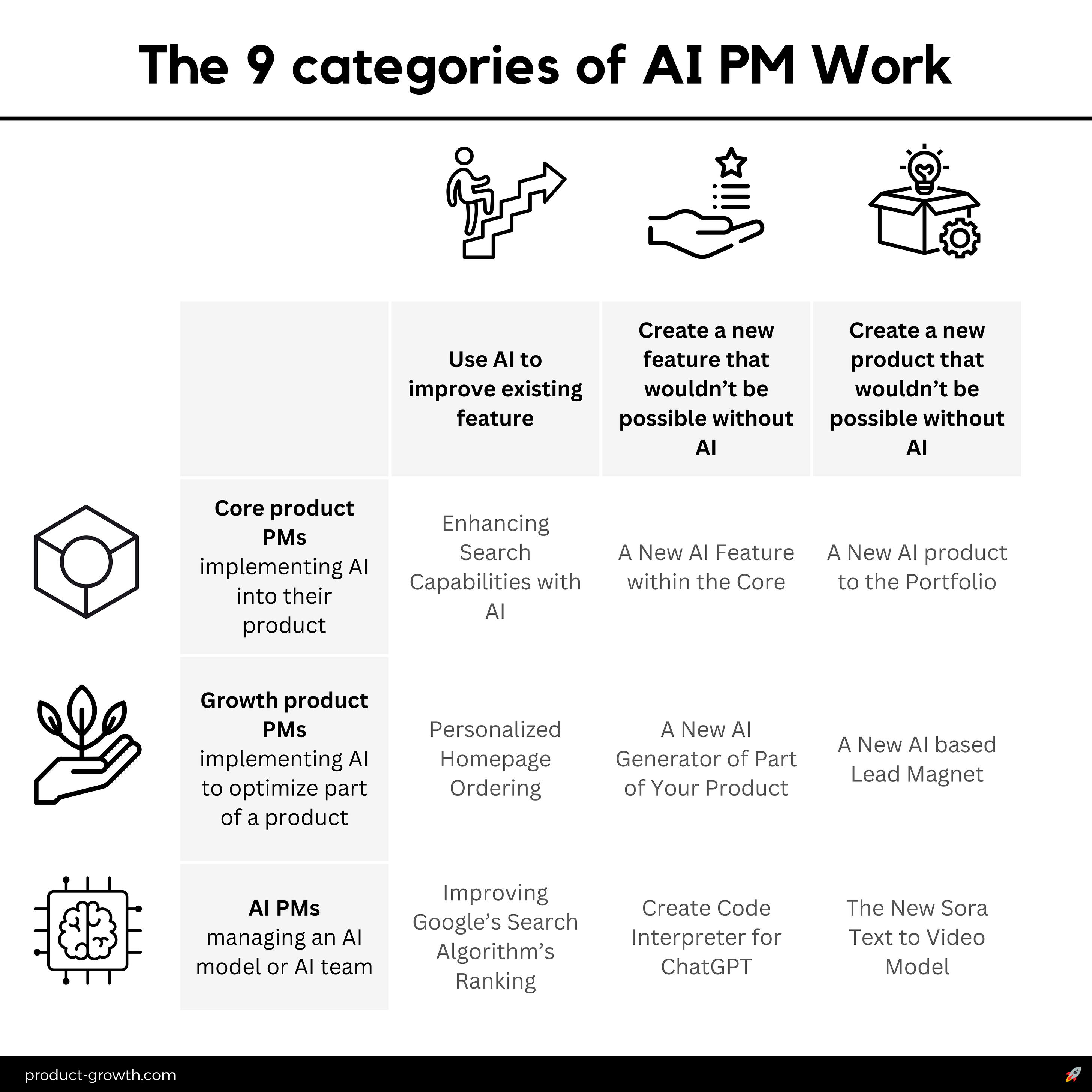
1. The different types of PMs doing AI workTaxonomy really helps to distinguish the different types of AI teams. And the first vectors to understand are: who is doing the work and what type of work is it? There are three main types of PMs building with AI:
Across all 3 sources, you can further classify 3 Levels of implementation of AI:
This generates a total of 9 categories of AI PM work. All 9 categories of work exist. But they’re vastly different in terms of skills required, compensation, and features built. Here what we mean by different work and features built:
Core and Growth PMs often use AI. But their whole job isn’t AI. It’s to use AI where it makes sense. On the other hand, AI PM’s job is entirely AI. So for the rest of this piece, when we’re talking about AI PMs, we’ll be talking about that bottom row. Functional ClassificationsWhen you dive deeper into AI PMs, as the org expands, it can grow into almost 11 functional focus areas they might be focused on:
Each of these PMs approach their job based on their own goals and surfaces areas. 2. Key differences between the AI PM and regular PM jobThere are 5 key differences to understand if you’re interested in making this transition:
Let’s go through each one-by-one... Keep reading with a 7-day free trialSubscribe to Product Growth to keep reading this post and get 7 days of free access to the full post archives. A subscription gets you:
|





This week’s system design refresher: Top 9 Most Popular API Protocols (Youtube video) What is a deadlock? What’s the difference between Session-based authentication and JWTs? Top 6 ElasticSearch Use Cases Top 9 Cases Behind 100% CPU Usage SPONSOR US ͏ ͏ ͏ ͏ ͏ ͏ ͏ ͏ ͏ ͏ ͏ ͏ ͏ ͏ ͏ ͏ ͏ ͏ ͏ ͏ ͏ ͏ ͏ ͏ ͏ ͏ ͏ ͏ ...
Comments
Post a Comment