Addition by Subtraction: The Art of Killing FeaturesA Product Leader's Advanced Guide to Strategic Feature Sunsetting to maintain focus, enhance user experience, and drive strategic growth
Can you Marie Kondo your product? You might want to. If your product has been around for a few years, killing features might be the growth tactic missing in your current strategy.
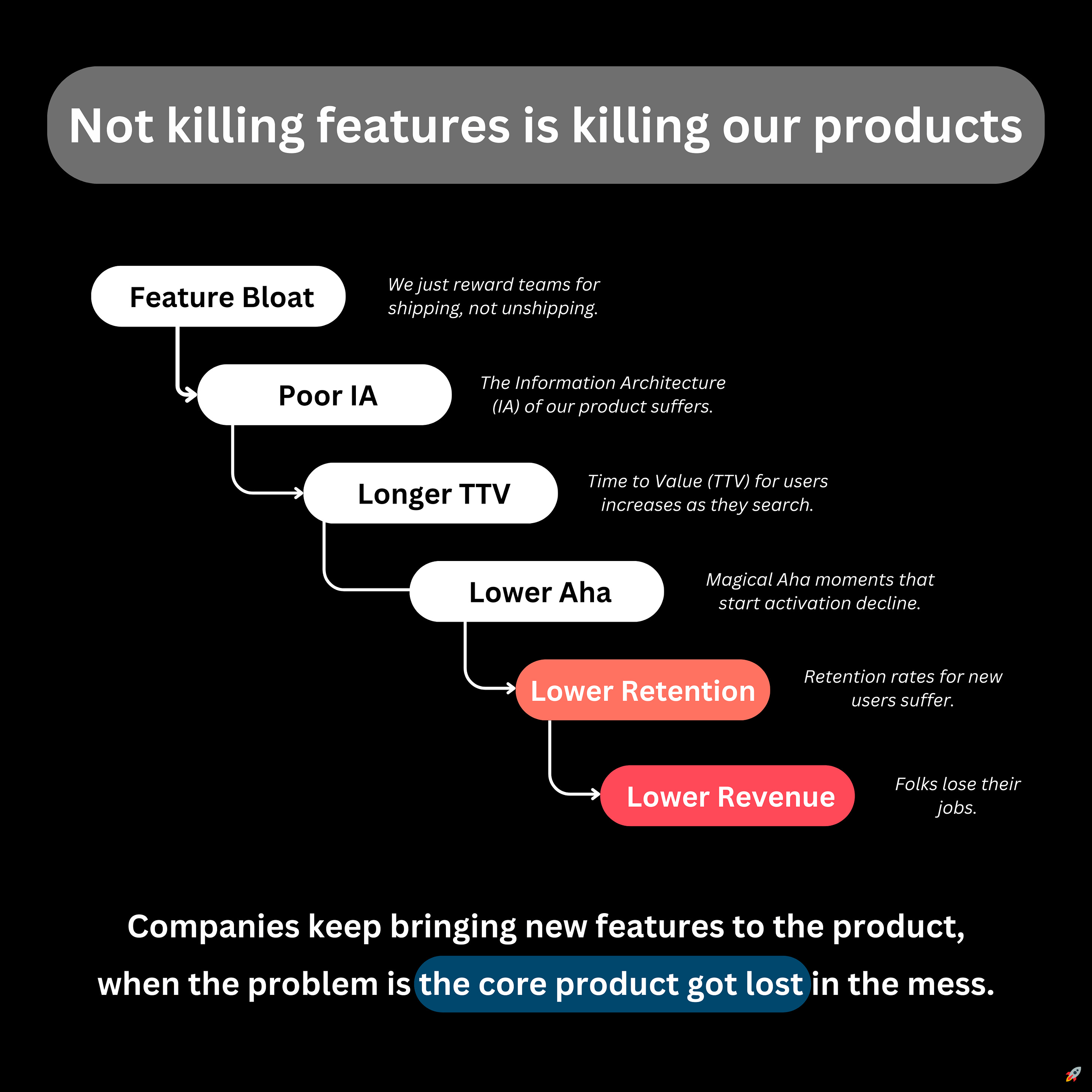
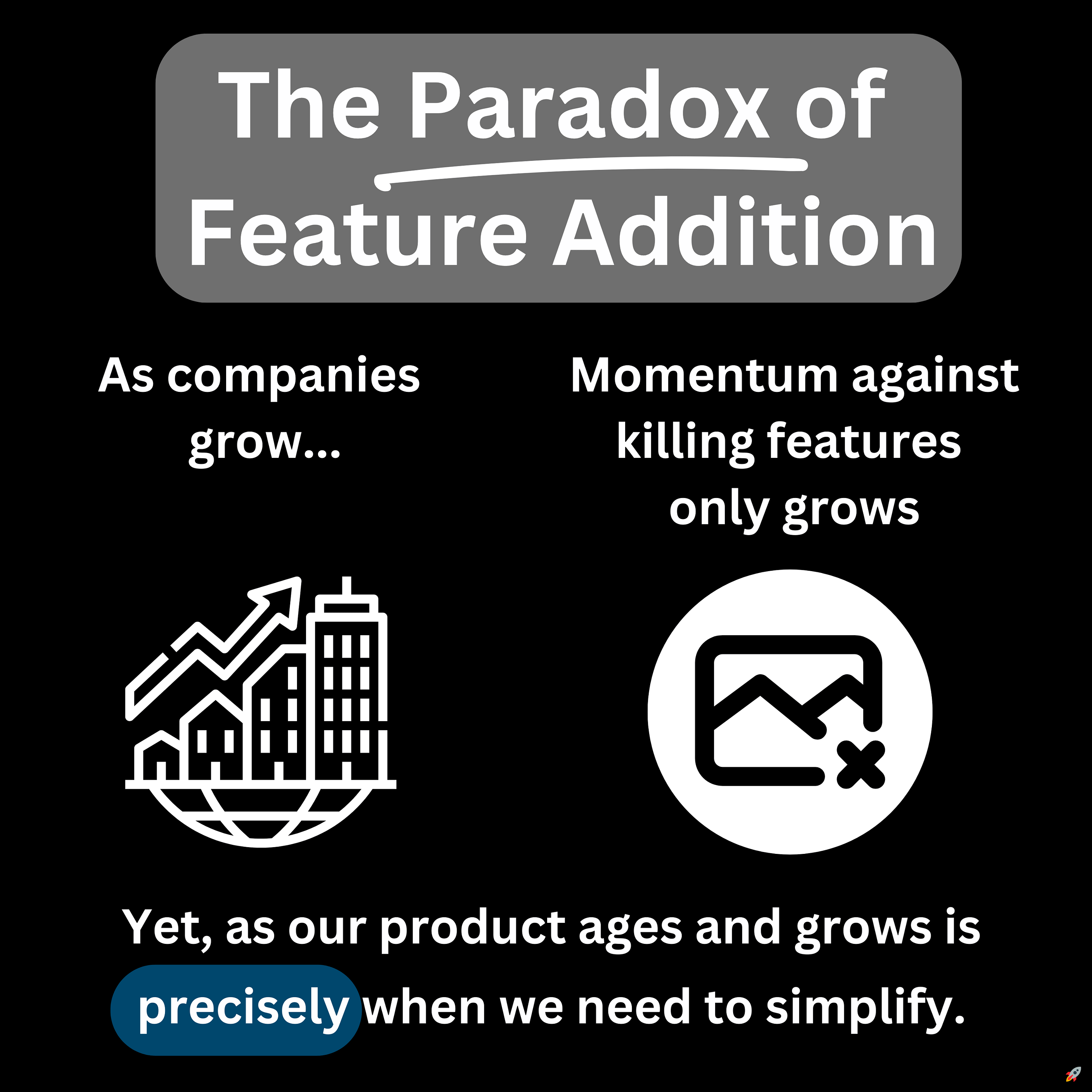
The Paradox of Feature AdditionIt’s generally the job of Product Managers, designers, and engineers to build new features. All the systems are set up to reward new feature launches.
Meanwhile, many times removing a feature can do more good than creating a new one. This is the paradox of feature addition. It’s more insidious than at first mention.
As our systems increasingly get built up to disincentivize feature deprecation is precisely when we need it most. 1. We begin to ship the org chart When we get big and complex, entire teams and functions are spun up against things that need to be killed. For instance, a marketplace team gets spun up in the business org—but what happens when you need to kill the marketplace feature? Managers begin to worry. “Without the feature, will my team be smaller?” So, they block the move. 2. We use our wealth to build things we don’t need to Most startups begin with a founder and some engineers, a designer. Then slowly, giant non-product organizations get spun up: Customer support, sales, marketing… They’re all essential. But each of these functions also generates product demands. This results in the development of:
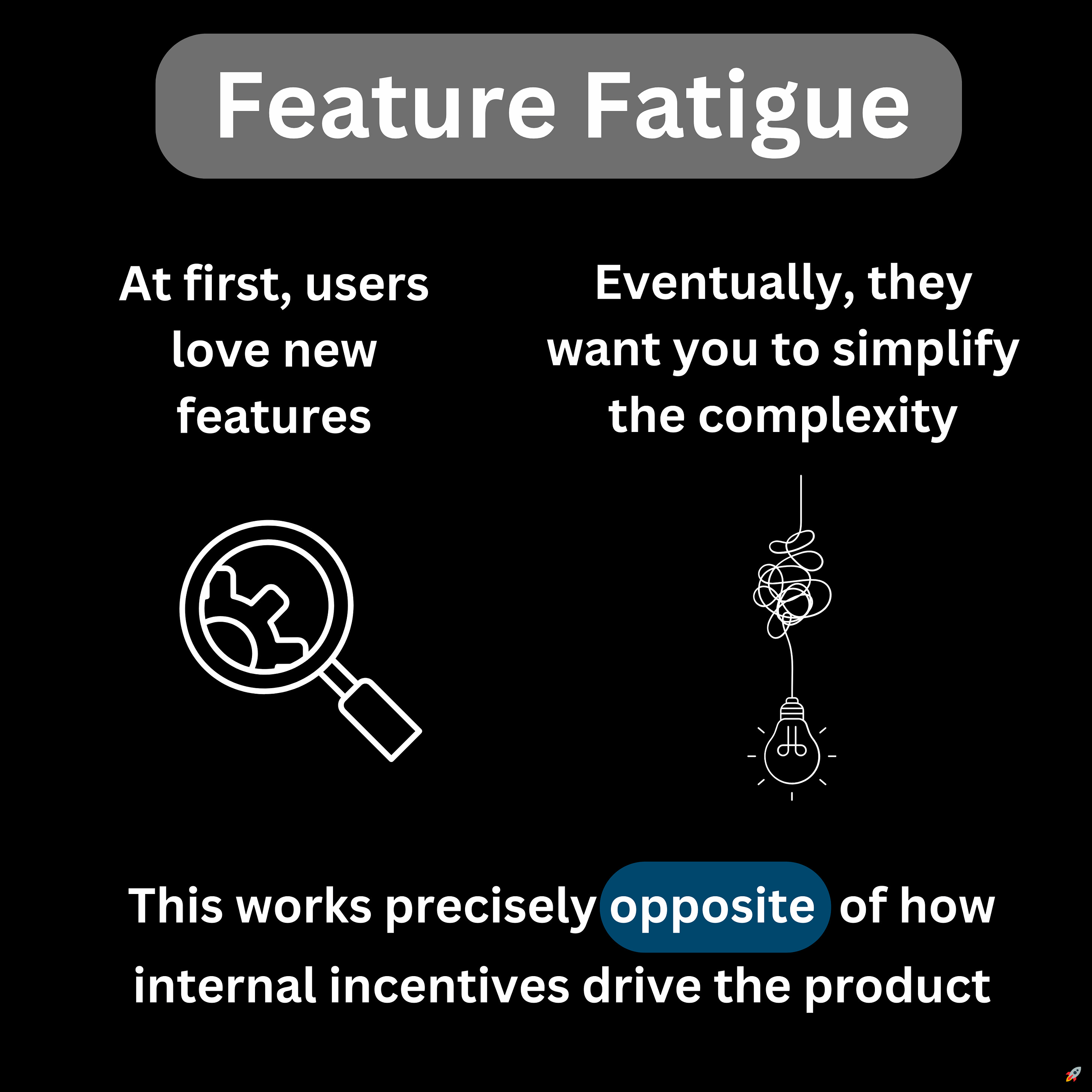
And it’s worse in big companies. The bigger these organizations get, the more they think the small feature for their niche is absolutely the most important thing in the world. Do you see it now? All the incentives in companies work against making good choices to kill features. The result is: we don’t actually every kill anything. Feature FatigueUsers just want a simple way to complete their job to be done. They don’t care about our feature announcement or our pop-up. Yes, even when it makes their life better. While product builders constantly have “shiny new feature syndrome,” users actually have feature fatigue.
You know this as a user. Those products that have just one feature that is incredibly to use? We love them. But the fact is: every feature past your first one complicates in the product. It’s in the data:
And so users slowly run away from adopting your latest new feature, and merely want to complete their original job to be done. While we PMs are continuously in a race to copy competitors and serve niche use cases, users are in a race to get their job done. This post was too long for e-mail. You may want to migrate to your browse: Good Product Strategy, Bad Product StrategyThis translates into what makes for a good product strategy. 1. Choice:
2. Problems:
3. Product features:
That’s why today’s post is so important. 99% of what’s written online is all about adding features. But it misses out on the key inverse: removing them. The Google Anti-PatternOf course — removing features is not easy. Over the past week, we’ve all gotten a masterclass in how not to kill products. Left and right, Google has been misstepping:
The market hasn’t reacted kindly to these misnaming kerfuffles. Google’s market cap has spiked downwards nearly 10% off all-time highs. Meanwhile, its big tech peers continue to power higher. You can’t pull a Google on users and expect them to not notice. That’s why you need a strategy and operating practice to kill features. Which brings us to today’s deep-dive. We’ll cover how to kill features with grace. Today’s PostWords: 8,316 | Est. Reading Time: 38 minutes
This post is for paid subscribers. You can unlock 1 post for free.A subscription gets you:
|





This week’s system design refresher: Top 9 Most Popular API Protocols (Youtube video) What is a deadlock? What’s the difference between Session-based authentication and JWTs? Top 6 ElasticSearch Use Cases Top 9 Cases Behind 100% CPU Usage SPONSOR US ͏ ͏ ͏ ͏ ͏ ͏ ͏ ͏ ͏ ͏ ͏ ͏ ͏ ͏ ͏ ͏ ͏ ͏ ͏ ͏ ͏ ͏ ͏ ͏ ͏ ͏ ͏ ͏ ...
Comments
Post a Comment