Crucial Conversations for PMs and Product Leaders: Advanced TechniquesThe key concepts + advanced extensions to engage in more important conversations that change your product's direction and enhance your impact as a leader
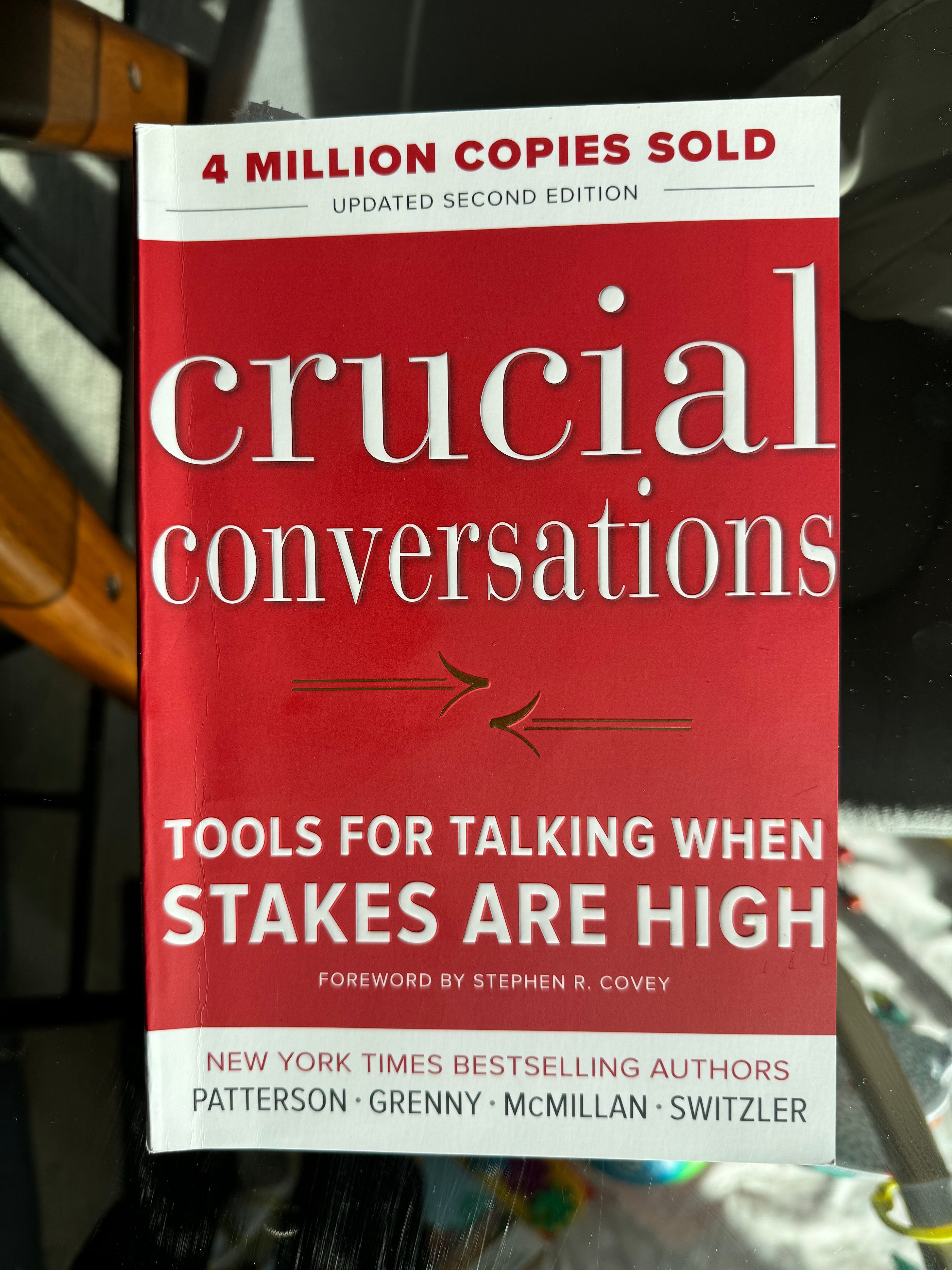
These are crucial conversations. And the best PMs don’t just write great PRDs and Roadmaps, they have crucial conversations. Along with saying no and politics, crucial conversations are amongst the most important soft skills for PMs. I’ve had to coach my fair share of PMs on these skills, as well as improve my own. I’ve been shaping - and re-shaping - my views over time. My favorite textI’ve now read a bunch of books and articles on the topic. Before writing this today’s deep dive, I returned to my favorite - this book:
I actually heard from two people in the last month that it was recommended to them. This post is an extension of the book for PMs, edited by my experience in the field. It’s meant to relive the concepts in a product context. Because crucial conversations are one of the most important soft skills for PMs, it also goes a step further. The book is without replacement. It’s more of an ‘experiential read’ anyways. So buy it. As humans, we erroneously deprioritize these “soft skills.” But, as the book says:
Today’s Roadmap
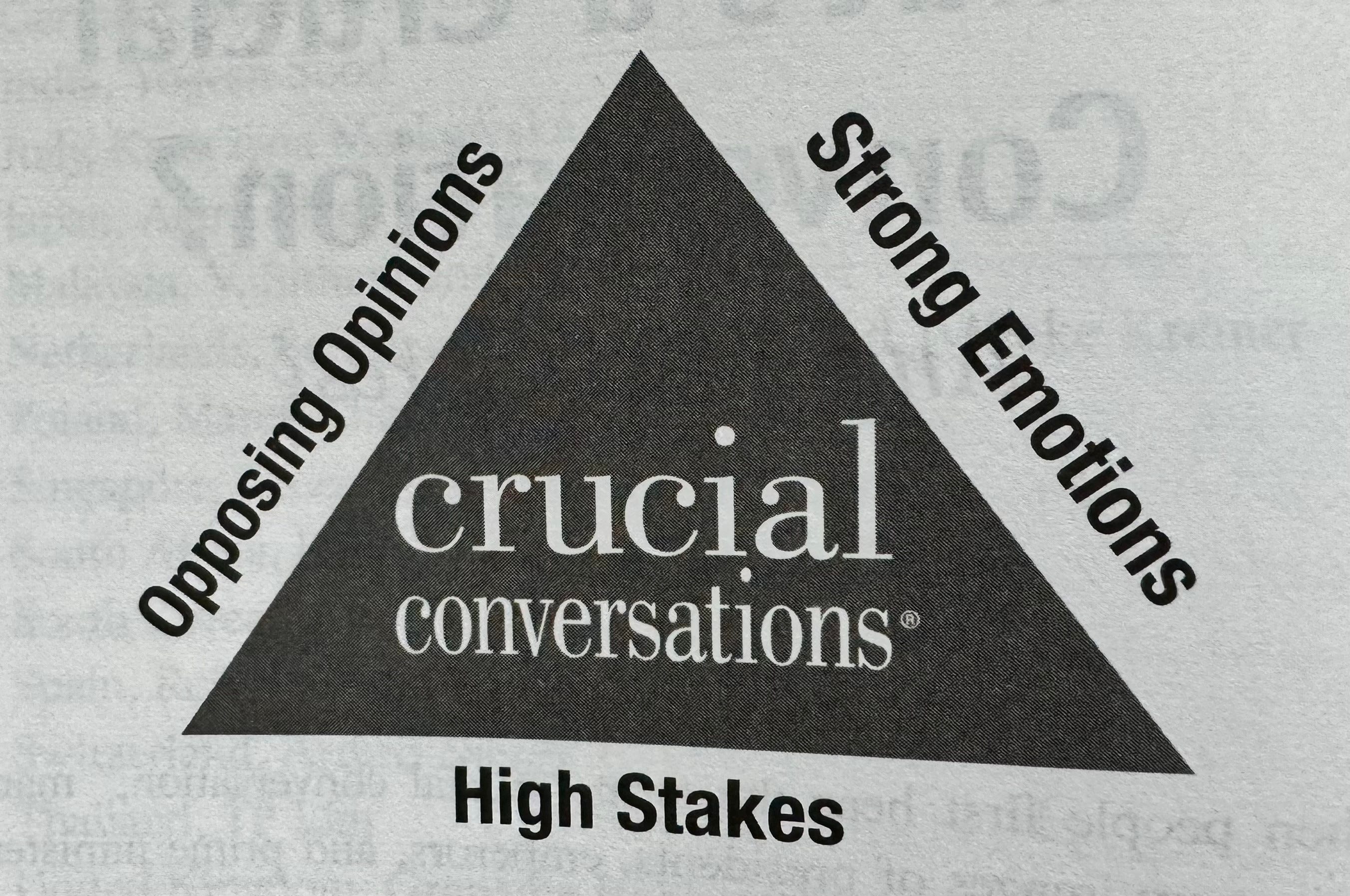
1. Top lessons from Crucial Conversations for PMs and Product LeadersLet’s cover the lessons that make the book my favorite before we go into the extensions. These are fundamental axioms for crucial conversations. We’ll apply them to product contexts. Lesson 1: It’s your job to have crucial conversationsCrucial conversations are those with opposing opinions, strong emotions, and high stakes.
The fact is: your job as a PM is, in part, to initiate the crucial conversations.
As the role on the product team that is most looked at to lead by influence instead of direct outputs, PMs have to often be the initiators of these conversations. The fact is: engineers and designers have other outputs they can point to for their success. The PM is most often left with the outcomes. If there’s some person or personality in the way of those outcomes, it’s up to the PM to tackle them:
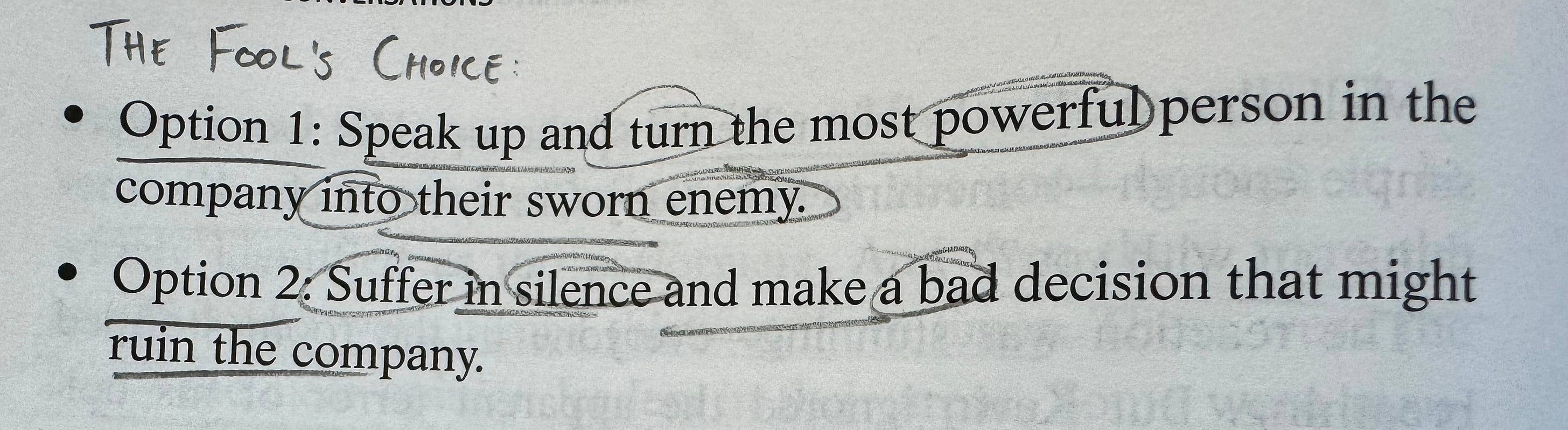
These aren’t optional for a PM to achieve outcomes, they’re required. (And by the end of this piece, we’ll have covered each.) Lesson 2: The Fool’s ChoiceYou’ve probably been in a situation like this yourself.
The room clearly disagrees with the leader, but the leader is not getting the message. At this point, most people give up. Because they all feel they are in The Fool’s Choice:
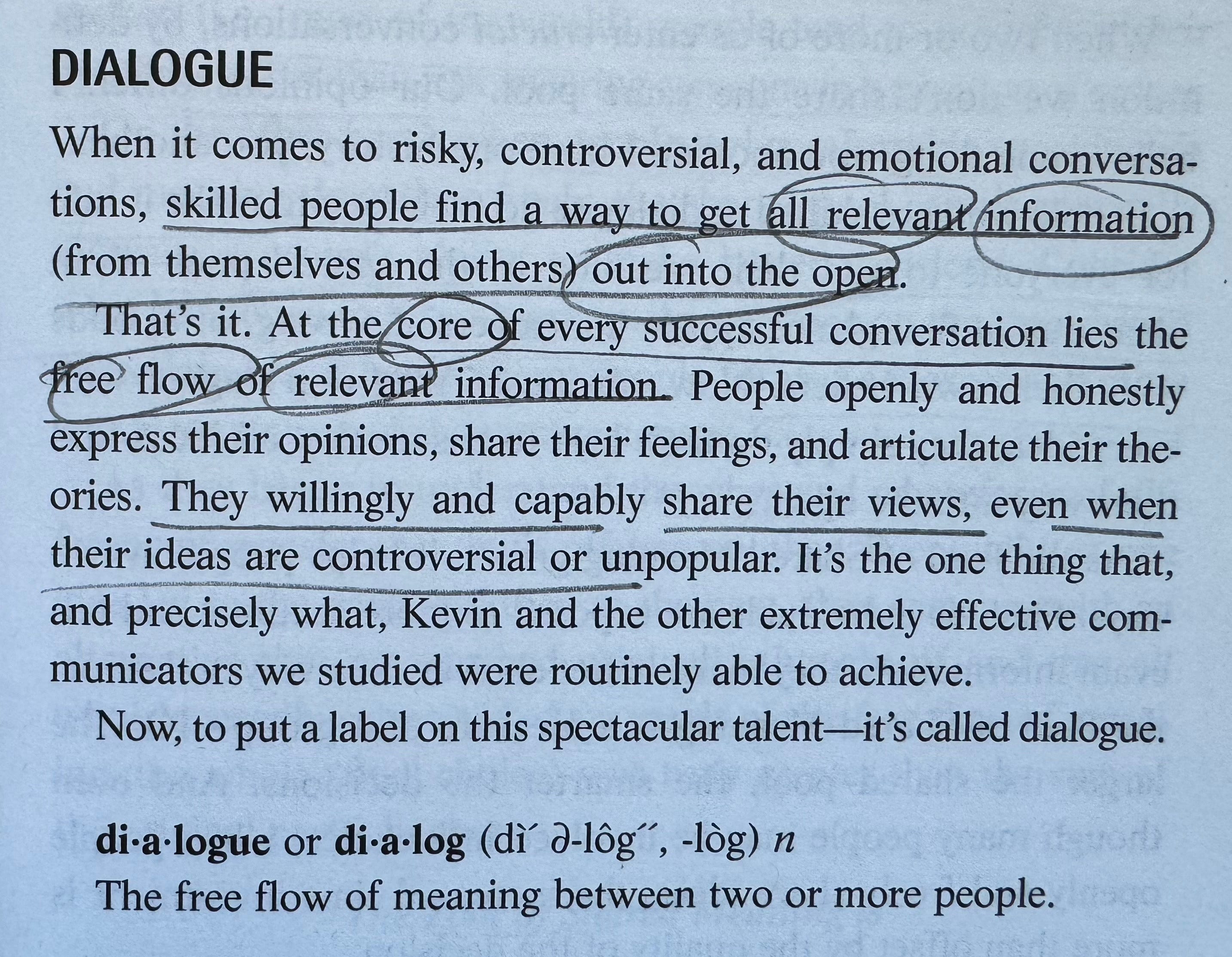
We believe that we could make an enemy of ourself with the CPO. So, we suffer in silence. But - in fact - there’s another way. It’s the way of dialogue. Lesson 3: DialogueThe core of successful crucial conversations is the free flow of meaning. This is the definition of dialogue:
In this case of the product team meeting, it’s up to you share your view, even though it might be unpopular to the CPO. It sounds like this:
This is adding to the free flow of meaning. The relevant information and reasoning for why to go over the prioritization reasoning has been stated - to propagate it to the broader org (and the meeting attendees). And it’s structured with an agreement to move the pace of the conversation forward. In many cases, at this point, the CPO may respond with realization:
How do I know this? I’ve been that PPM. At 7K words, this deep dive was a bit too long for e-mail: Lesson 4: We need to start with heart firstThe key in dialogue is, we need to start with heart. Let’s play out a different scenario.
At this point you have several options. You might respond with silence:
Or, worse, you might begin to respond with violence:
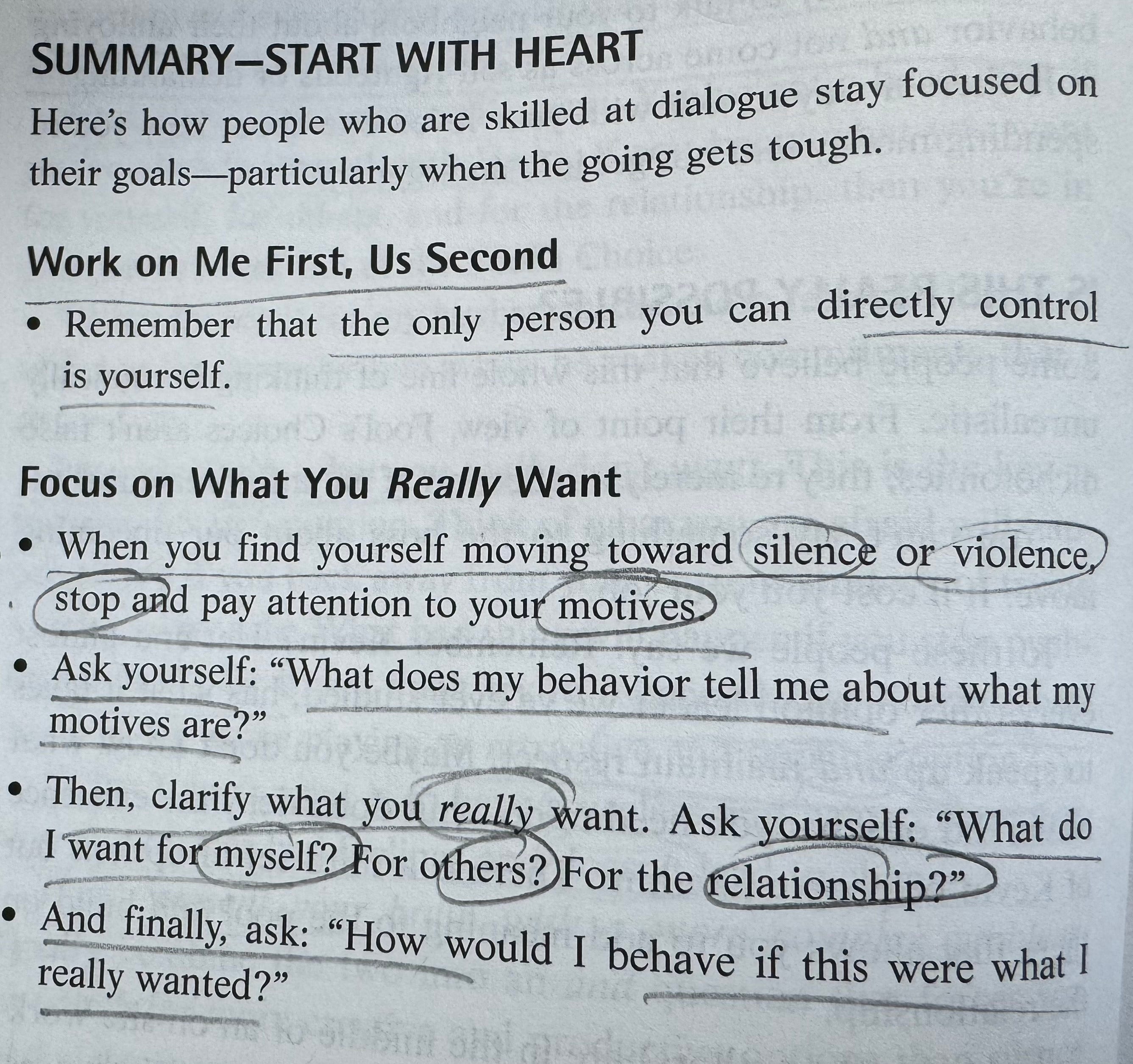
Either of these ways of responding are not to conductive to your case. It’s time to catch yourself and focus on what you really want:
Recognizing what you’re doing - silence or violence - is the first step. I’ve had direct reports respond with silence or violence. But I’ve also had some focus on what they really want - maybe even recover from silence or violence. For example:
The stating of facts focuses on the progress - and brings the manager (in that case, me) along. The quicker you can snap away from your bad conversational patterns, the better - which is our next lesson. Lesson 5: Play the game, don’t be playedYou have to act on emotions, not let them act on you:
Let’s take another example, this time as a product leader.
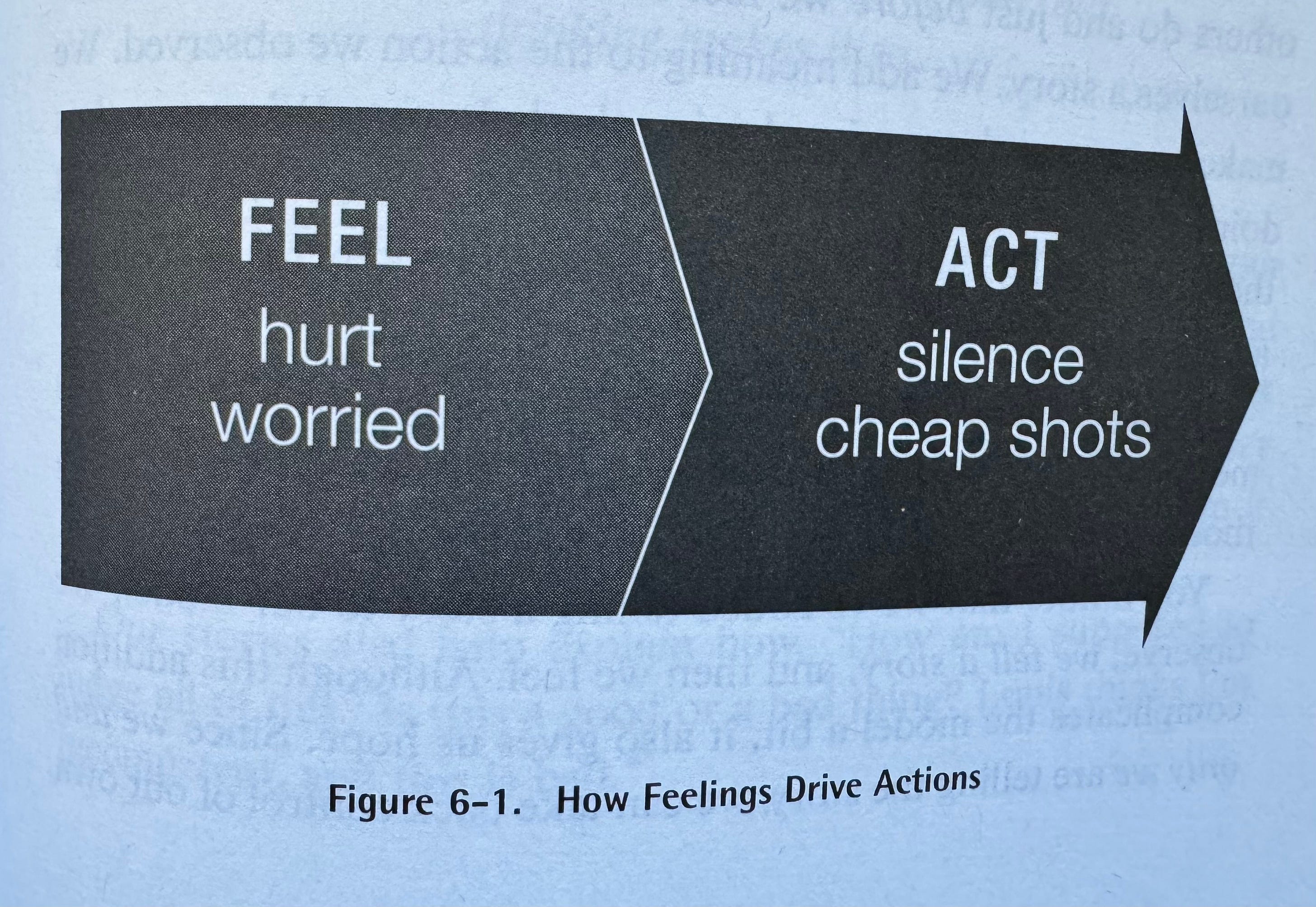
I’ve seen this happen. The product person falls of the rails at the end there, resorting to high-level attacks on another leader’s organization — something highly unlikely to be received well. What’s happened? You felt hurt, worried. This meeting was with the CEO. Then, at the end, the VP of Sales said something about the features taking a long time - and it set you off. This happens all too often to us. Feelings led us to act in silence or violence:
We need to regain control. Lesson 6: Retrace your path to regain emotional controlWe tend to lose control because we’ve told an entire story about a person or situation. In the case of the VP of Sales, you start to think something like:
It’s the storytelling that’s really at the center of the problem, not what the VP of Sales has said. There are three damaging stories we tell ourselves
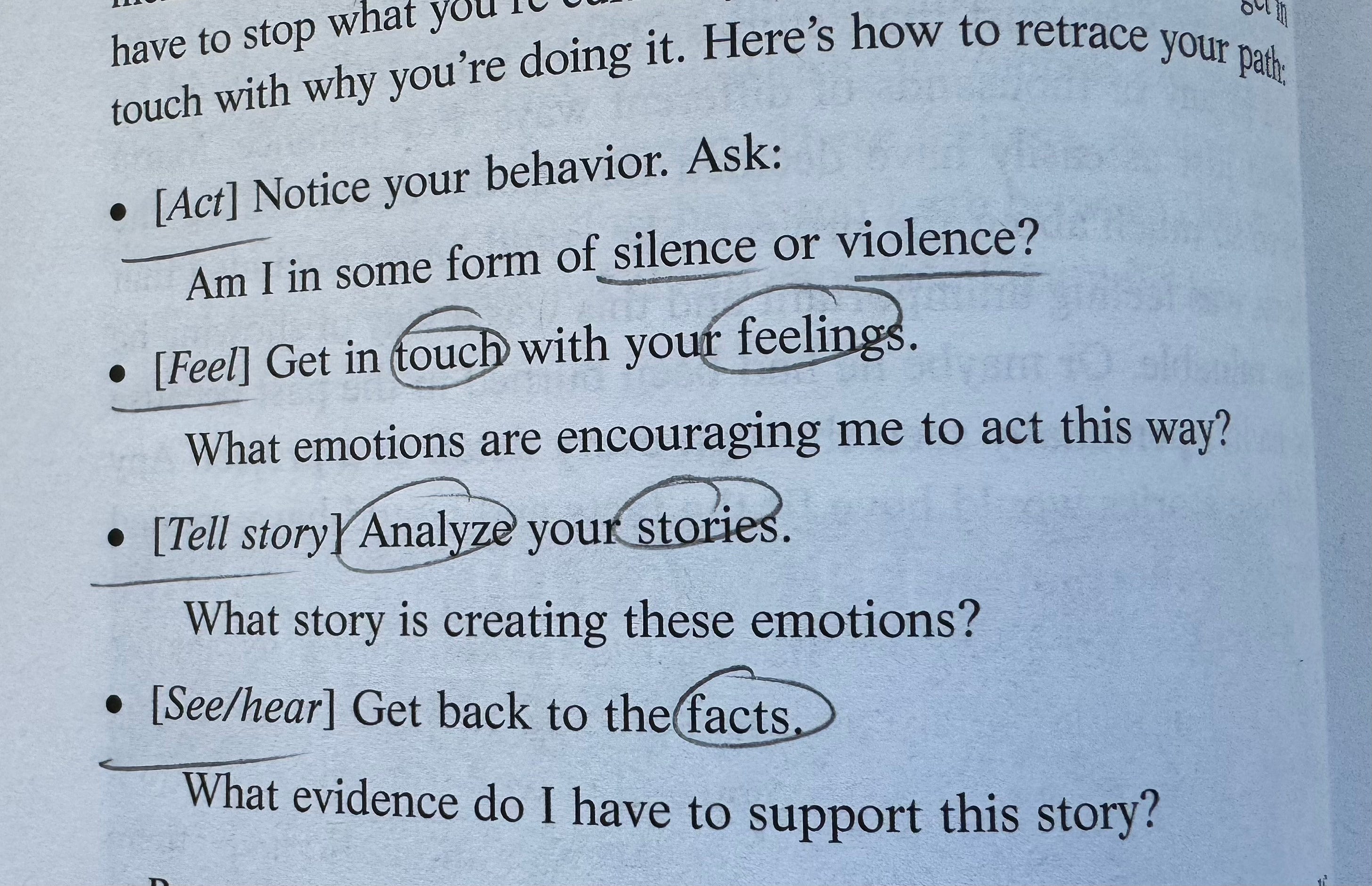
The key is to be able to identify them. The steps involved are:
It looks like this:
So - with our VP of Sales and CEO, let’s go through the steps.
It’s after catching ourselves, and then asking ourselves these questions, that we can return to the conversation and make it safe. Lesson 7: Make it safeNow that you’ve gone ahead and said negative things about the VP of Sales’ org, it’s time to make it safe again. The best in dialogue apologize when appropriate. Let’s say the conversation continues like this:
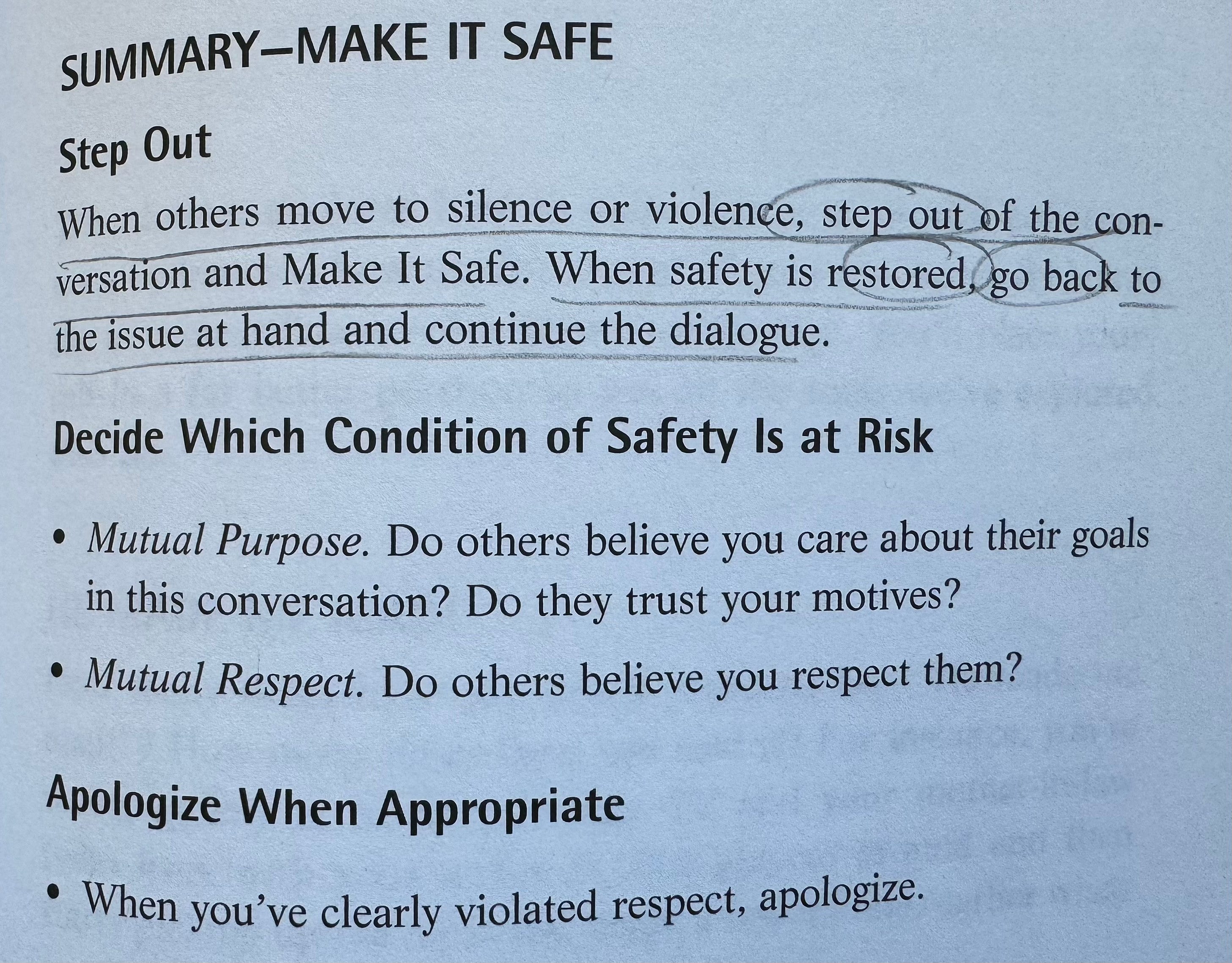
The CEO was responding and the VP of Sales even fell into violence after your violence. It’s not atypical. The solution is to: step out, decide which condition of safety is at risk, and apologize when appropriate.
Of course, apologies aren’t always the answer.
The trick is to decide whether mutual purpose or mutual respect is at risk.
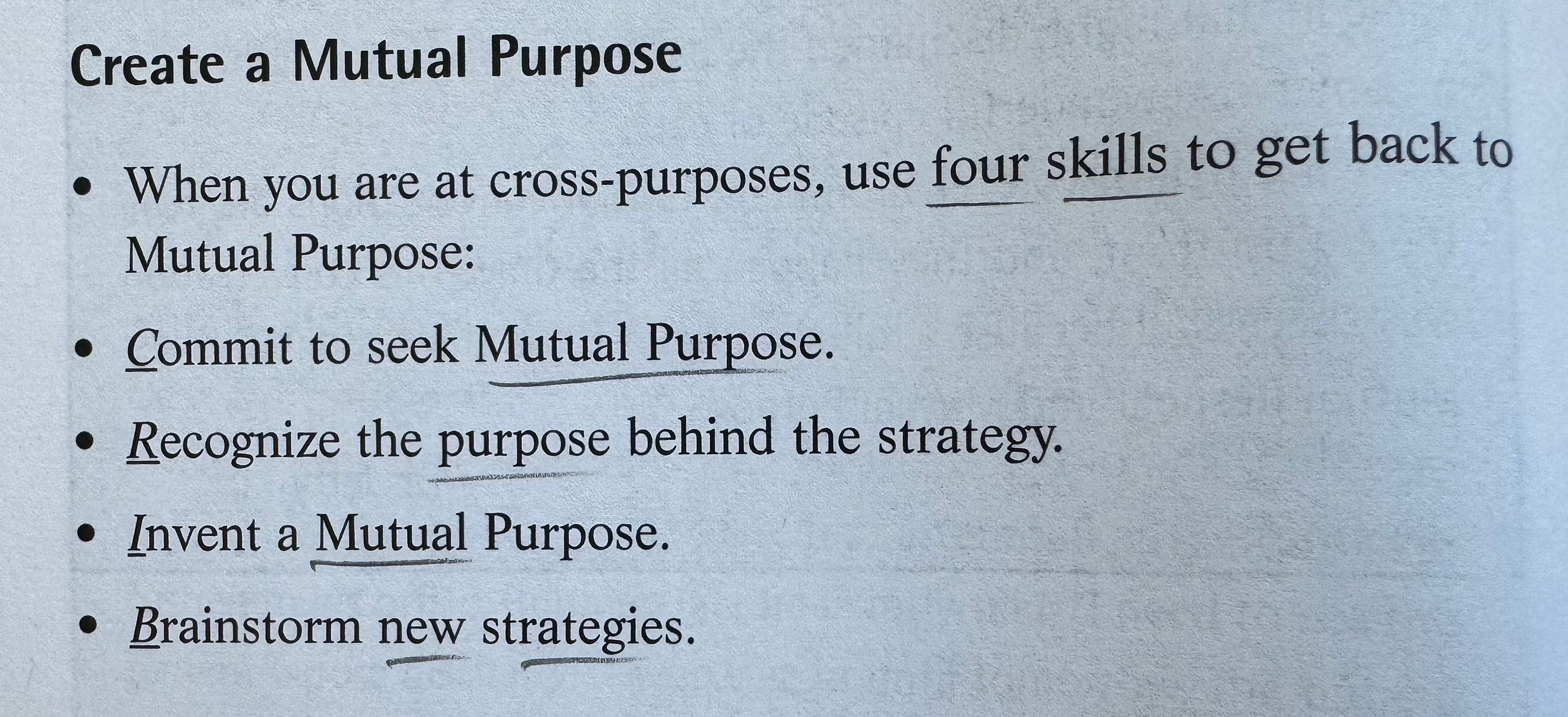
Here’s how… Lesson 8: CRIB to create mutual purposeLet’s shift gears to another scenario. You’re working with an underperforming engineering manager.
At this point, the engineering manager is beginning to lose the conversation. They may be descending. It’s time to create mutual purpose. This skill of managing others is critical in crucial conversations. And the antidote is to create a mutual purpose with CRIB:
Here’s what the thought process is like.
After the thought process, you’re ready to return to the conversation:
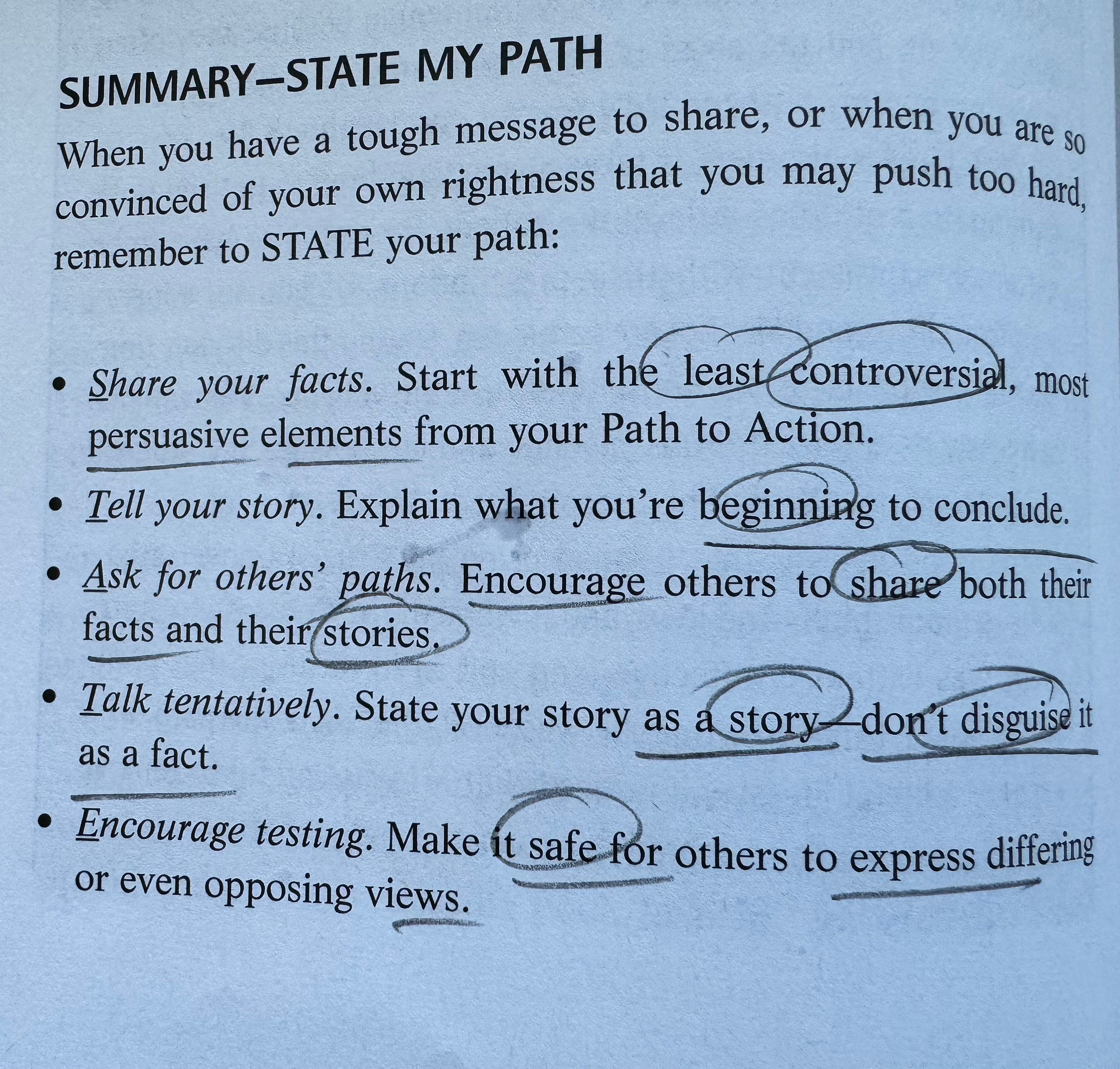
CRIB helps you bring others back to flow of meaning - by creating mutual purpose. Lesson 9: STATE your pathOne of the hardest part of these conversations is knowing what framework to use for them. The framework is STATE:
Let’s take the example of a product leader who wants to work with a VP of engineering on the culture. Here’s the STATE method in action:
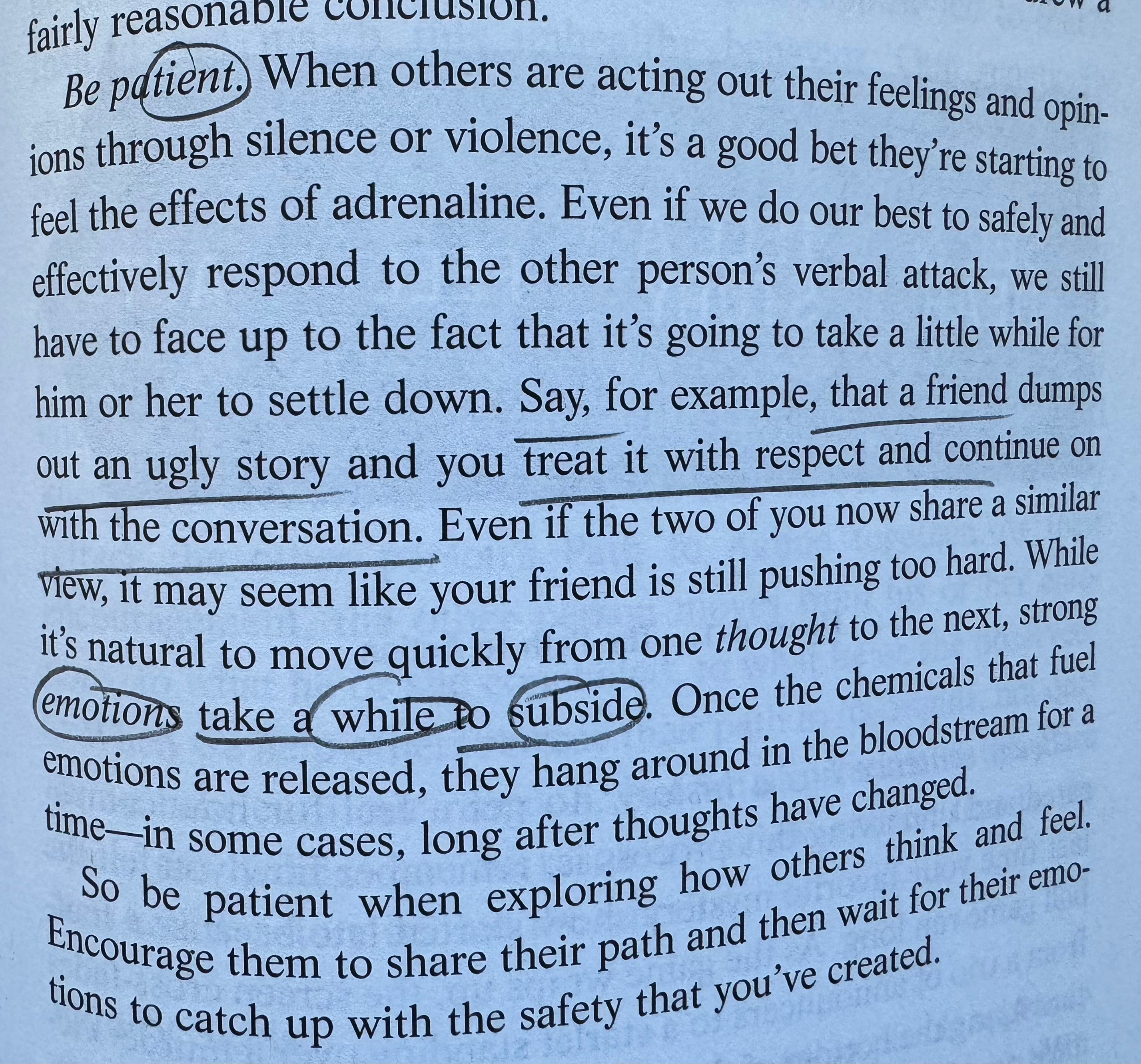
The VP of Product shared their facts, told their story, asked for the VP of Eng’s path, talked tentatively, and encouraged testing. When you go through STATE, it makes influence much more approachable as a product person. Instead of complaining about the engineering culture at your company, you go change it. That’s why the skill is so highly valued in PMs. Lesson 10: Be patientThe final lesson is to not always expect the resolution to go as fast as some of these examples. Let’s pretend we’re sharing feedback with a researcher on the timelines of their work.
You don’t want to expect them to just have moved on. It takes some massaging after delivering feedback if someone really is vulnerable and shares they are struggling. You need patience in these conversations before moving on to the next thing.
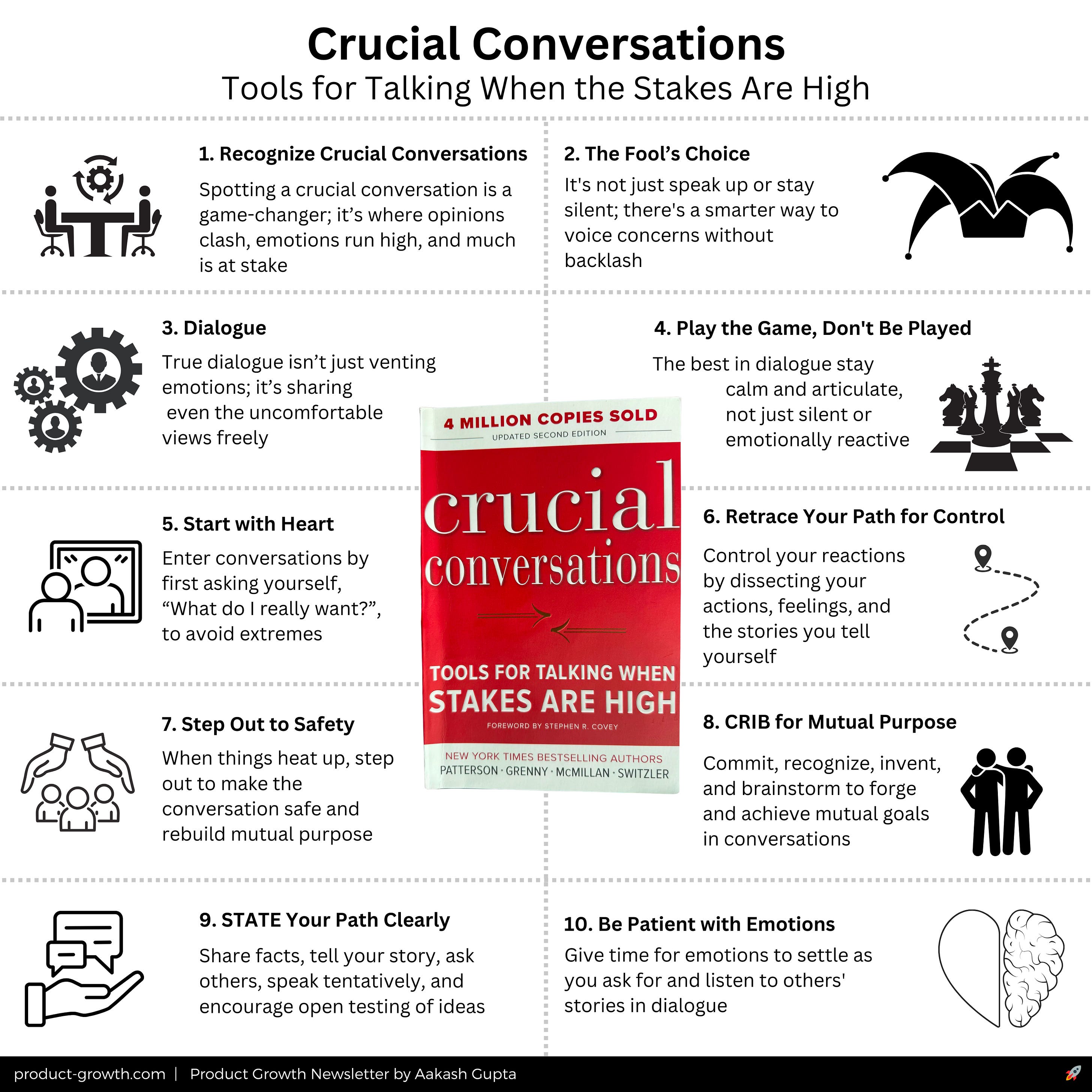
Patience is like the magic pill for these conversations. Space allows time to pass, emotions to subside, and stories to lose their pull. It all works together. Summarizing All 10 Lessons
2. Advanced Crucial Conversations for Product People - 10 Extensions of the BookThose are the axioms of crucial conversations, the things you know but are useful to turn into principles. Now let’s get into my meditations applying this stuff in a product career. ... Keep reading with a 7-day free trialSubscribe to Product Growth to keep reading this post and get 7 days of free access to the full post archives. A subscription gets you:
|





This week’s system design refresher: Top 9 Most Popular API Protocols (Youtube video) What is a deadlock? What’s the difference between Session-based authentication and JWTs? Top 6 ElasticSearch Use Cases Top 9 Cases Behind 100% CPU Usage SPONSOR US ͏ ͏ ͏ ͏ ͏ ͏ ͏ ͏ ͏ ͏ ͏ ͏ ͏ ͏ ͏ ͏ ͏ ͏ ͏ ͏ ͏ ͏ ͏ ͏ ͏ ͏ ͏ ͏ ...
Comments
Post a Comment