Let’s be real: 95% of the PM day doesn’t require technical knowledge.
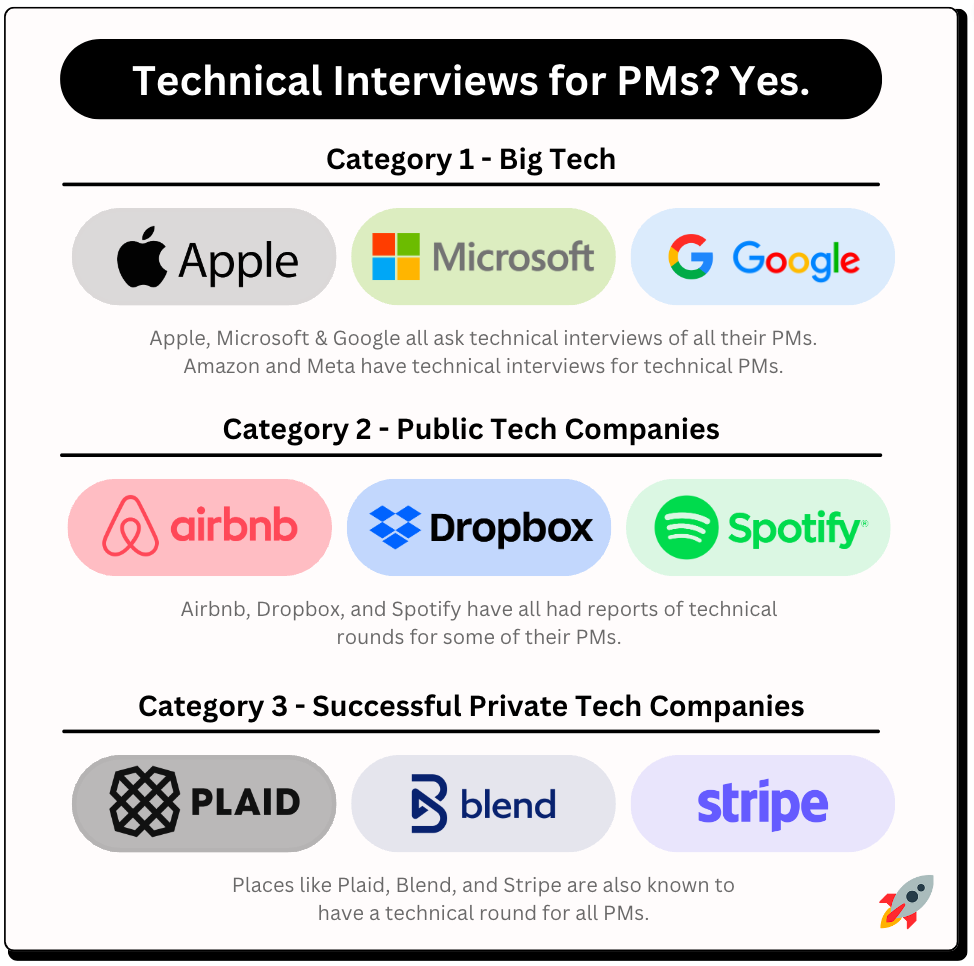
So you might find it surprising that one of the most common reason companies like Google, Stripe, and Amazon reject PMs is the technical interview. This is the weekly ‘Getting a PM Job’ series. Once a week, we cover career related topics. You can manage your subscription to only receive the product content here. Who uses the technical interviewYou can’t ignore technical skills if you are a PM ever looking to job search again. The technical interview is alive and well for PMs. Including at some of the highest paying, most sought after tech employers. It actually surprised me once I started doing the research and understanding the landscape.
They’re really everywhere:
So that goes to say, if you’re on the market, it’s worth spending some time on this question type. What they’re looking forThey’re not looking for you to be an engineer. But they want you to be able to talk to engineers. They’re not going to ask you complex Leetcode questions. But they are going to assess:
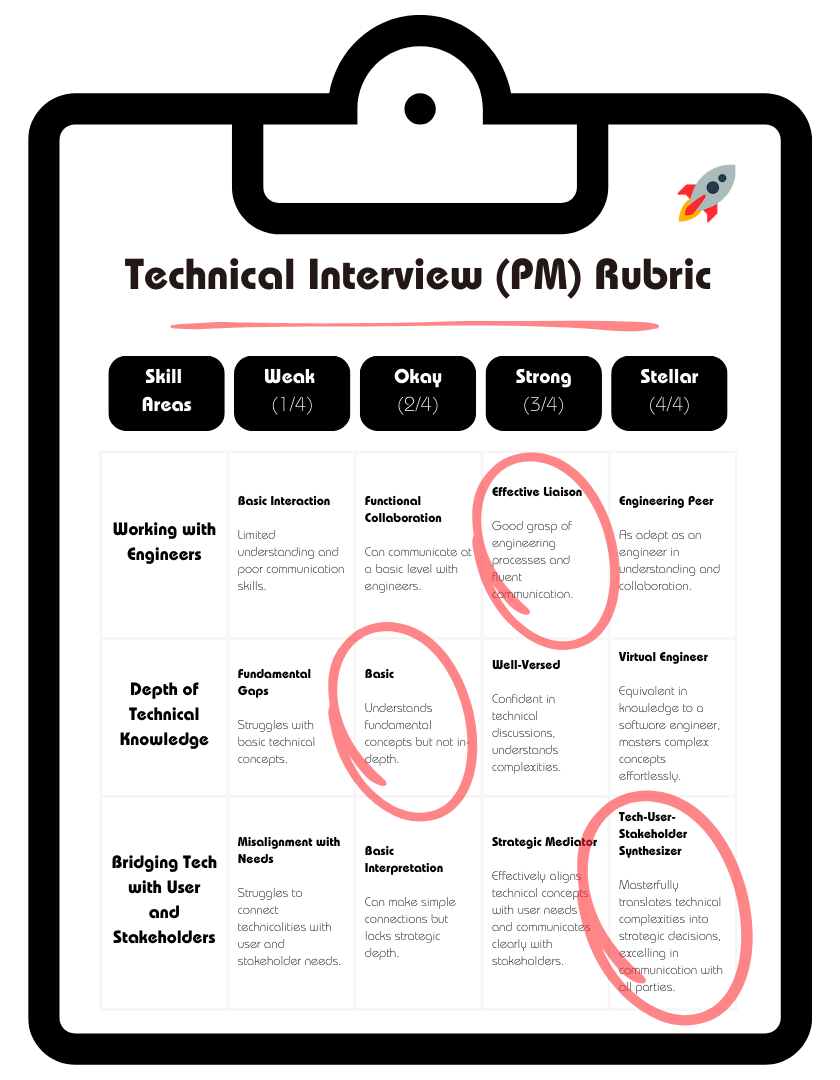
Rubric Area 1 - How you work with engineersIt’s a timeless PM skill. Do you know how to work with engineers? Interviewers tend to zone in on:
Some people test this with case too, but almost everyone tests this with behavioral questions. Rubric Area 2 - Depth of your technical knowledgeThe second thing interviewers are looking at is: what is the edge of your knowledge? Where does your technical knowledge end? So it’s all about understanding:
Rubric Area 3 - How you bridge technical concepts with the userInterviewers want to make sure you understood the technical concepts of how products are built: APIs, Databases, the internet’s infrastructure. The goal is to make sure you understand how those technicalities will influence the product experience for the users. So expect them to test:
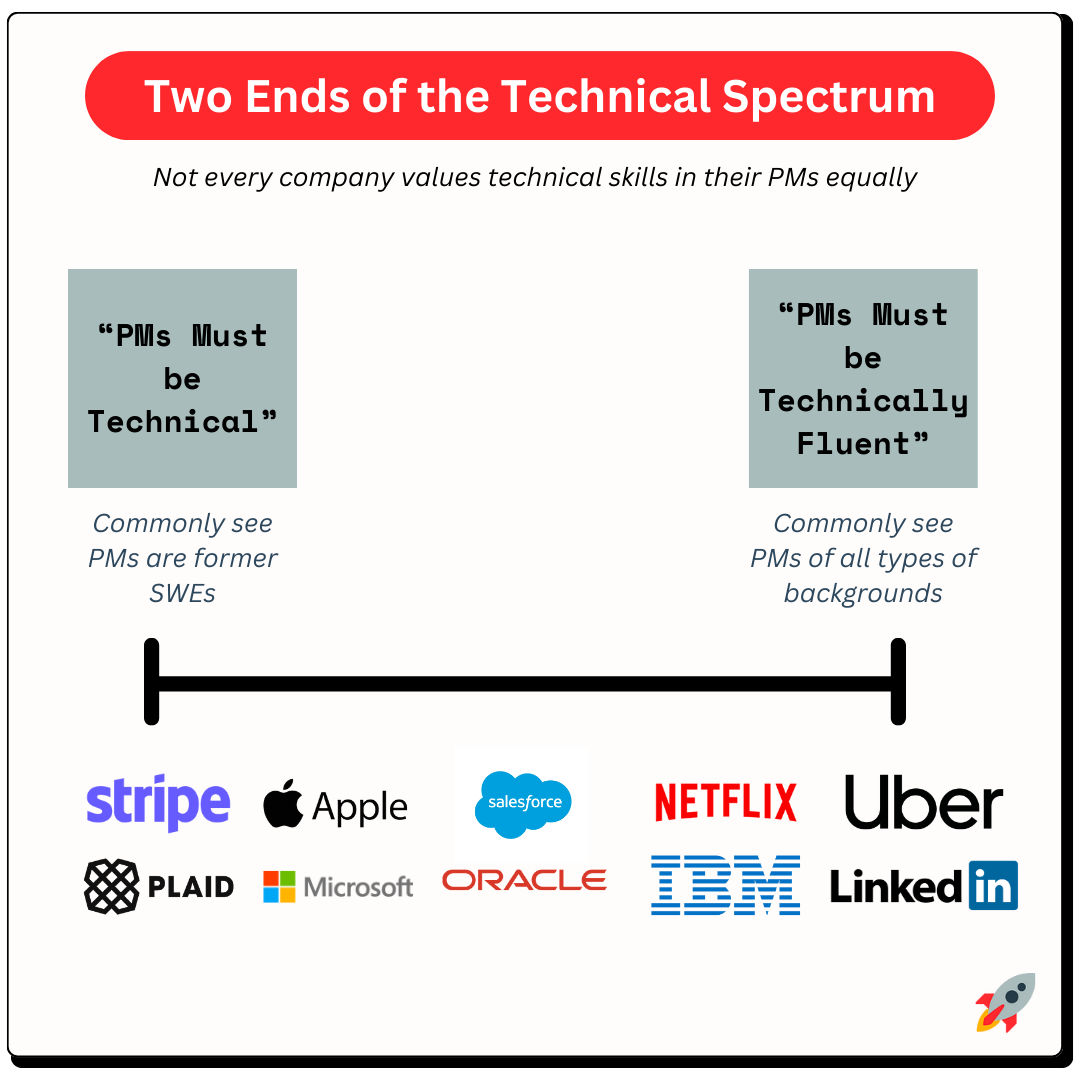
Differing Philosophies on TechnicalityThere’s two ends of the spectrum. On each end you have:
Both groups want to make sure you can architect a product. So it’s important to understand databases, how to handle multiple requests, how to scale products, how systems talk to each other, how to do things like storing large media files. Where PMs LandThese three rubric areas seem easy enough, right? Well - most people don’t do well on them. Very often, even great PMs get a rating something like this:
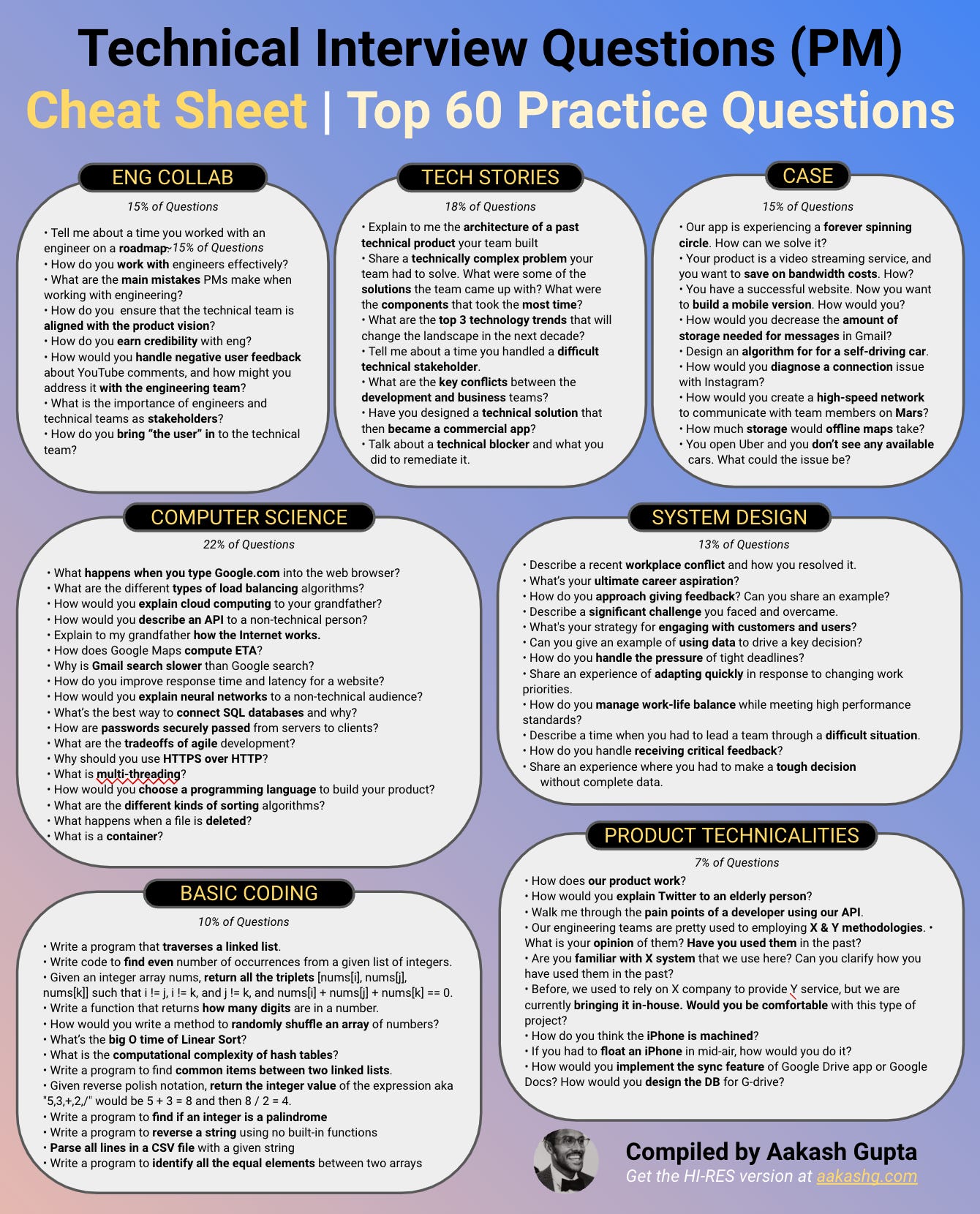
That’s why today’s piece exists. Let’s cover the questions you’re likely to see and the knowledge you need. The Most Common QuestionsThere are a 7 major technical categories of questions you should be aware of:
These are the most common questions across them:
I’ll admit, just collecting all these questions made my palms sweat… These are tough! Today’s Deep DiveI wanted to create the resource I wanted before all of my technical interviews. So we’re going to peel back several layers of the onion today:
At over 10K words, it’s the web’s deepest dive into the technical interview for PMs yet… ... Keep reading with a 7-day free trialSubscribe to Product Growth to keep reading this post and get 7 days of free access to the full post archives. A subscription gets you:
|





This week’s system design refresher: Top 9 Most Popular API Protocols (Youtube video) What is a deadlock? What’s the difference between Session-based authentication and JWTs? Top 6 ElasticSearch Use Cases Top 9 Cases Behind 100% CPU Usage SPONSOR US ͏ ͏ ͏ ͏ ͏ ͏ ͏ ͏ ͏ ͏ ͏ ͏ ͏ ͏ ͏ ͏ ͏ ͏ ͏ ͏ ͏ ͏ ͏ ͏ ͏ ͏ ͏ ͏ ...
Comments
Post a Comment