I still remember my Google Product Strategy interview clear as day:
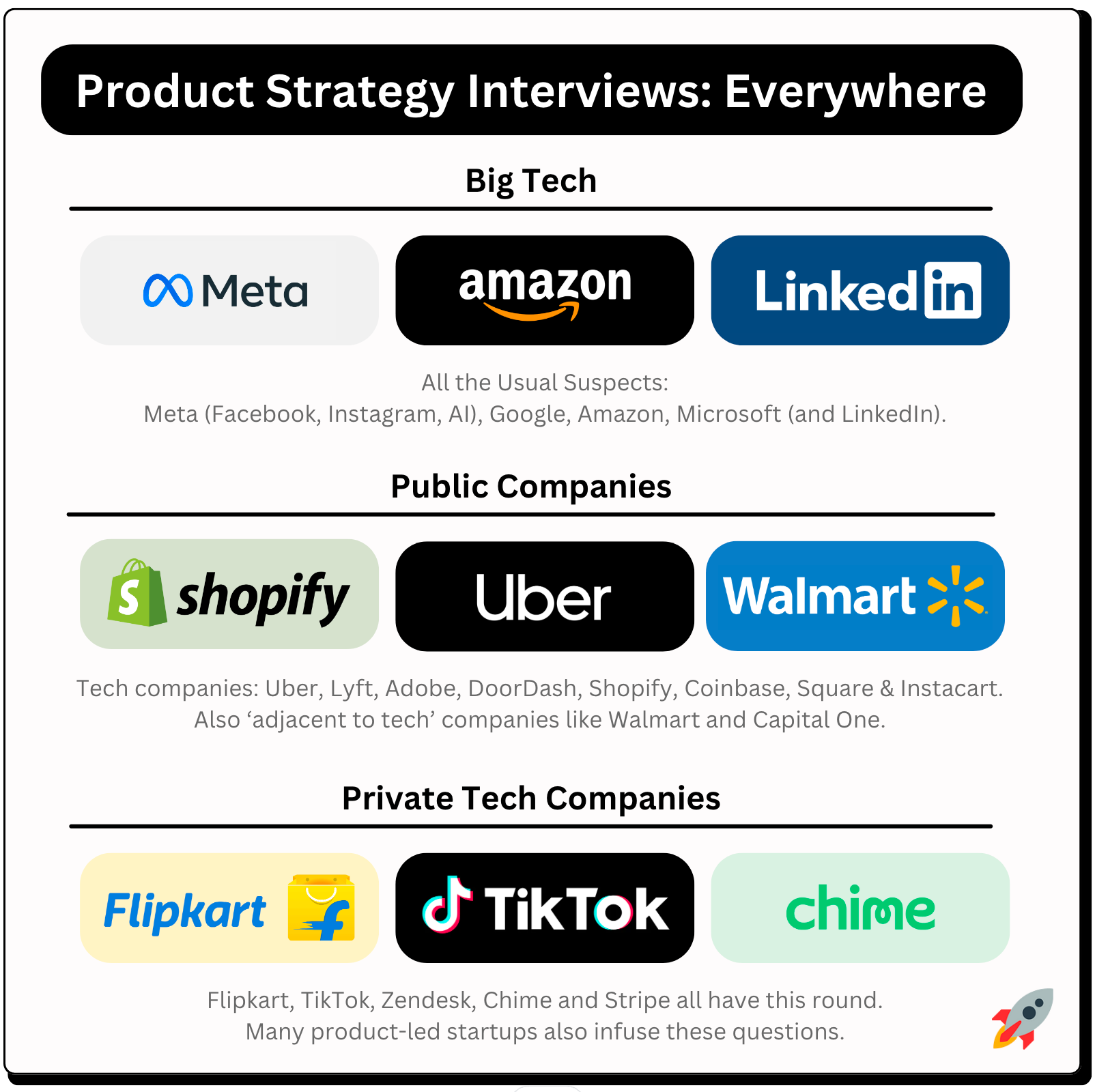
At first, I was scared. Don’t they have a whole team for that? Can I add value in a 30 minute case? But - I collected myself, built a custom framework, and aced the interview. It led me to the best “pure” PM job of my career. Now that Google has removed the technical interview from their PM interview (verified by team Google last week), the Product Strategy case has become even more important in determining whether you snag the PM job that $415K senior PM comp job. This is the weekly ‘Getting a PM Job’ column. You can also modify your preferences to only receive the Product Growth content here. Who Uses the Product Strategy Interview?It’s not just Google. Strategy is one of the most important elements of the PM job. As a result, all of these companies are known to have a Product Strategy round:
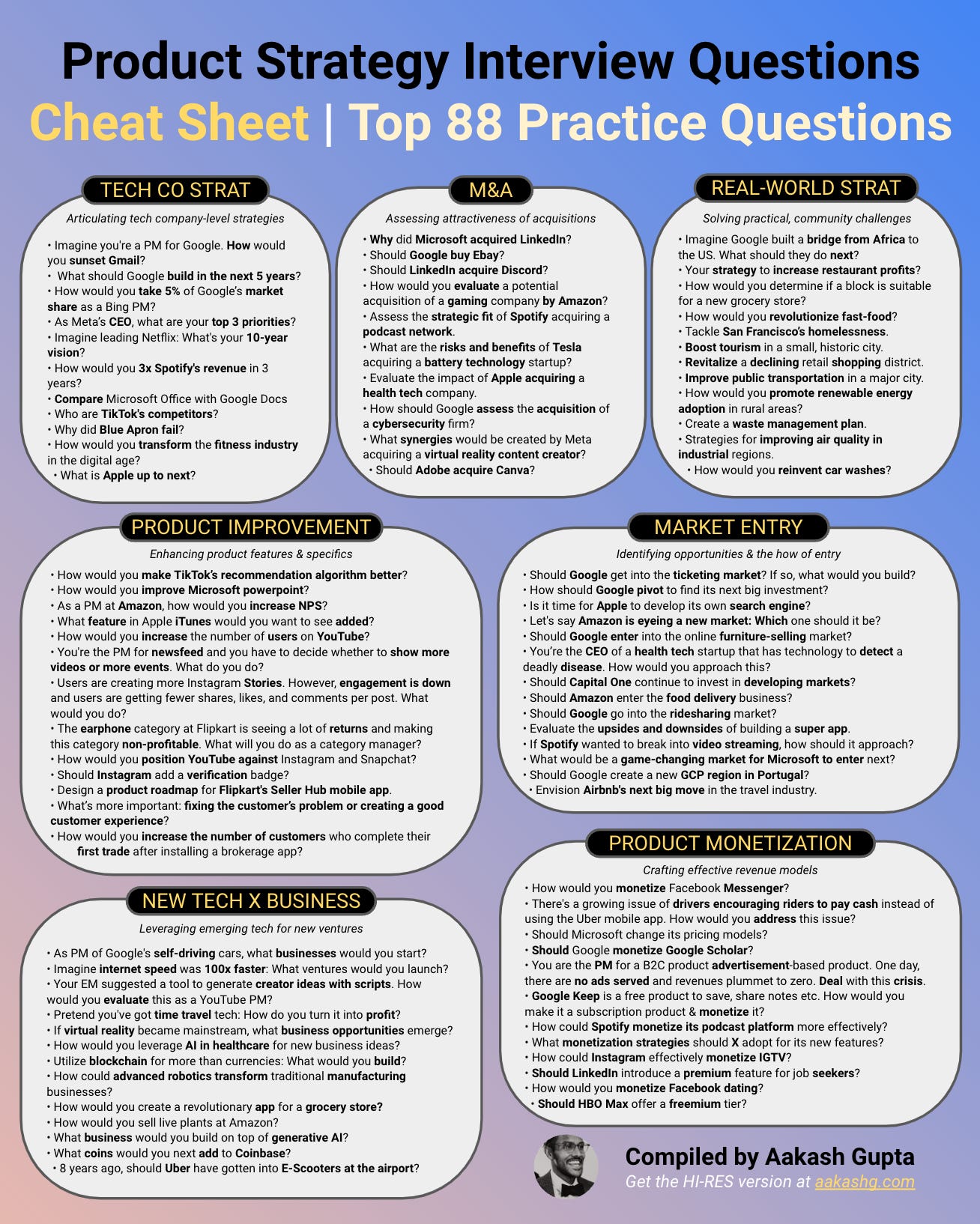
Of all the case types, this is probably the third most ubiquitous: What Questions Do They Ask?There are 7 major categories of questions you are likely to encounter. These are the most commonly asked questions in each:
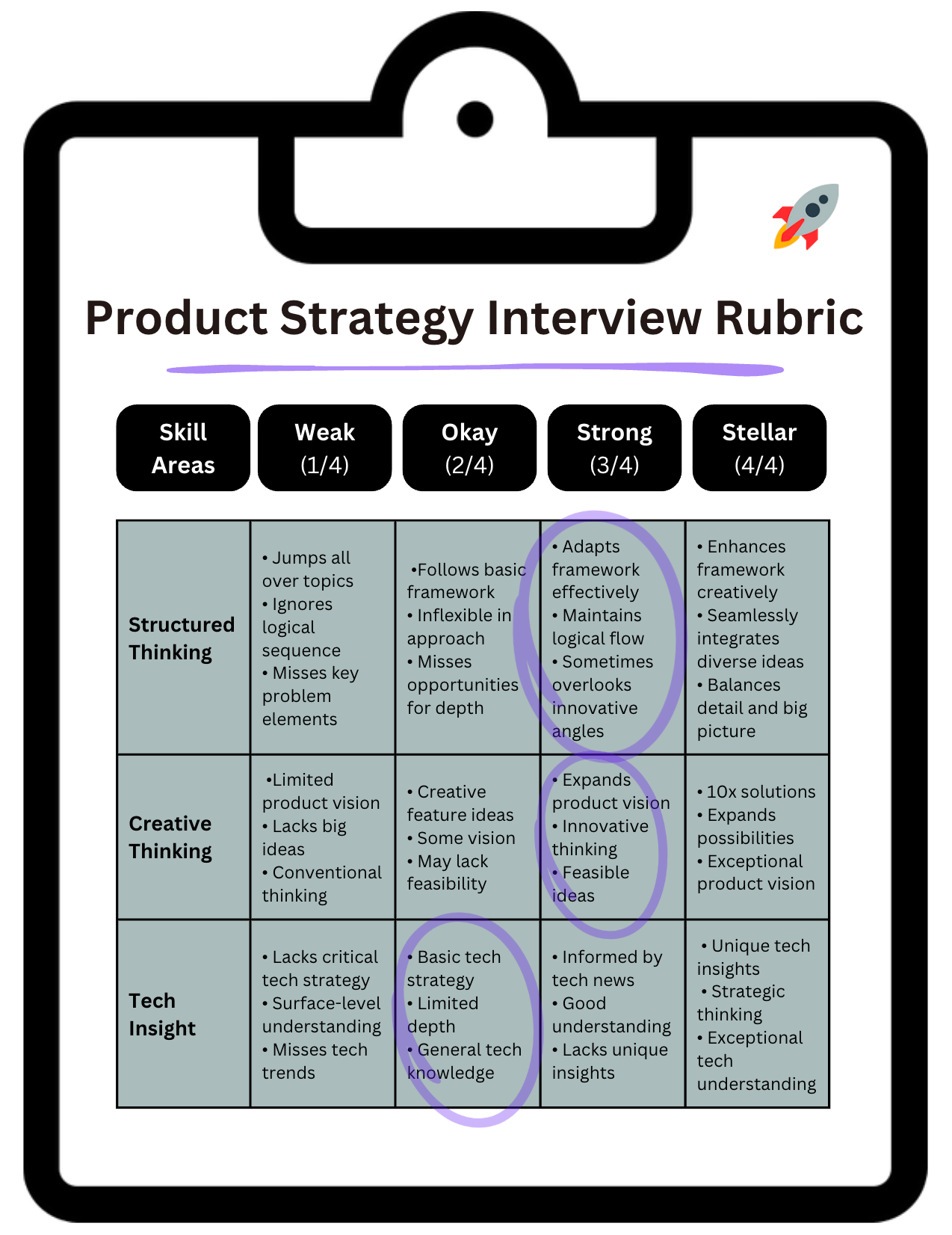
What’s the Rubric They Use?There’s 3 main areas they will look at: Rubric Area 1 - How you break down a big problemNo company worth their salt cares about using a specific framework. It’s simply not about programmatic use of a framework in 2023/2024. Instead, it’s about custom use of your frameworks. They want to see that you can bring a structured process to think about problems.
Rubric Area 2 - Your ability to think creativelyThe product strategy interview places a very heavy weight on the your product creativity. It’s kind of like product sense and design in that sense. But in this interview, they’re less interested in how creative you can be with design and feature details. They’re more curious how you can be curious with overall product vision, mission, strategy, and problem areas of focus.
Rubric 3 - Whether you show real tech insight & knowledgeThe final area that especially the big tech companies tend to ding people for is showing real tech insight and knowledge. This is actually the area I see most PMs dinged on. They’re great at PM, but they aren’t used to thinking at the strategy aperture to show real tech insight & knowledge.
The Most Common Pitfall of Good PMsThis is the most common rubric I saw in my scorecards for otherwise good candidates:
They forget to show that actual tech insight, because they’re so focused on executing that cursed framework. Today’s Deep-DiveWhen I was preparing for this interview, here’s what I would’ve wanted:
So let’s get into it... Keep reading with a 7-day free trialSubscribe to Product Growth to keep reading this post and get 7 days of free access to the full post archives. A subscription gets you:
|





This week’s system design refresher: Top 9 Most Popular API Protocols (Youtube video) What is a deadlock? What’s the difference between Session-based authentication and JWTs? Top 6 ElasticSearch Use Cases Top 9 Cases Behind 100% CPU Usage SPONSOR US ͏ ͏ ͏ ͏ ͏ ͏ ͏ ͏ ͏ ͏ ͏ ͏ ͏ ͏ ͏ ͏ ͏ ͏ ͏ ͏ ͏ ͏ ͏ ͏ ͏ ͏ ͏ ͏ ...
Comments
Post a Comment