👋 Hi, this is Gergely with a 🔒 subscriber-only issue 🔒 of the Pragmatic Engineer Newsletter. In every issue, I cover challenges at Big Tech and startups through the lens of engineering managers and senior engineers. Code Freezes: Part 3It’s December, the month when many mid-size and large companies put code freeze policies in place. This article provides a wide ranging overview of this practice, based on responses from 185 readers
It’s the last month of the year, meaning that engineering teams at some companies are preparing to start a “code freeze,” while others have already done so, and at a few places it’s business as usual. This issue is the final part of a three-part series on the topic of code freezes, resuming almost a year after the last installment. In Part 1 we covered:
In Part 2, we touched on:
Now, we wrap up this subject with:
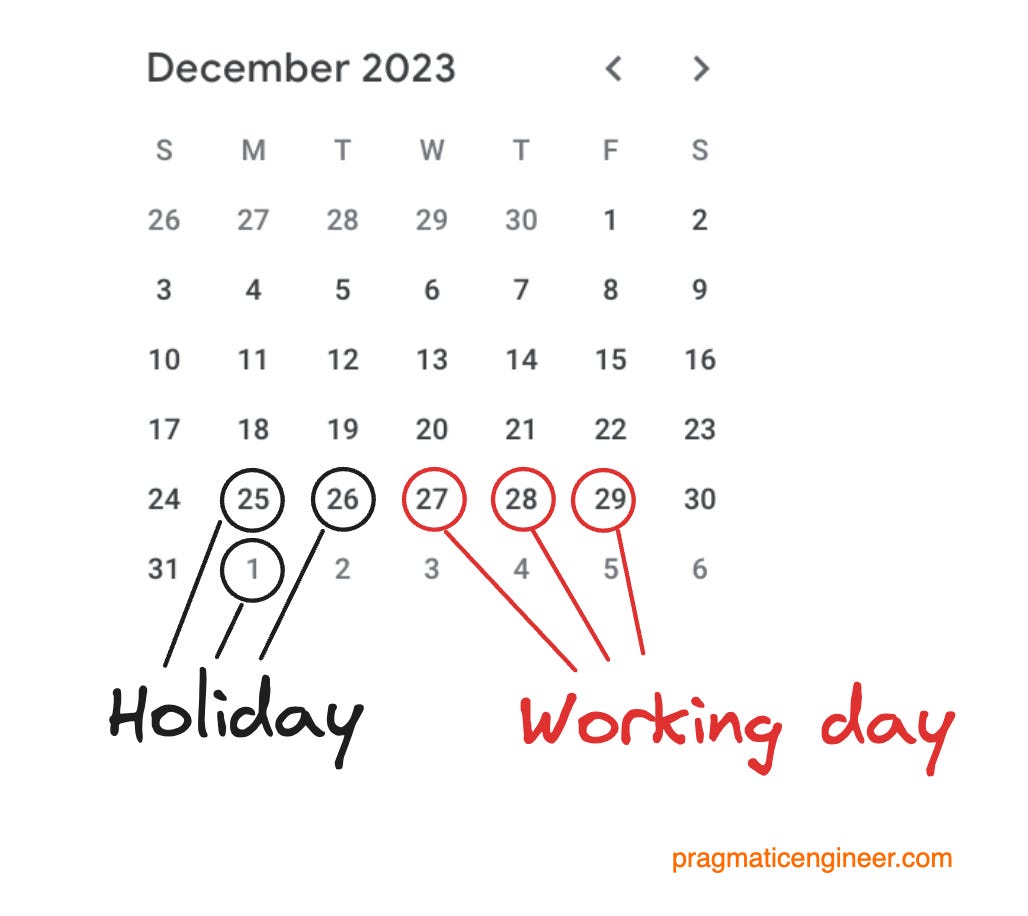
In today’s issue, we analyze data from software engineers and engineering managers across tech on how their workplaces run code freezes. These data points come from a survey I published in Part 1; thank you to everyone who shared insights! 1. Dates worth keeping in mindThere are a few dates worth circling in your calendar when considering whether or not to mandate a code freeze. The week of 25th December. This year, for most companies based in the US and Europe, the final week of the year is a 3-day workweek:
Whatever the code freeze approach – including not having one – it’s worth figuring out how many people will be around during the week of 25 December. Will there be enough for oncall? Or will oncall need to be merged across teams? What about people still in the office: should they delay risky production changes, even if there’s no formal code freeze in place, assuming most people will be on holiday? The first week of January. When will normal work patterns resume? Will some staff take off the first week of January, or will most people return to the office? iOS and Mac app submissions could take longer between 22-27 December, says Apple. Until 2021, Apple paused app reviews between Christmas and New Year. That’s been adjusted. This year. Apple writes:
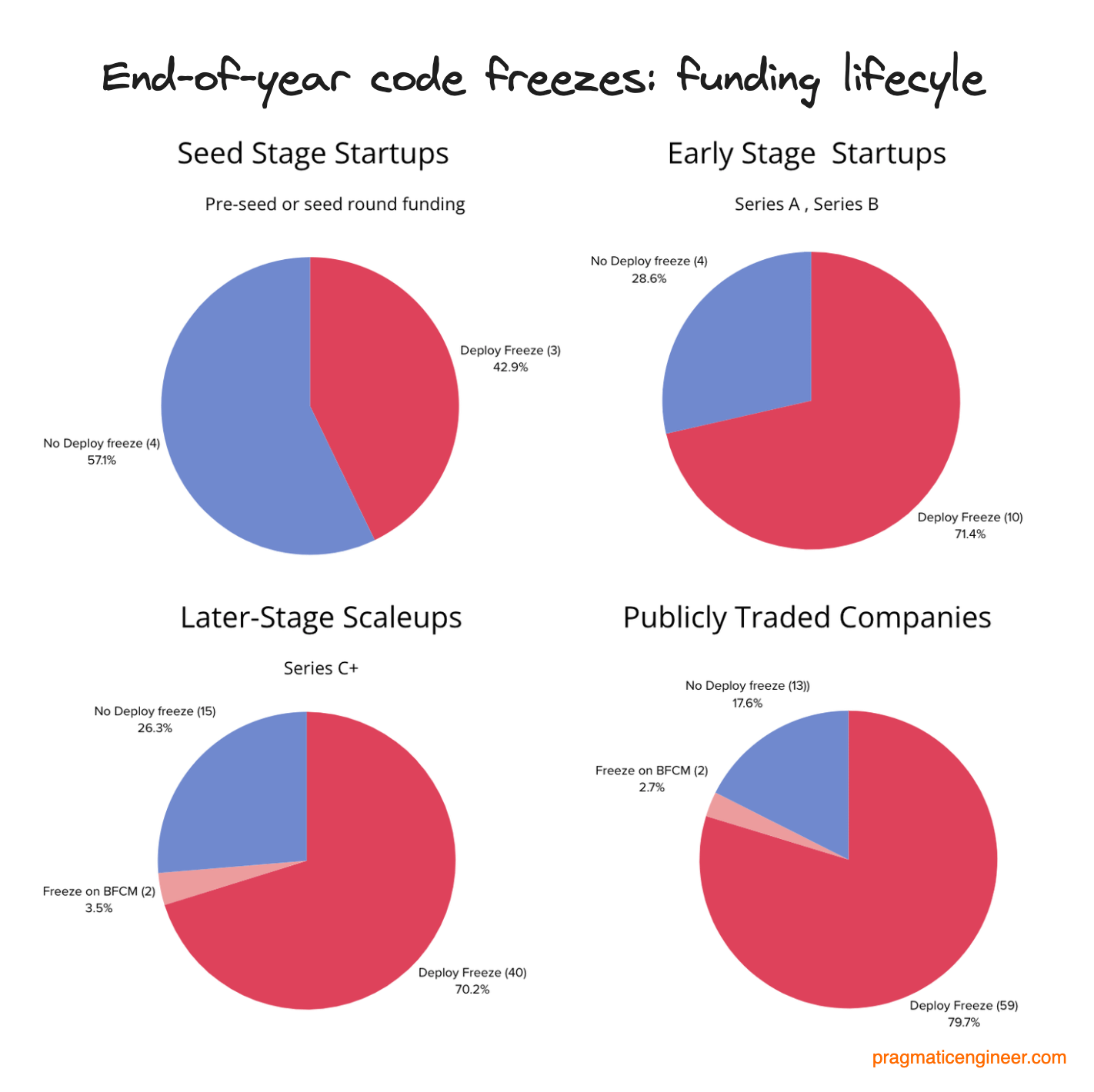
2. Code freezes by funding lifecycleLet’s look at the split of companies employing freezes, by funding lifecycle:
Unsurprisingly, the later stage a company is, the more likely it imposes a freeze around this time. And here’s one data point that seems to underscore funding’s role in how risk averse companies are when business is higher than during most of the year, but when more staff than usual are away:
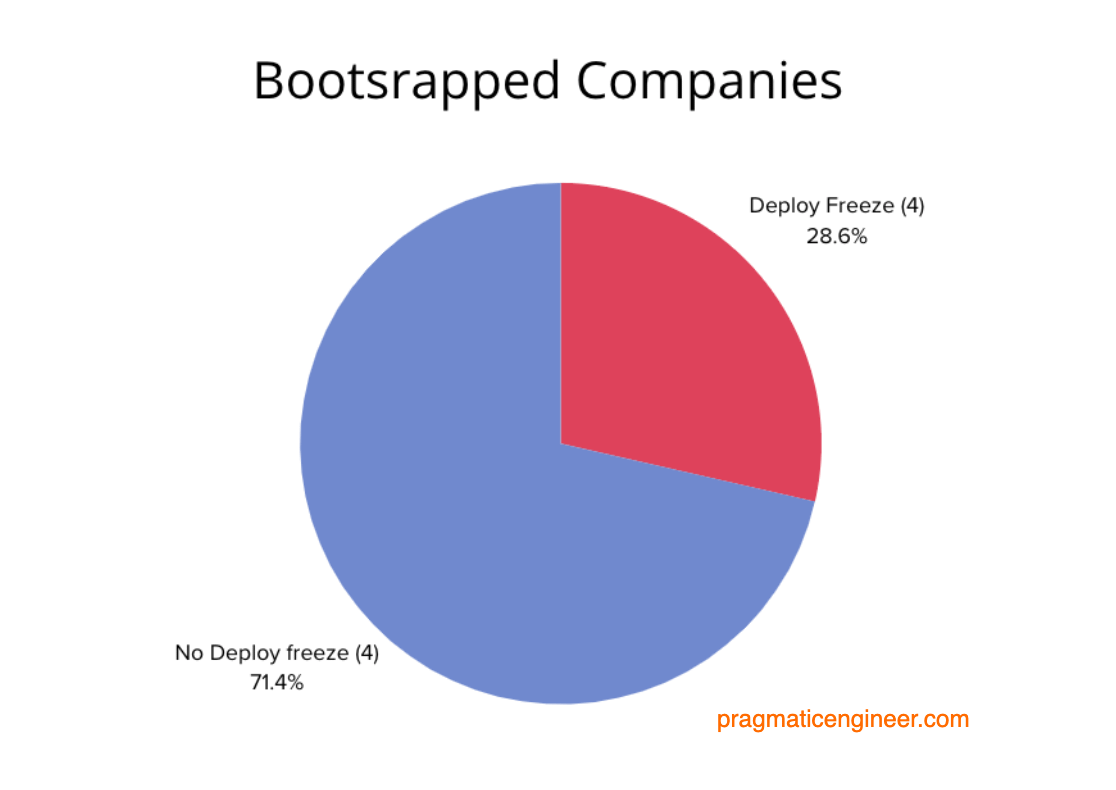
Given there were only 13 data points on bootstrapped companies, I collected the reasons why they did or didn’t do code freezes. The bullet points are quotes provided by survey respondents. Small bootstrapped companies (50 or fewer employees): Those implementing a code freeze:
Workplaces with no code freeze – at least not on the backend:
Larger bootstrapped companies (50-1,000 employees): Those with a code freeze:
Workplaces with no code freeze – at least not on the backend:
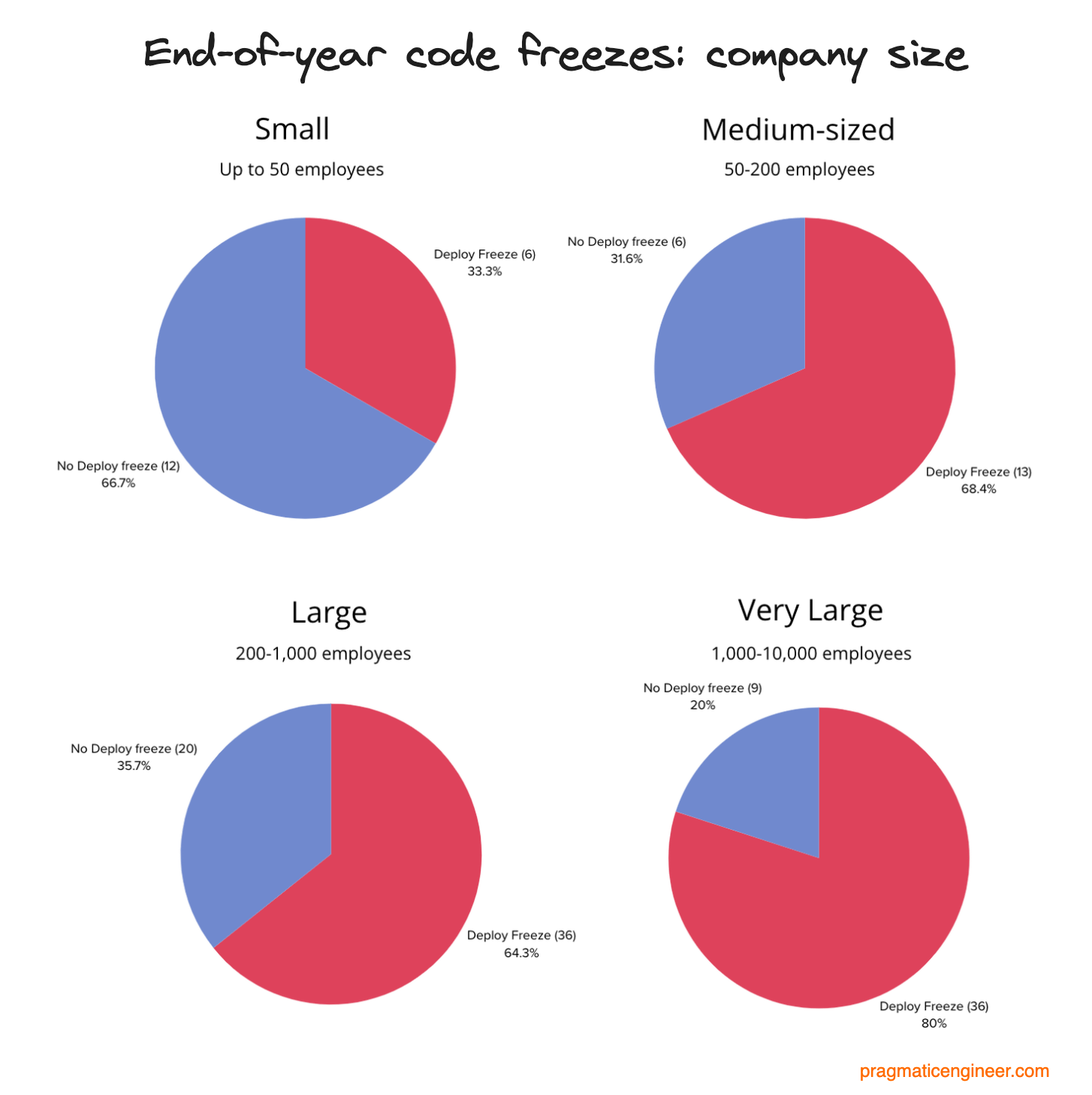
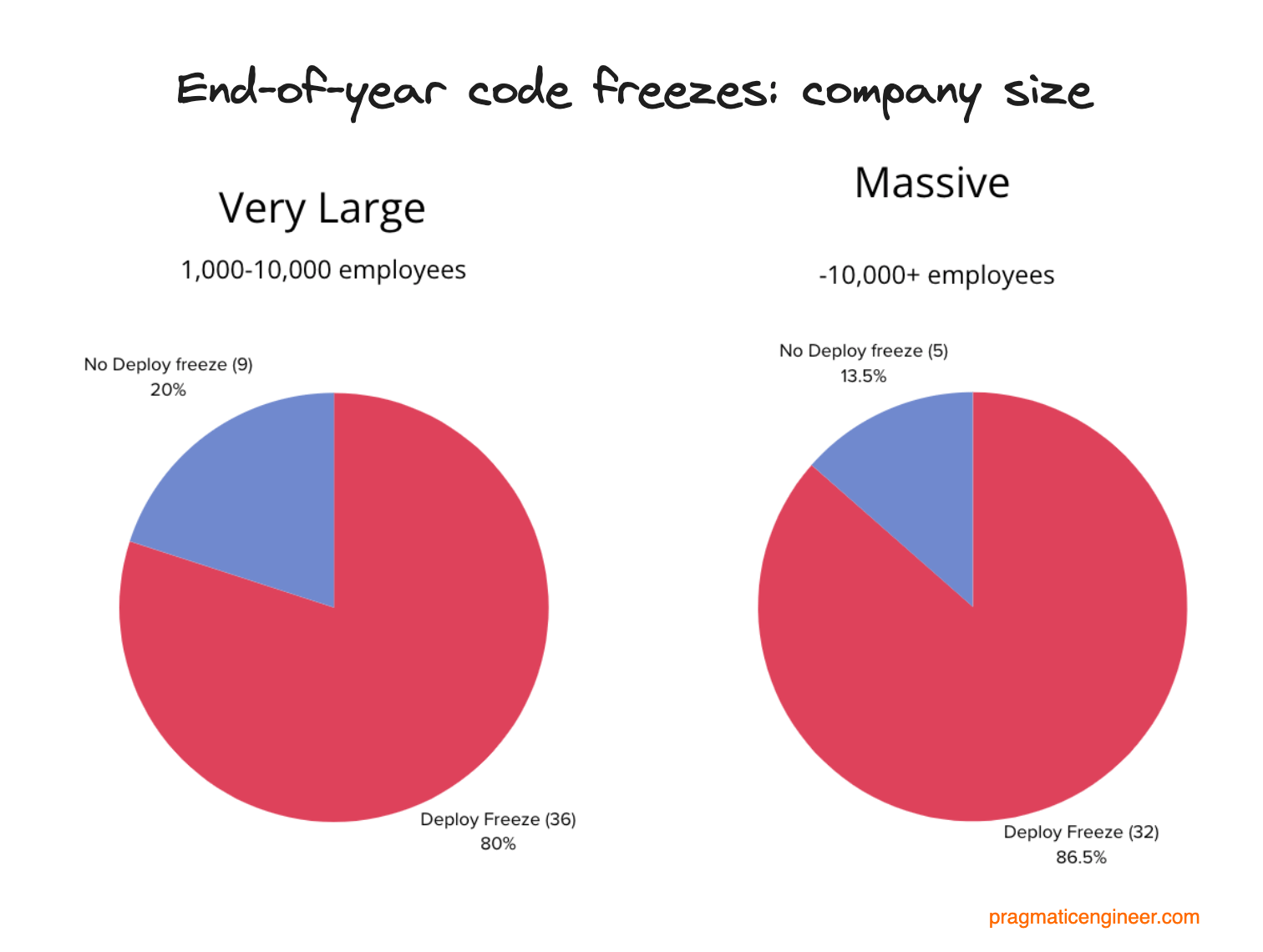
JetBrains is a bootstrapped company, and one of the biggest firms to become a billion-dollar company without external funding. Since Jetbrains ships most of its products as releases, the company doesn’t need a code freeze. It just does not cut any major new releases, says a team lead at the company. Minor releases can happen during the holidays. Bootstrapped companies have quirks worth noticing, as they must be as practical as possible, and are probably immune to trends of little practical benefit. We previously covered lessons of bootstrapped companies founded by software engineers. 3. Company sizeSegmenting responses by workforce size:
There’s few surprises in this data. The larger the company, the more likely there’s an end-of-year freeze. This makes sense, as the majority of bootstrapped companies tend to be smaller. Within the group of “massive” companies (10,000+ staff) there tend to be even fewer exceptions to this than at very large workplaces:
4. By industrySplitting responses by industry yields some interesting findings. There are intriguing – though not unpredictable – patterns:... Subscribe to The Pragmatic Engineer to read the rest.Become a paying subscriber of The Pragmatic Engineer to get access to this post and other subscriber-only content. A subscription gets you:
|






This week’s system design refresher: Top 9 Most Popular API Protocols (Youtube video) What is a deadlock? What’s the difference between Session-based authentication and JWTs? Top 6 ElasticSearch Use Cases Top 9 Cases Behind 100% CPU Usage SPONSOR US ͏ ͏ ͏ ͏ ͏ ͏ ͏ ͏ ͏ ͏ ͏ ͏ ͏ ͏ ͏ ͏ ͏ ͏ ͏ ͏ ͏ ͏ ͏ ͏ ͏ ͏ ͏ ͏ ...
Comments
Post a Comment