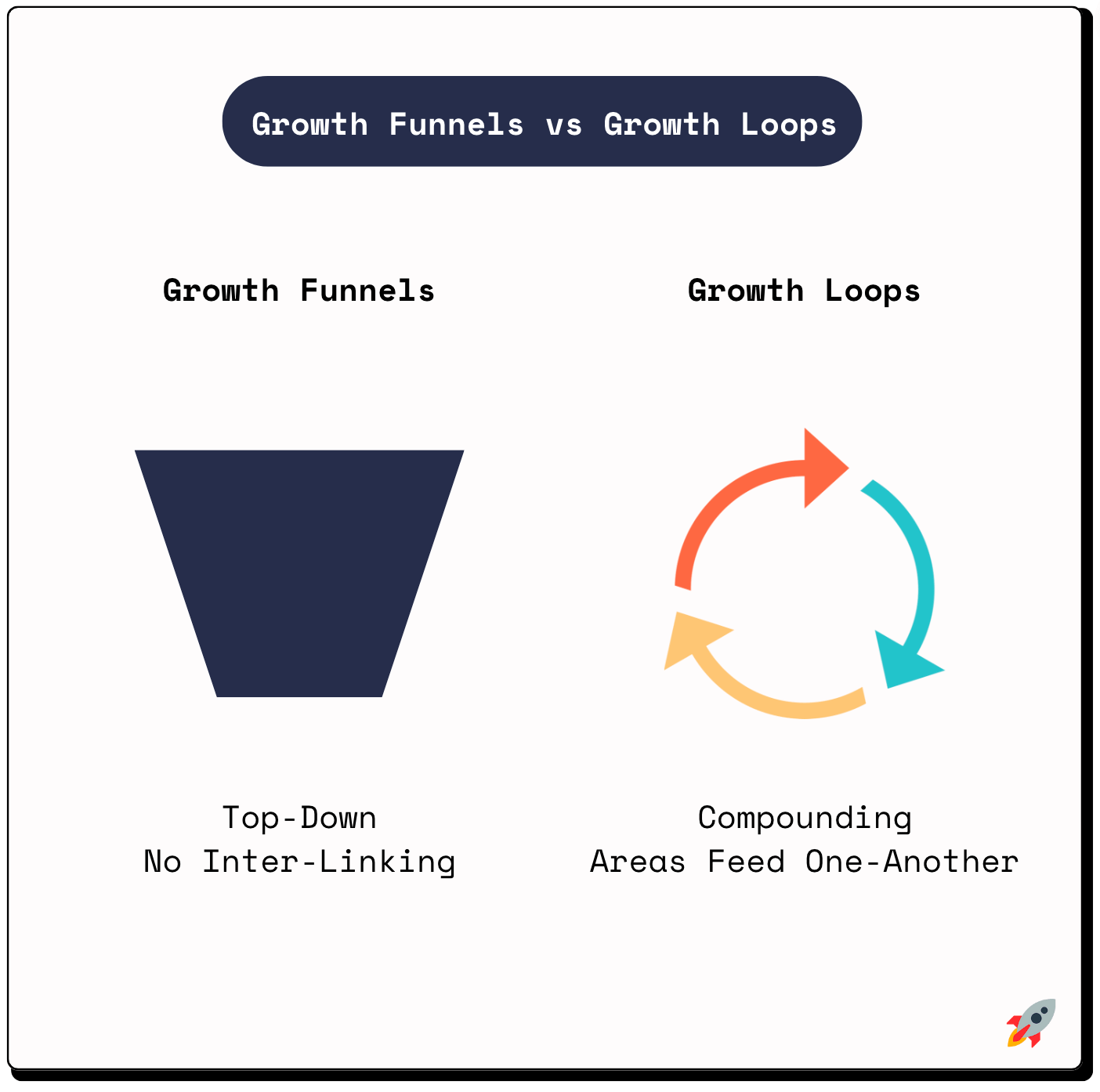
Growth funnels are dead. Growth loops are the new standard.
Why? Funnels have 7 key problems: 1. Silo SyndromeGrowth funnels often operate like silos, disconnected and self-contained. The isolation of each step fragments the customer journey. The result is disjointed experiences that can hinder growth. A clear example is when marketing pulls in leads, but hands them off to sales without a seamless transition. This creates a gap where potential customers can fall through. 2. Scalability CeilingScalability ceilings hit like a ton of bricks. As your audience grows, the cost per acquisition creeps up—sometimes exponentially. Take the example of Wish. Initially, user acquisition was organic and viral. However, as the platform matured, it had to invest heavily in advertising and incentives to keep the growth curve from flattening. 3. Linear ThinkingFunnel logic is straight-lined; customer behavior isn't. It's messy. People don't just march forward — they meander, pause, backtrack. The gaming world knows this well. A player might install a game on a whim, forget it, then binge post-update. Funnels miss this chaos; growth loops capture it and allow the potential for compounding growth. 4. Resource SinkholesFunnels can demand an unsustainable amount of resources for customer acquisition. You just continue to feed the top of the funnel. Companies can hemorrhage cash with little return. Take Blue Apron, for example. They spent nearly $400 on customer acquisition for a product that nets less than half that in a year. And what’s the result? A stunning 72% churn rate after six months. 5. Optimization MyopiaConversion rate optimization can lead to shortsightedness, focusing too narrowly on the numbers game and missing the broader picture. An e-commerce site might boost immediate sales through aggressive retargeting, but if customers feel hounded, they won't return. Balancing the pursuit of conversions with long-term loop health is critical. 6. Retention NeglectRetention often gets the cold shoulder in growth funnels, overshadowed by the glitz of acquisition. Yet, it's the bedrock of sustainable growth. The stats are loud and clear: a 5% increase in customer retention correlates with up to a 25% increase in profit. It's about creating an experience that keeps customers coming back. 7. InflexibilityFunnels struggle to adapt to the evolution of the market as a whole. This makes it hard for businesses to pivot when a new trend emerges. For instance, when streaming services began to gain popularity, a traditional funnel approach in cable television companies didn’t allow for a quick pivot to streaming models. A loop-based approach would continuously monitor user behavior and market trends, allowing for a seamless transition to include streaming services in their offerings. Bottom line: Growth isn't a funnel; it's a cycle. Build a loop, not a funnel. But What is a Growth Loop?Thanks to the mass distribution of PM content on social media, most people want to create growth loops these days. The harder part is actually creating them. In practice, every single company I’ve been to still looks at funnels, not loops. In today’s post, we’ll walk through an end-to-end process of identifying your growth loop:
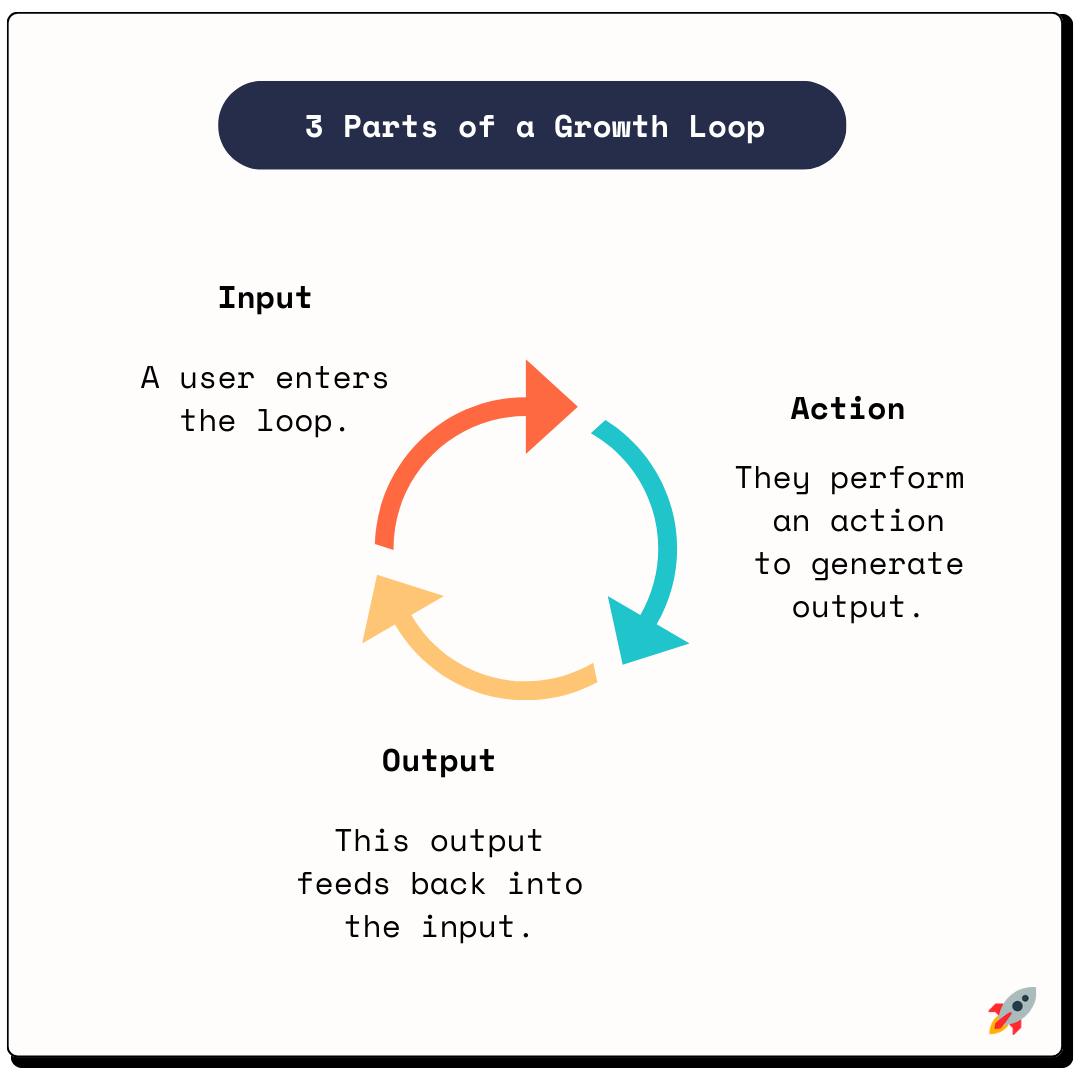
This will allow you, like me, to bring growth loops into your companies. It’s the value of a $1000 course - and my VP of Product salary - as just one of 100 pieces you receive every year for just $150. There’s no better value in growth. 1. What is a growth loop and what makes it a loopLet’s start with a definition. We’ll go straight to the source, the originator of the growth loop, Brain Balfour of Reforge. A growth loop is a set of three interlocking steps:
Growth loops answer a couple different questions:
Let’s make this more concrete with some famous examples. 2. 6 famous growth loop examples to understandAny of the famous technology companies can be modeled as a series of growth loops. They all have spun up multiple growth flywheels. Let’s go through 6 canonical examples across all types of companies:
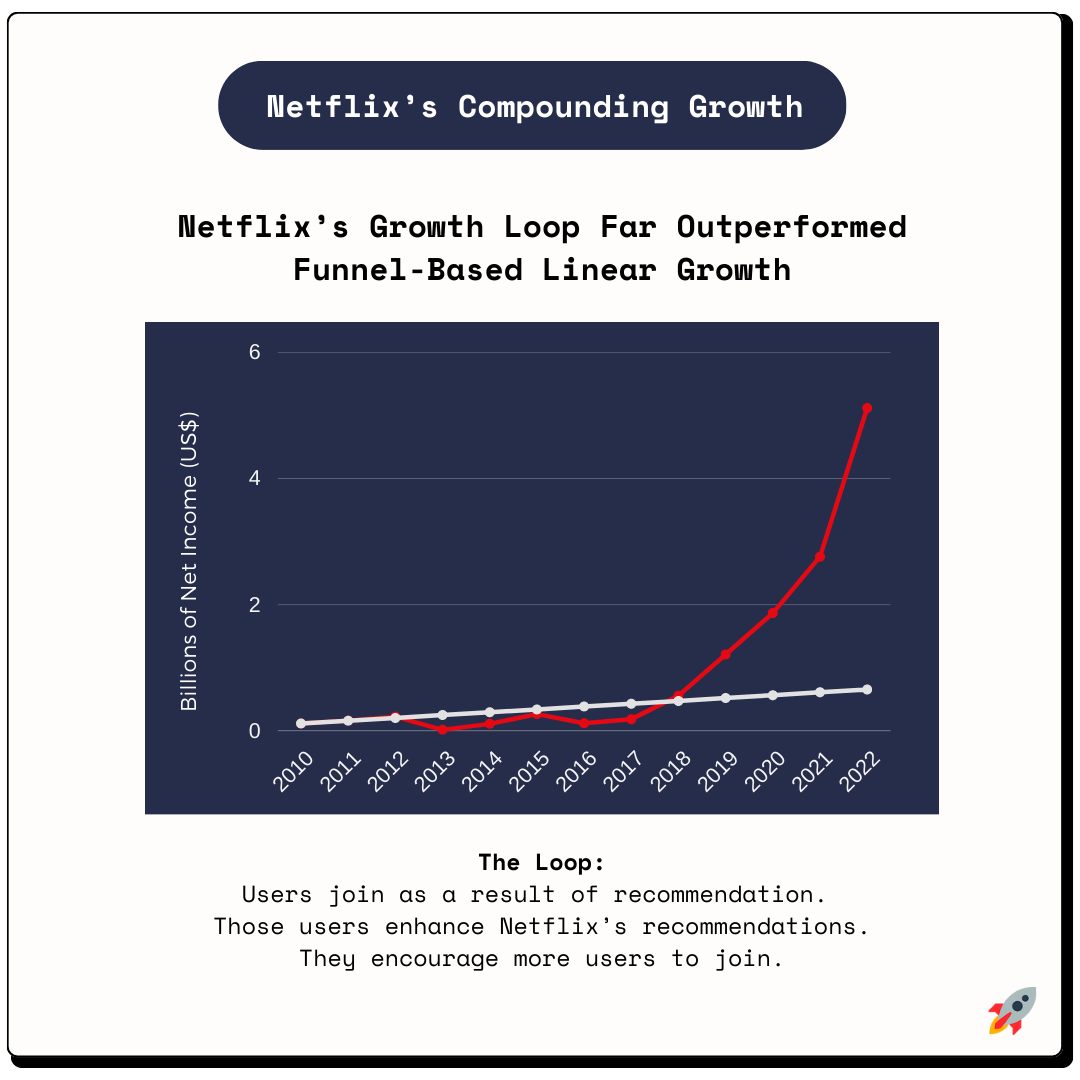
Canonical Example 1 - Netflix’s Recommendation EngineIt’s always easiest to start with something like Netflix. It’s such a classic example of compounding growth:
How does Netflix’s core growth loop work?
It’s a growth loop that’s self-perpetuating because it gets better with more data. And it’s only reliant on one person - the viewer. They don’t even have to be the payer. They just have to enjoy their recommendations. Netflix has tripled down on those recommendations more than anyone else, and has built such a moat on that core feature, that it continues to lead the streaming market. It’s so simple. It shows what’s wrong with the traditional funnel. Canonical Example 2 - LinkedIn’s Contact IntegrationBrian Balfour had this to say about LinkedIn:
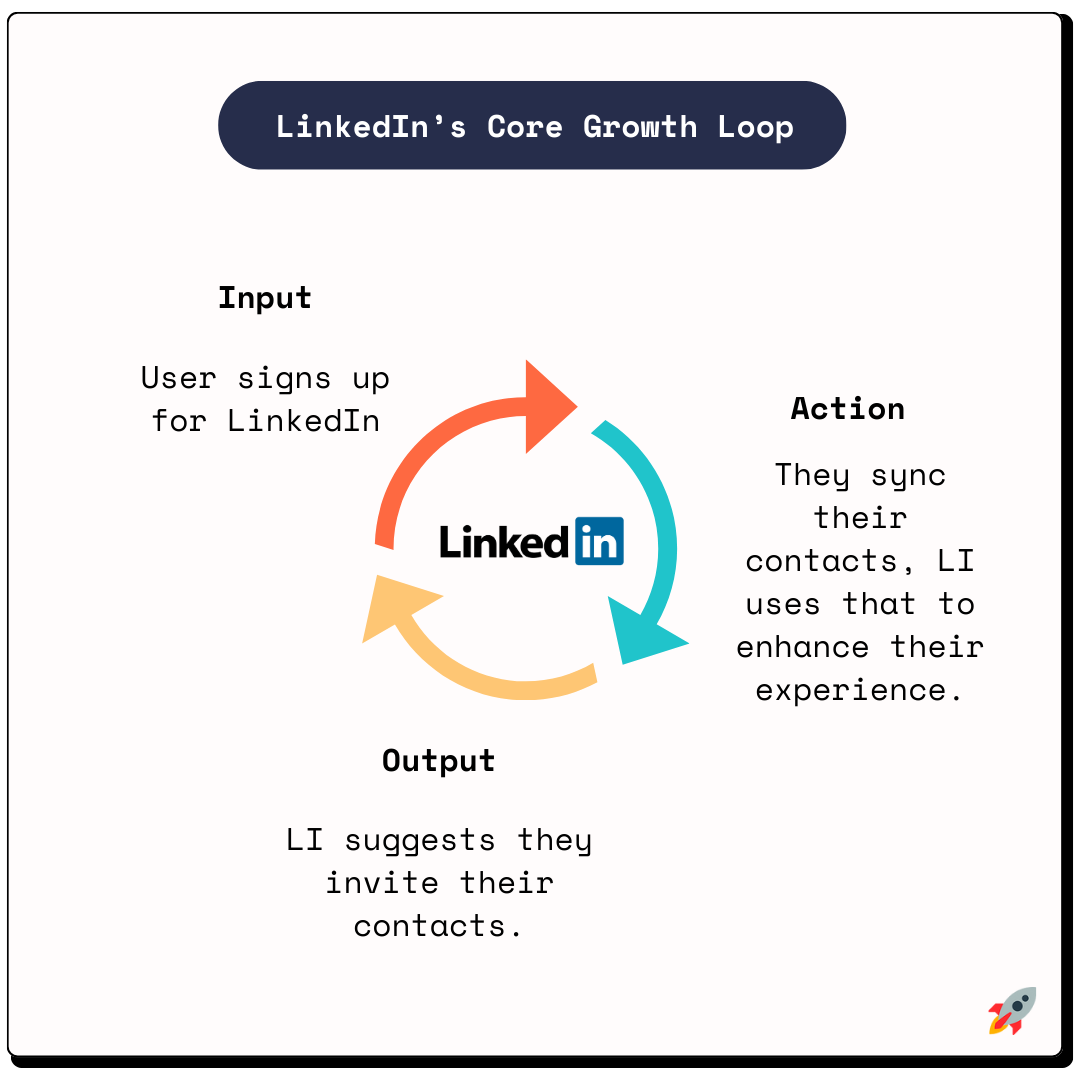
So they’re definitely worth paying attention to. They have many different growth loops in their arsenal, but the core loop is one they’ve had for over 20 years and ridden to 1B MAU:
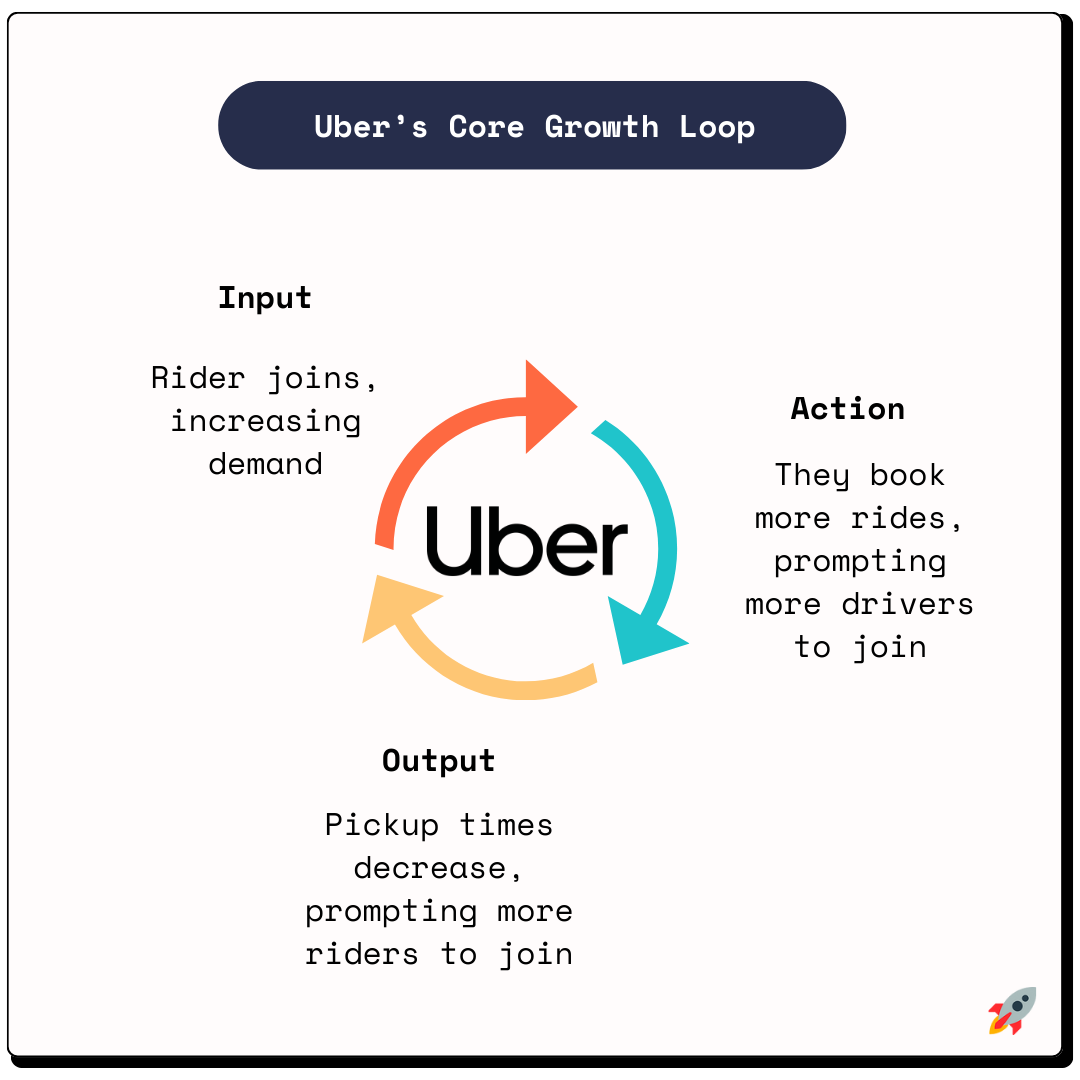
They have users sign up to LinkedIn, those users link their contacts, LinkedIn uses those contacts to optimize the first time user experience, and the output is LinkedIn prompts users to invite more of their contacts. They’ve ridden that core loop to become one of the most enduring social networks of all time. Canonical Example 3 - Uber - Balancing Demand and SupplySo you understand the basic growth loops. Now let’s get more complicated. Uber has two sides to its marketplaces: riders and drivers. Its growth loop brings them together:
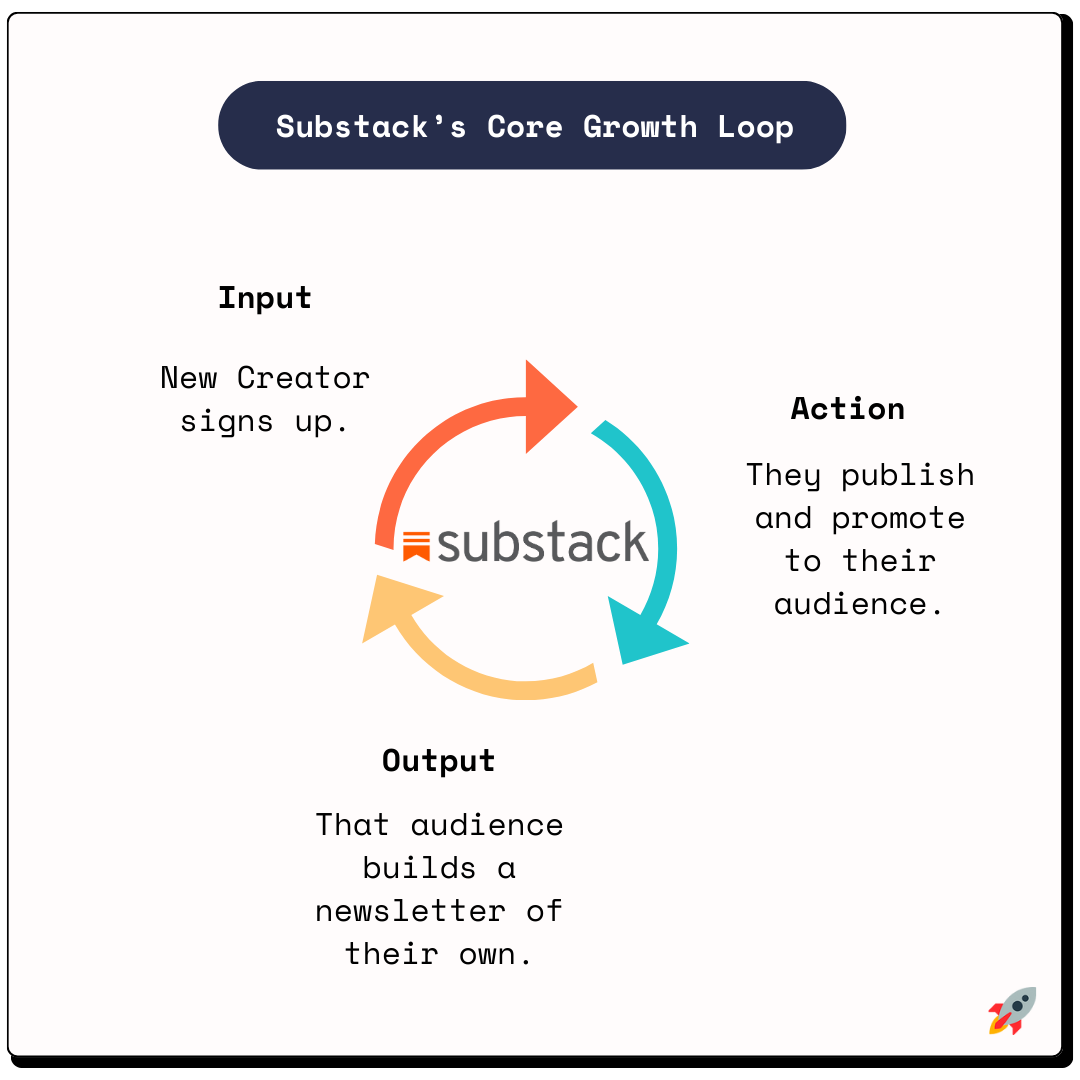
Uber has ridden that all the way to the S&P 500. Canonical Example 4 - Substack’s Writing EngineSo that’s the B2C side of the house. What about something more B2B? Let’s start with a classic B2C/SMB B2B crossover:
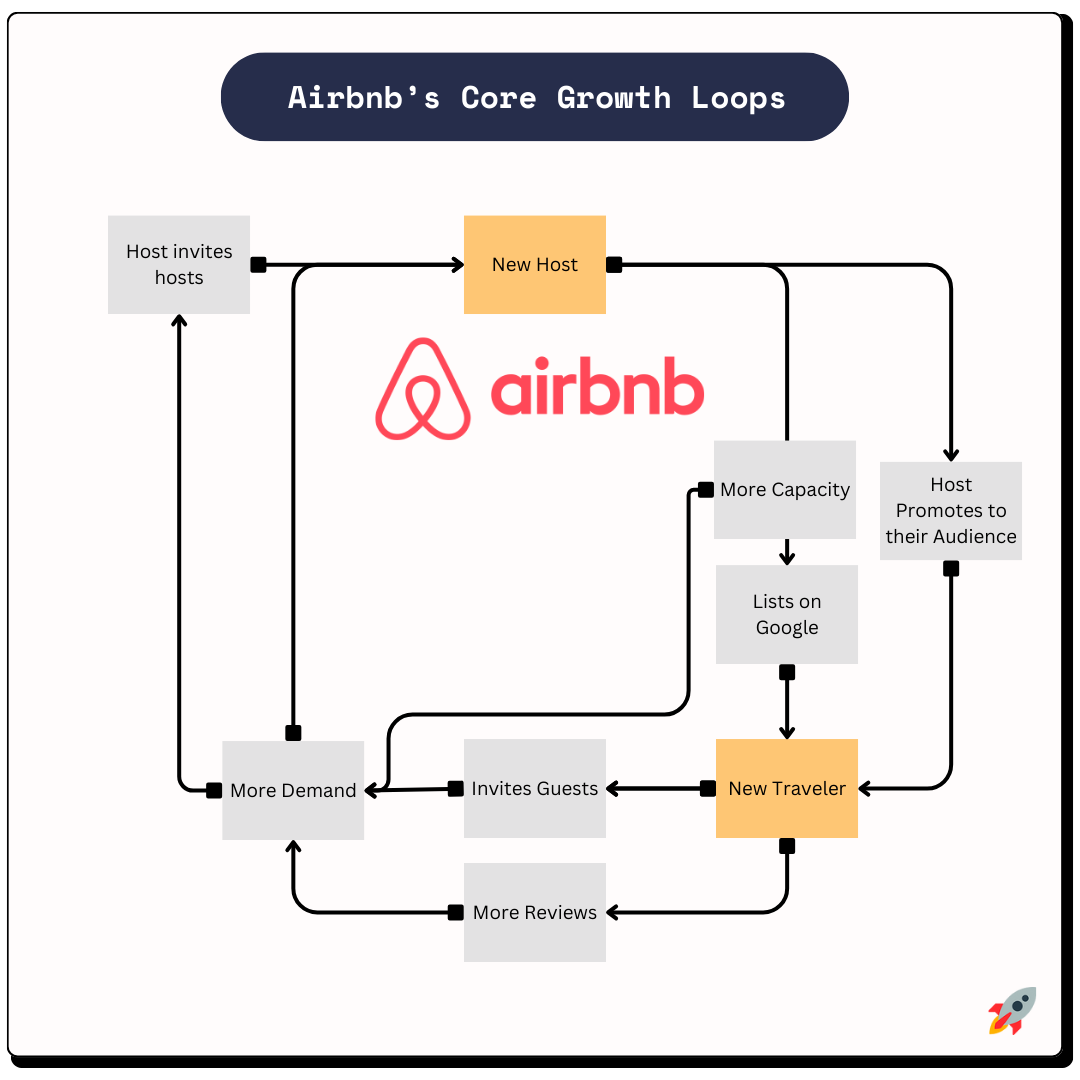
It classically uses its core product - the newsletter - to attract both readers and writers. Those writers then go attract users to Substack. And it’s a virtuous, self-perpetuating loop. Canonical Example 5 - Airbnb - Putting It All TogetherNow that we’ve gotten you thinking in core loops, it’s time to go a layer deeper. Like we said with LinkedIn, companies have multiple growth loops. Airbnb is our first putting it together example. It too has several different growth loops coming together. Let’s look at them:
There is one major growth loop represented here: the core new listing loop:
But that’s just high-level. It can be broken into 5 mini-loops as well, that more closely approximate the work of product & marketing teams on the ground:
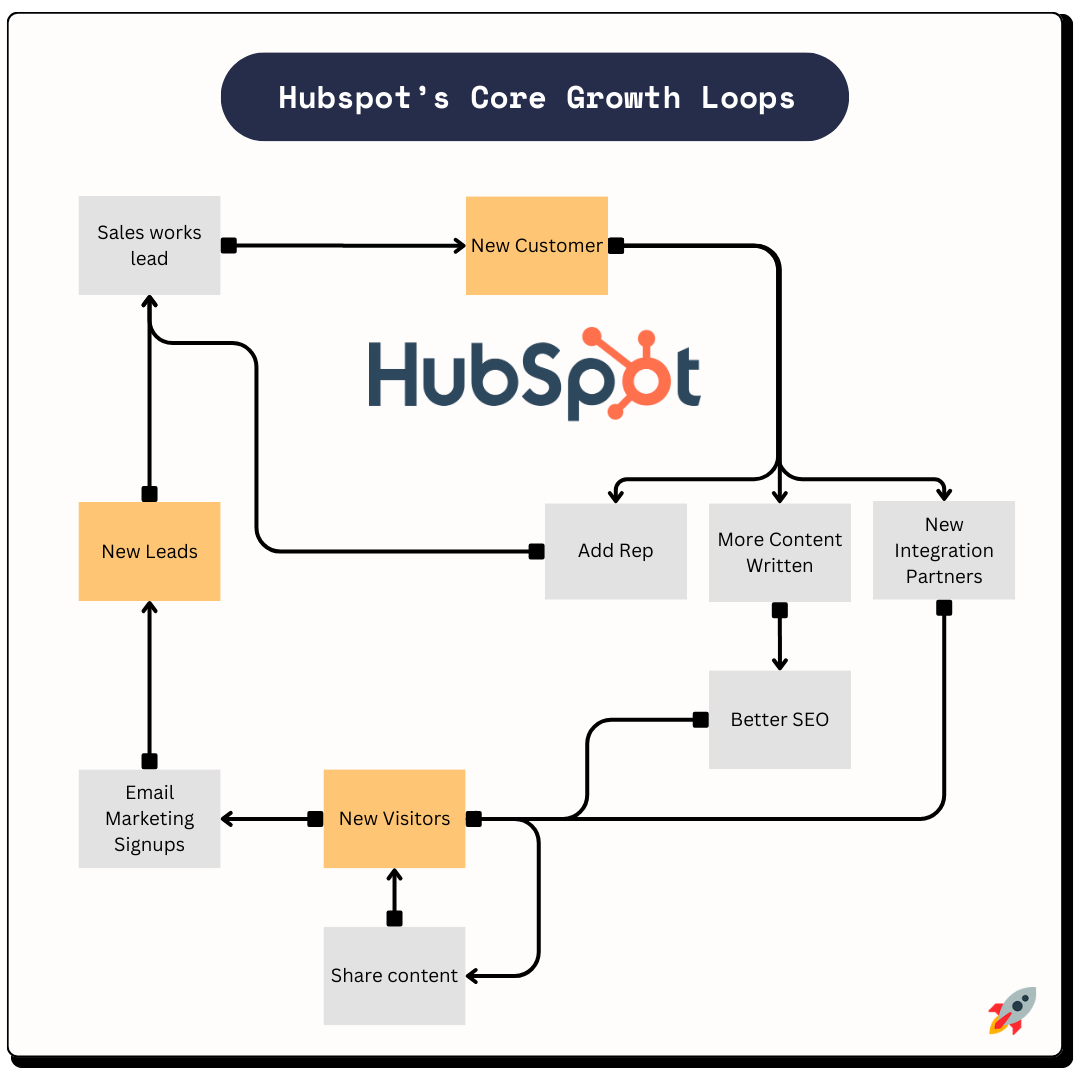
Canonical Example 6 - Hubspot - B2BBut what about B2B you say? Let’s end our examples with a walk through the Hubspot example of a unified set of growth loops.
The B2B world is, admittedly, a bit more complex. Hubspot was spinning together at least 6 growth loops to turn its overall loop:
Hubspot has spun these growth loops to a 14x return since it became a public company in 2014. Loops work. Now that we’ve got the concepts out of the way, it’s time to talk types of growth loops, how to identify yours, and how to accelerate it. Keep reading with a 7-day free trialSubscribe to Product Growth to keep reading this post and get 7 days of free access to the full post archives.A subscription gets you:
|





This week’s system design refresher: Top 9 Most Popular API Protocols (Youtube video) What is a deadlock? What’s the difference between Session-based authentication and JWTs? Top 6 ElasticSearch Use Cases Top 9 Cases Behind 100% CPU Usage SPONSOR US ͏ ͏ ͏ ͏ ͏ ͏ ͏ ͏ ͏ ͏ ͏ ͏ ͏ ͏ ͏ ͏ ͏ ͏ ͏ ͏ ͏ ͏ ͏ ͏ ͏ ͏ ͏ ͏ ...
Comments
Post a Comment