The Story of the Product Execution InterviewThe product execution interview is everywhere nowadays.
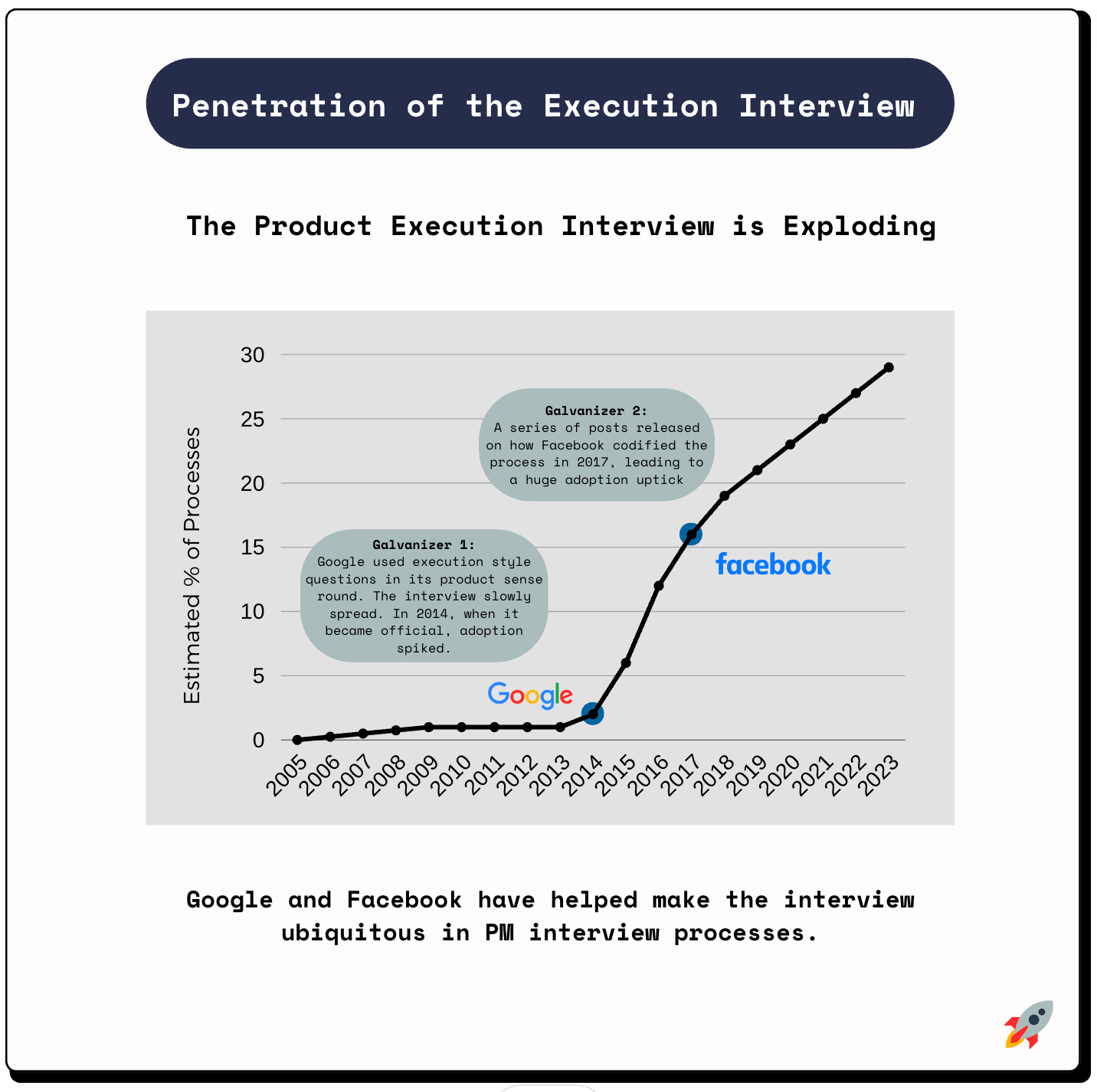
These case questions are up to ~30% of interview processes based on a survey of ~100 processes I conducted this week. I’ve been mining the internet and talking to hiring managers about where this interview actually came from. It turns out, it’s Google and Facebook. → By 2008, companies like Google were extensively using product sense interviews. This led to slow and steady growth in the interview. → By 2014, execution was officially an interview at Google. This further accelerated the uptick. In the ensuing years, Meta wanted to make sure its PMs understood the product and its value to users. They also wanted to check that PMs could prioritize impactful metrics. → By 2017, Facebook codified the product execution interview into one of its three main interviews (the other’s are product sense and leadership & drive). Since then, the growth of the interview has been scaling fast. Interestingly enough, Meta now calls this interview Analytical Thinking. Who Uses Product Execution at the end of 2023Of course, not just Meta uses the product execution interview. It’s ubiquitous across tech globally. I’ve coached candidates in India, Australia, Nigeria, and more. And everyone does it a bit differently. Here are the most common flavors and users of the execution interview. MetaUS L4 PM Total Compensation: $241K
US L4 PM Total Compensation: $270K
AppleUS L3 PM Total Compensation: $209K
Public Tech Companies
Fast Growing Companies
Overall - the execution interview is being adopted at some of the highest paying places for PMs - and is a skill well worth having. Today’s PostGiven the importance of the execution interview, let’s go 4K words to break down:
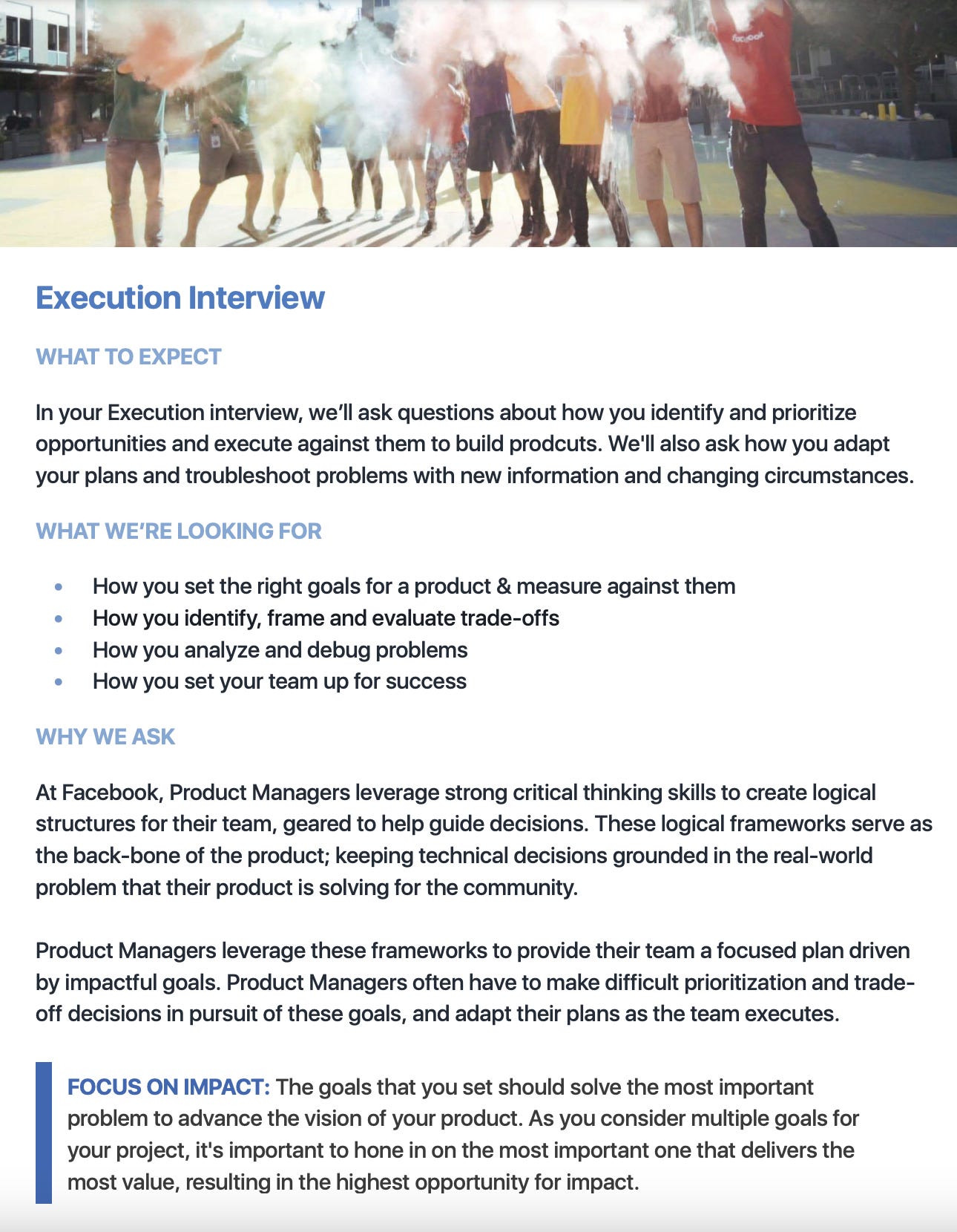
How to Rock the Meta Execution QuestionLet’s first start with the rubric interviewers use in this execution round. Meta is particularly open about their rubric. Here’s exactly what they send candidates:
That’s the “official line.” Behind that, Meta has interviewers go through a shadowing process before they are considered “calibrated.” These calibrated interviewers then assess candidates. In these sessions, Meta teaches its candidates to look at 4 major buckets:
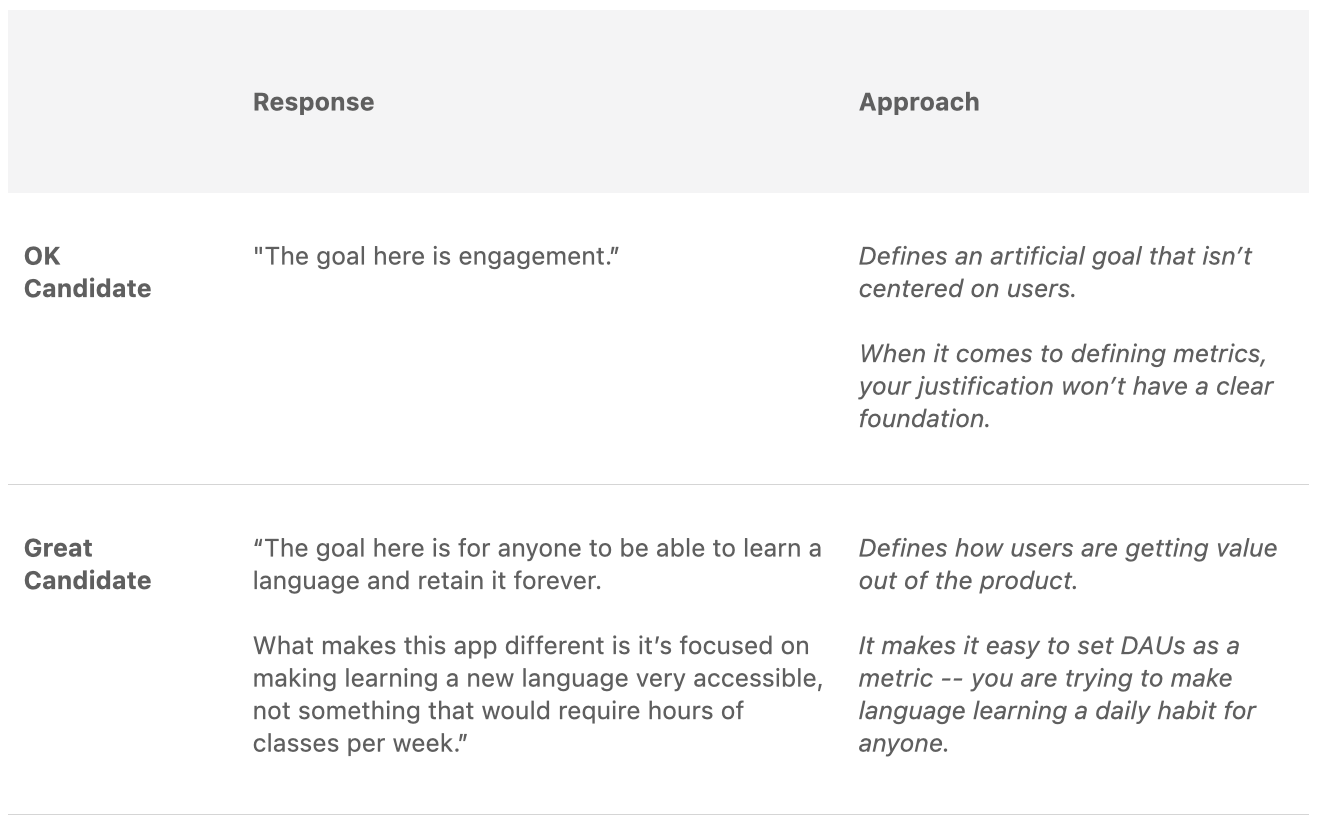
Let’s break each down. Shout out to all the great sources on Meta interviews out there like Meta itself, Ravi Mehta, Rohan Katyal, Parth Tiwari, Will Lawrence Dianna Yau, and more for this info. Rubric Area 1 - Metrics SkillThis is by far the most important, so we’ll go into the most detail here. Goal MetricsCan this candidate set measurable goals and top-line metrics? They want to see what options you consider, your intuition and experience level, and also your confidence when asked questions. PMs should be great at identifying north star metrics. Example: Define success for a language learning app
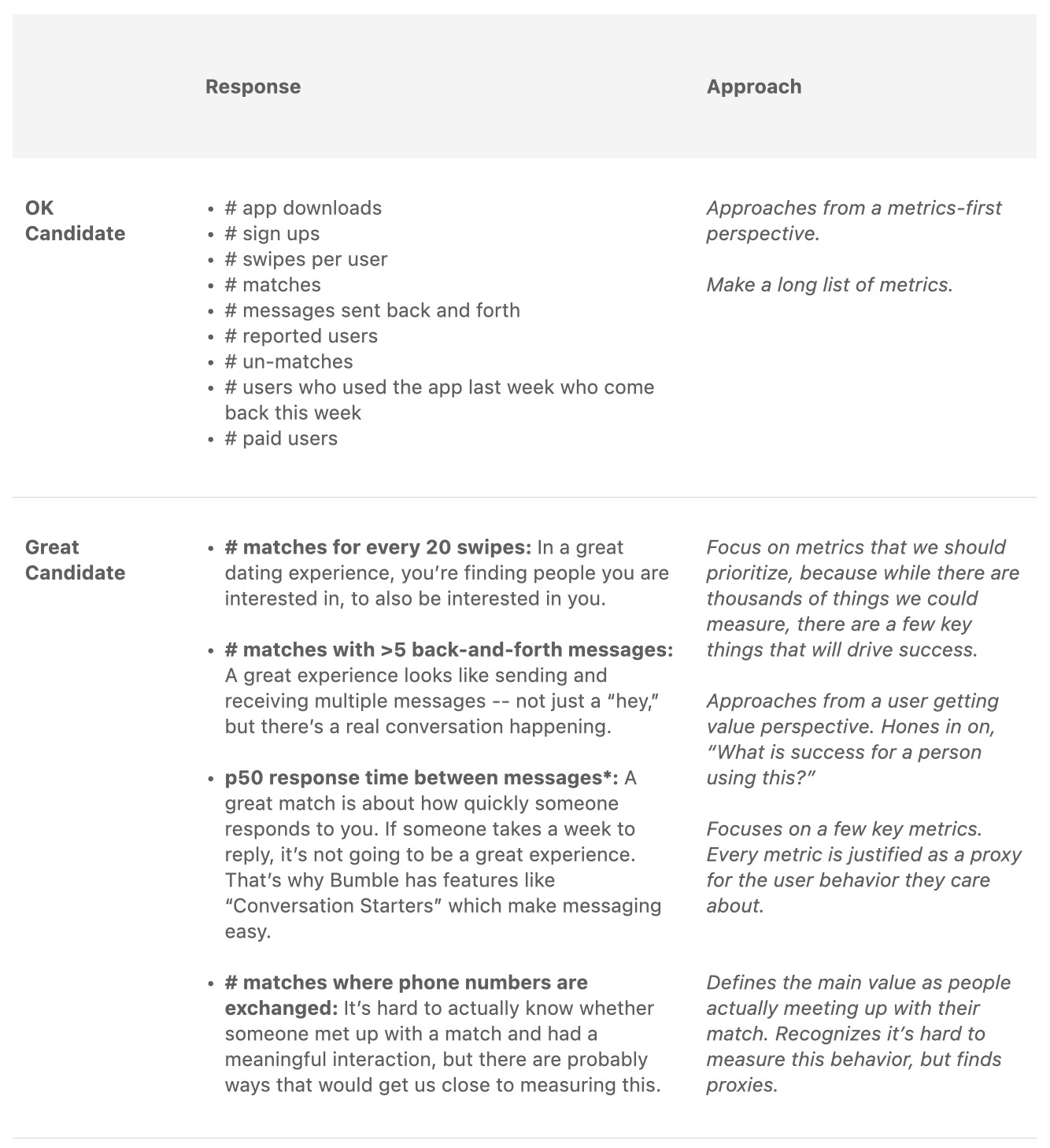
Comprehensive Metric PictureCan the candidate think through a comprehensive set of metrics for all types of stakeholders in the ecosystem? You need to be able to take metrics and turn them into actionable decisions. Example: Define success for Bumble
In addition to metrics, Meta is also interested in PM, execution, and Facebook skill. Rubric Area 2 - PM SkillUnderstand the people problem you are trying to solveCan this candidate define the problem the product or feature is solving? They really want you to be able to have a crisp definition of this. Solving problems is the core of Meta’s PM philosophy. They even have PMs focus on stats like Daily Active People instead of Daily Active Users. Identify the best way to start solving that problemHow do you approach prioritization and make sure the right things get done first? The execution interview rubric always has a specific focus on your prioritization skill. So set up a good framework and follow through it logically. Rubric Area 3 - Execution SkillDive Into the WeedsCan you really break down what problem areas affect metrics? You need to be able to get into the details of what metrics might have moved, what user populations to target, and what might have affected something else. The rubric wants to assess how deep you go on topics and where your level of depth ends. How do you navigate trade-offsCan you articulate and navigate thorny trade-off decisions? Identifying and then navigating trade-offs is the name of the game in the execution interview. They’re everywhere in medium-to-large tech companies. Rubric Area 4 - Facebook SkillThink at ScaleCan you zoom out from your personal user needs and think about the various types of user groups in the world? There’s a different set of root causes and analytical issues when it comes to highly adopted products like Facebook’s. Use and Love Facebook ProductsDo you understand the value of the product and how that relates to the metrics? Surprisingly many people have a faulty understanding of how things would move metrics, which is easy to see as they go through execution interviews. MEta wants you to be able to clearly articulate Meta’s mission and strategy. What They Aren’t Focused OnProject Management SkillsThe interview isn’t about your ability to collaborate with others or bring people along. It’s you asking for first principles thinking about the problem at hand. You should focus on working through the numbers and research hypothesis yourself, not stating that you’d work with others to solve them (even if you would on the job). Your Past ExperienceThese cases aren’t the time to tell tales of the dashboards you have built and the SQL you have run. They are simulations where you should focus on the interview prompt at hand. Now let’s break down the question types, how to answer them, walk through key principles and mock interviews. It’s the web’s deepest dive on the execution interview. ... Keep reading with a 7-day free trialSubscribe to Product Growth to keep reading this post and get 7 days of free access to the full post archives.A subscription gets you:
|





This week’s system design refresher: Top 9 Most Popular API Protocols (Youtube video) What is a deadlock? What’s the difference between Session-based authentication and JWTs? Top 6 ElasticSearch Use Cases Top 9 Cases Behind 100% CPU Usage SPONSOR US ͏ ͏ ͏ ͏ ͏ ͏ ͏ ͏ ͏ ͏ ͏ ͏ ͏ ͏ ͏ ͏ ͏ ͏ ͏ ͏ ͏ ͏ ͏ ͏ ͏ ͏ ͏ ͏ ...
Comments
Post a Comment